

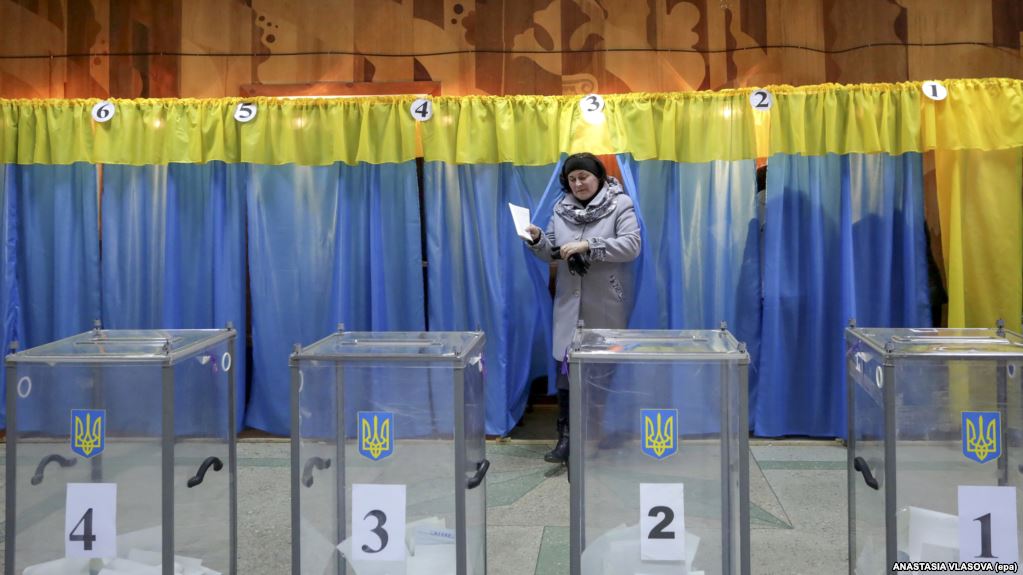
The majority of Ukrainian society is not ready to hold elections during a full-scale war. According to a survey by the Kyiv International Institute of Sociology, 57% of citizens believe that elections are possible only after a final peace agreement and the complete end of hostilities.
Previously, US President Donald Trump said that Ukraine should hold new elections despite its ongoing war with Russia. Under Ukraine’s constitution, they cannot be held during martial law, the New York Post reports.
In response, President Volodymyr Zelenskyy stated that he would be ready to hold elections within three months, provided that the US and Europe ensure the security of the process.
Trump has not publicly commented on this proposal.
Meanwhile, Russia has been calling Ukraine's government and Zelenskyy, who has been at the helm of defending Ukraine for the fourth year of the war, illegitimate. According to Moscow, it has been one of the reasons Moscow does not want to make a peace deal with Kyiv. This regards the agreement without concrete security guarantees for Ukraine.
It is unclear how the Kremlin's position will change if Ukraine again chooses leaders who refuse to surrender to Russia during the potential elections.
Elections are possible only after peace, not under fire
According to the survey, only 9% of Ukrainians believe elections should be held before a ceasefire. For comparison, in September 2025, 11% held this view, while 63% already supported holding elections only after the war had ended.
Trust in Zelenskyy remains high despite political tensions
Sociologists also recorded the level of trust in the Ukrainian president. Sixty-one percent of Ukrainians trust Volodymyr Zelenskyy, while 32% do not. The trust–distrust balance stands at +29%.
The poll notes that these indicators are dynamic. Among respondents surveyed at the end of November, 49% trusted Zelenskyy. This is apparently connected to "Mindichgate", a major corruption scandal in Ukraine involving businessman Tymur Mindich and his alleged ties to Zelenskyy's inner circle.
Kyiv implemented personnel changes and anti-corruption measures following the Mindichgate scandal, including dismissals of key ministers. Zelenskyy also fired his top aide, Andrii Yermak, who might have had links to he scheme. Meanwhile, the EU praised Ukraine's efforts in combating corruption but stated that further actions were necessary.
In December, support for Zelenskyy rose to 63%, and during the period from 8 December to 13 December, it increased to 65%.
Donetsk and Luhansk factor
Euromaidan Press previously reported that, according to the same poll, three-quarters of Ukrainians reject a "peace plan" that would require withdrawing forces from Donbas, limiting the size of the Ukrainian army, and offering no concrete security guarantees.
This figure contradicts Trump's statements that 82% of Ukrainians want a peace deal with Russia on Moscow's terms.
Russia maintains that the entire Donbas region, encompassing Donetsk and Luhansk oblasts, belongs to it as Russian territory, rejecting any Ukrainian control or demilitarized zones without full Russian administration.
According to the poll, 72% of Ukrainians, although mostly without enthusiasm, the sociologists note, are prepared to approve the European-Ukrainian plan. Only 14% categorically reject it.


