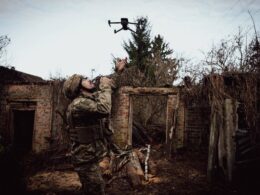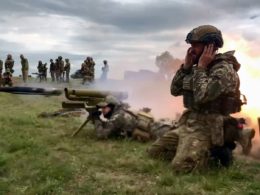


Three of Ukraine's most successful military formations have cracked a code that eluded Soviet generals for decades: they manage soldiers like valued employees, not expendable resources. The result is 60,000 troops across three corps that recruit through Instagram, measure commanders on "price per kill," and maintain 24/7 hotlines for veterans' prosthetics, The Economist reported on 18 October.
Azov, Third Assault, and Khartiia didn't start as military powerhouses. Third Assault was founded by Andriy Biletsky, a former far-right politician now eyeing higher office. Khartiia's creator, Vsevolod Kozhemyako, made his fortune in agriculture. Azov, the oldest of the three, was nearly destroyed defending Mariupol in 2022 and rebuilt from nothing.
What they share is a rejection of military tradition. Kozhemyako, who spent years convincing collective-farm managers that concepts like "marketing" and "accounting" weren't capitalist tricks, now applies the same patience to old-guard officers. His next project: enterprise resource planning software for battlefield logistics.
"Our men are involved in planning, they understand what they're doing, they're part of the mission 100%," Kozhemyako tells The Economist. The contrast with the inherited Soviet system, which would "use people like animals," isn't subtle.
The units track metrics that would fit comfortably in a quarterly earnings report. Battalion commanders answer to key performance indicators measuring "price per kill" and "cost per frontline day." Khartiia maintains a professional HR department specifically to ensure promotions don't go to "senior officers' drinking buddies," according to Kozhemyako.
But the corporate mimicry goes beyond spreadsheets. After three years in Russian detention, a young lieutenant describes his reception by Azov Care: "They met me off the bus, they found the best hospital for me and the best prosthetic, and they're on the phone 24/7." Wounded soldiers who want to continue serving get non-combat roles. Families of the fallen receive funeral arrangements and help navigating compensation bureaucracy.
The marketing operations rival mid-sized agencies. Khartiia's team, led by an executive from one of Ukraine's top marketing firms, is working with Chinese artist Ai Weiwei on merchandise. Third Assault partnered with Mstyslav Chernov, who won last year's Oscar for best documentary, on a film using battlefield helmet-cam footage.
Third Assault's recruitment strategy targets 18- to 25-year-olds through KillHouse, a drone school on Kyiv's outskirts. The course is open to anyone. About 25% of graduates enlist. A "Top Gun"-style billboard campaign last year drew accusations of sexism but generated over 200 applications daily, says the Third's media chief, Khrystyna Bondarenko.
The advertising evolves with the war's mood. Early Third Assault billboards bristled with weapons. Later campaigns leaned into humor—a drone pilot lounging in a deckchair under "Summer, FPV, 3rd Assault." After Ukraine's failed 2023 counter-offensive, a zombie campaign warned "if you don't fight now, darkness will prevail," Bondarenko explains.
Current billboards show unarmed soldiers under "Grow in Khartiia" or troops cuddling babies and walking dogs with the tagline "We're Here to Live." The imagery looks suspiciously like political advertising, The Economist notes—probably not by accident, given that these commanders now control substantial military power and public followings.
A recent Azov media team video captures the recruitment pitch through satire. Two women chat at a hairdresser. The first can't take her husband to a birthday dinner—he's terrified of conscription teams. The second is planning an Italy trip with her husband. "Your husband got an exemption?" No, the woman explains. He's in Azov, which allows servicemen foreign travel during leave.
The message: joining isn't just patriotic duty. It's a better lifestyle than hiding at home.
All three units grew through independent fundraising and recruitment before the government formalized their expansion this spring, adding four to five brigades to each and elevating them to corps status. They now field over 20,000 troops each—comparable to the standing armies of some NATO members.
The transformation demonstrates what happens when Ukraine's talent for self-organization meets existential necessity. It also shows that business skills transfer to warfare more effectively than many assumed. Whether these hybrid military-corporate-political entities strengthen or complicate Ukraine's post-war future remains an open question.
For now, they're solving an immediate problem: attracting soldiers to a grinding war with no end in sight. And they're doing it with drone schools, Oscar winners, and spreadsheets measuring the cost of keeping men alive at the front.