Putin ‘played no less role’ in creation of ISIS than Stalin did in rise of Nazis, Shmulyevich says

Putin and Obama at G20 meeting
Putin ‘played no less role’ in creation of ISIS than Stalin did in rise of Nazis, Shmulyevich says


Vladimir Putin should be compared with Stalin rather than with Hitler, Avraam Shmulyevich says, not only because he is seeking to use an east-west alliance to legitimize his seizure of territory but also because Putin has played “no less a role” in the creation of ISIS than the Soviet dictator did in “the strengthening of German fascism.”
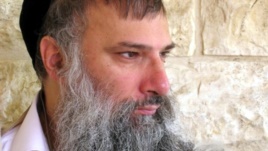
President of Israel's Institute for Eastern Partnership Rabbi Avraam Shmulyevich

In an interview with Kseniya Kirillova posted on Krym.Realii, the Israeli rabbi and analyst approaches this issue with great caution, indicating what is known and what is only suspected because the Russian government has done little or nothing to dispel the suspicions its actions have generated.

“Radical Islamism began with the invasion of the USSR into Afghanistan,” the Israeli analyst says. “All the more radical Islamists including Ben Laden came out of the struggle with the Soviet Union. The second push to the growth of radicalism was given by the invasion of Russia into Chechnya.” In both cases, the Islamists saw Moscow as the enemy.

At the same time, “the largest number of ISIS militants are being recruited from Russia and the other countries of the post-Soviet space,” he says. “In part, this is connected with the fact that over the course of many years, the Russian special services have ‘pushed’ their own Islamists toward Syria and Iraq, putting before them the choice: emigration, jail or murder.”

“Of course,” Shmulyevich says, “we do not know the motives of the FSB in this: did they only want to cleanse their own territory of unsuitable elements or did they intend to strengthen ISIS. But whatever the case, it remains a fact that precisely the Russian special services sent there the most motivated and educated contingent of militants.”

The Israeli analyst says that he does not now have “any data about how much the Russian special services are today using their old ties with the Islamic State… or even how much ‘the Islamic underground’ in Russia is controlled by the special services.”

“However, if Russia wants to avoid accusations of cooperating with ISIS, it should at a minimum clarify this issue.” Instead, “Moscow in the course of several years has created ‘a green corridor’ for the militants who want to join the terrorists.” Moreover, Russian agencies undoubtedly have large dossiers on these people and “one would like to understand how they are using these.”

At present, Shmulyevich continues, “we can reliably assert only that Russia extended its hand toward the creation of ISIS” and “undoubtedly has some levers of influence” on the group. But that alone does not mean that Moscow necessarily is behind any particular action of the Islamic State.

Yet another fact which “does not speak in Russia’s favor,” Shmulyevich continues, is that it is precisely the country “which stands at the origins of Arab terrorism;” and “all those methods which Islamist terrorists use now, including the seizure of planes and suicide bombers were developed by the KGB and its satellites” in Soviet times.

Despite that, he says, he is “not inclined to consider that Putin stands behind the Paris terrorist attacks and supposes that they were completely organized by ISIS itself. However, “the Russian leader used the tragedy in his own interests to the maximum extent possible” and is seeking “to convince the West that Russia has become a reliable ally in the struggle with terrorism.”

The Kremlin leader is having success in that regard, especially since he appears to have accepted the idea that his ally Assad will have to leave office. But that will create problems for him: he will have to assume the difficult task of providing security in the region. At the same time, if he gets bases there, he will have achieved a longstanding Russian dream.

And “it is possible,” Shmulyevich continues, that the price for all this that Putin will extract from the West is Ukraine. Already it appears that “unfortunately” the West is moving in the direction on Ukraine that Moscow wants, and that risk “will increase with each new ISIS terror attack.”

To suggest a correction or clarification, write to us here

You can also highlight the text and press Ctrl + Enter

Please leave your suggestions or corrections here


    Leave a Reply
    Euromaidan Press

    We are an independent media outlet that relies solely on advertising revenue to sustain itself. We do not endorse or promote any products or services for financial gain. Therefore, we kindly ask for your support by disabling your ad blocker. Your assistance helps us continue providing quality content. Thank you!

    Related Posts

    February 12: ”Normandy Four” negotiations concluded in Minsk with a disappointing result for Ukraine

    February 12 – "Normandy Four" negotiations concluded in Minsk with a disappointing result for Ukraine. Putin did not give in on a single point – there will be no withdrawal of Russian troops (they are, of course, nowhere close to Ukraine), no immediate resumption of control over the border, no reinstatement of sovereignty over occupied Crimea or Donbas. There are, however, the obligations on behalf of Ukraine to service social needs of separatists, legalize their armed gangs and hold fake elections under their watchful eye. The situation looks a lot like the surrender of Sudetenland (Czechoslovakia) to Hitler.

    February 12 – Total financial assistance to Ukraine from the IMF and other organizations could amount to 40 billion dollars over 4 years, – said IMF's Managing Director Christine Lagarde.

    February 12 – Russian Ministry for Emergency Situations has announced the preparations for the 14th so-called humanitarian aid convoy destined for Donbas – more weapons will be transported, no doubt.

    February 12 – Russia has transferred another lot of military equipment and artillery to the territory of Ukraine, controlled by militants – approximately 50 tanks, 40 "Grad", "Uragan" and "Smerch" multiple rocket launch systems and 40 armored vehicles crossed Russian-Ukrainian border at border crossing point Izvaryne, – said NSDC spokesman Andriy Lysenko.

    February 12 – The transfer of the amphibious assault ship "Vladivostok" (Mistral-class) to Russia could begin as early as next week.

    February 12 – EU High Representative for Common Foreign and Security Policy Federica Mogherini does not expect sanctions against Russia to be discussed during the summit of EU member-states leaders to be held on Thursday.

    February 12 – Secretary General of the Organization for Security and Co-operation in Europe (OSCE) Lamberto Zannier hassaid that at present it is impossible to determine whether the militants in Donbas are also soldiers of the regular Russian army. OSCE has completely exhausted itself as a security-oriented organization.

    February 12 – Agreements reached in Minsk during the meeting of the leaders of the countries of the "Normandy quartet" are absolutely weak. This was stated by the President of Lithuania, Dalia Grybaskaite, to journalists in Brussels before the EU Summit. "The fundamental part of the resolution is the control of the borders. It was not agreed upon and not resolved," she noted. "This means that the border is open for crossing by whatever soldiers and whatever artillery," remarked Grybaskaite. "This means that the resolution is totally weak," emphasized the President of Lithuania. She is also not very optimistic about the agreements on the cease-fire.

    "Five months ago we already had one agreement about a cease-fire which was not implemented. Let's see what happens with this one," underlined Grybaskaite. "We will observe in the next few days how at least these partial agreements will be implemented," she added.

    War is hell! (photo report from occupied Vuhlehirsk)

    Russia lies... great start to Minsk agreement (Savchenko cannot be released!!)

    Timothy Ash

    Ukraine – deal thoughts


    I guess with hindsight, a deal was always going to be done. Merkel was not going to get on a flight to Minsk, after Kyiv, Moscow, and Berlin, and not get something. And Putin needed to try and rebuild some bridges with Merkel, after seemingly upsetting her at Brisbane. Merkel is probably the honest broker in all this. She really feels for the Ukrainian position, but understands the real threat from Russia – she reads Putin better than any other Western leader, and cannot be bought. But it is Bismark-style real politik for Merkel, and she was desperate to stop the fighting – almost at any cost, which is entirely understandable. Hollande will likely get his aircraft carriers delivered, and sees all this as offering the hope of ressurection in terms of his presidency at home – a global leader, strutting the international stage and making Cameron, et al look like poodles, or rather a bulldog with no teeth. Putin gets his aircraft carriers, which will no doubt have a nice shiny berth now awaiting in Sebastopol. Putin also fended off near term threats of sanctions from the West, and can sell himself to allies in Europe (there are many) as a peacemaker – again heading off further sanctions threats. He has also not agreed to very much, as I don't think his signature is on the document, so if it fails (and it likely will) he can blame others. He has also headed off the threat of the US arming Ukraine – and therein he is in cahoots with Obama himself, who will see this deal as being useful in fending off calls from the DC consensus (including within his own administration) now to arm Ukraine – and can return to his own "splendid isolation" or "strategic patience" as it is now called stateside. That's a nice term for doing as little as possible. Poroshenko gets his IMF programme, and can try and roll out reforms attached to this to try and assure the supporters of Maydan that this team is really the Real Deal in terms of the reforms they so desire. Note the IMF press release was timed for 10am, just as news of the Minsk deal broke – so my sense is that someone was telling the Ukrainians that an IMF deal was contingent on a Minsk ceasefire deal. No ceasefire – no IMF deal. And the IMF gets to roll out its new programme, which it has been working on for months. Poroshenko probably also thinks that the ceasefire will buy time for Ukraine to regroup, rearm against the clear and present danger of further Russian intervention. But will it all stick/last? I just do not think so, as I still fail to see from this deal what is different to Minsk I in terms of delivery on Russian strategic objectives in Ukraine. Minsk I clearly did not deliver for Russia, hence that ceasefire did not last long, so let's see what is really different this time around. The issues of real autonomy/federalism, and border control don't appear to be properly addressed in this document. Constitutional reform towards the Russian agenda will be impossible for Poroshenko to deliver. And finally and fundamentally why I do not think that the status quo is sustainable – one year ago Russia felt the need to annex Crimea, and intervene in eastern Ukraine. But one year ago Ukraine was no threat to Russia as a) it was non aligned; b) popular support for Nato membership was low single digits, and there was little support in parliament or amongst political elites to drive Ukraine NATO membership. C) the west really did not want Ukraine in NATO as they saw this as a red rag to the Russian bull, and as events have proved could not defend Ukraine under NATO's TOR; c) the Ukrainian military had limited fighting capability as was proven in the early days of the conflict, but subsequently changed; d) the govt in Kyiv was weak and disarray and the Ukrainian economy on the brink of collapse; e) and as events have proven Russia had de facto control of Crimea via the stationing of 26,000 troops and the long term BSF agreement. And f) and finally Ukrainians were not anti-russian or even particularly anti-Putin. If Moscow was not a real threat a year ago, but Moscow felt compelled to intervene, look at the risk from a Russian perspective now from Ukraine – a) Ukraine is no longer non aligned. B) it now wants to join NATO and opinion polls now show majority support for this. C) Ukraine is rebuilding military capability and the military doctrine is now against the threat from Russia; d) Ukraine has a reform admin in Kyiv, which has a real chance of succeeding now with imf support. It can offer a rival and successful model of development to Putin's power vertical and sovereign democracy. E) Opinion polls show strong ukrainian opposition/distaste for the Putin regime. So, net-net the above still suggests the risk of further future Russian intervention in Ukraine.

    P.S.: Please spread this appeal as much as possible.

    Ads are disabled for Euromaidan patrons.

    Support us on Patreon for an ad-free experience.

    Already with us on Patreon?

    Enter the code you received on Patreon or by email to disable ads for 6 months

    Invalid code. Please try again

    Code successfully activated

    Ads will be hidden for 6 months.