


Peace talks between Ukraine, the US, and Russia are ongoing during 10–11 November in Abu Dhabi, with European Commission, European Council, German, French, and British security advisers and the NATO secretary general’s chief of staff attending.
The Russian delegation includes Presidential Aide Vladimir Medinsky, General Staff’s Main Directorate (GRU) Head Admiral Igor Kostyukov, Presidential Aide Yuriy Ushakov, and Deputy Foreign Ministers Mikhail Galuzin and Sergei Ryabkov.
The composition indicates a readiness for more substantive talks after months of diplomatic deadlock, Bloomberg argues, suggesting Moscow is prepared to address both political issues and the battlefield. It highlights Ryabkov’s arms-control portfolio and the negotiating experience of Medinsky, at the table since Istanbul in 2022, and Kostyukov, who led the first two Abu Dhabi rounds in early 2026.

Should we have high expectations?
Highlighting past statements, ISW pours cold water on wishful thinking. Medinsky used his position to stall negotiations by discussing the so-called “historical roots” of the war, the Kremlin’s shorthand for its original maximalist demands. Ushakov has repeatedly reiterated the Kremlin’s maximalist demands that Ukraine make unilateral concessions before Russia agrees to engage in any meaningful peace negotiations. Galuzin has reiterated the need to address the so-called “root causes” of the war.
Ryabkov has not formally participated in peace negotiations but frequently claims that Russia can only accept peace proposals that align with Putin’s war aims and “ground realities.” He also facilitated the Kremlin’s 2021 ultimatums to the US and NATO, which amounted to the destruction of the current NATO alliance under the guise of “security guarantees” for Russia. The team’s previous statements indicate that the Kremlin remains disinterested in good-faith negotiations, ISW concludes.
Russia did not start an unjust war only to seek peace through negotiations. More than 12 years of ever-escalating war have shown that Russia regards negotiations only as a tool to influence Western decision-makers, media, and public opinion. It is a means to secure a Russian victory.
Admittedly, expectations cannot be built on past statements. Strategic messaging changes with the situation on the battlefield. Neither has fundamentally changed.
The battlefield is far more than the front line: Russia wages war in the air, on land, at sea, in space, in the electromagnetic spectrum, in cyberspace, and through nuclear posturing; in the spheres of energy, economy, diplomacy, and politics; and in the cognitive and legal domains.
Seen in the bigger picture, the battlefield has not changed fundamentally since the full-scale war started. Ukraine is still defending itself and Europe alone, paying the price in blood. Russia’s blitzkrieg failed, but its war of attrition is still highly successful. After nearly three years of successful operation, Ukraine’s maritime corridor has been effectively severed: escalating strikes on vessels and ports since July 2026 have brought shipping through its main Black Sea ports to a near halt.
Europe still lacks the political will and military capability to defend itself, and will not be able to before 2035. NATO has reduced its level of ambition, fearful of crossing Russia’s red lines, and keeps Ukraine at arm’s length without meaningful security guarantees. It no longer deters Russia, whose hybrid war escalates as it prepares for a military conflict with NATO by 2029. US foreign policy since January 2025 marks the largest strategic shift of all: advantage Russia. Europe is now facing two strategic adversaries: Russia and the United States.
Russia is succeeding in many of the domains it fights in and has every reason to believe it will win. This is why its strategic messaging remains fixed, and why a positive outcome from the trilateral talks is extremely unlikely.
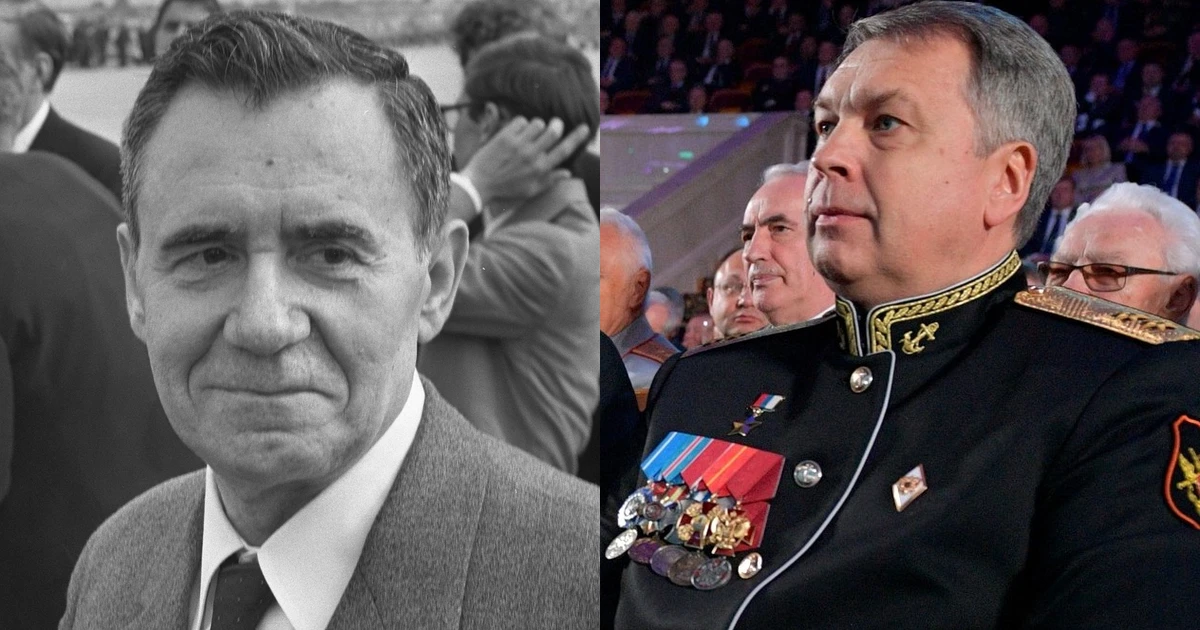
Gromyko’s ghost at Abu Dhabi: The Soviet playbook Russia still uses to sabotage peace talks
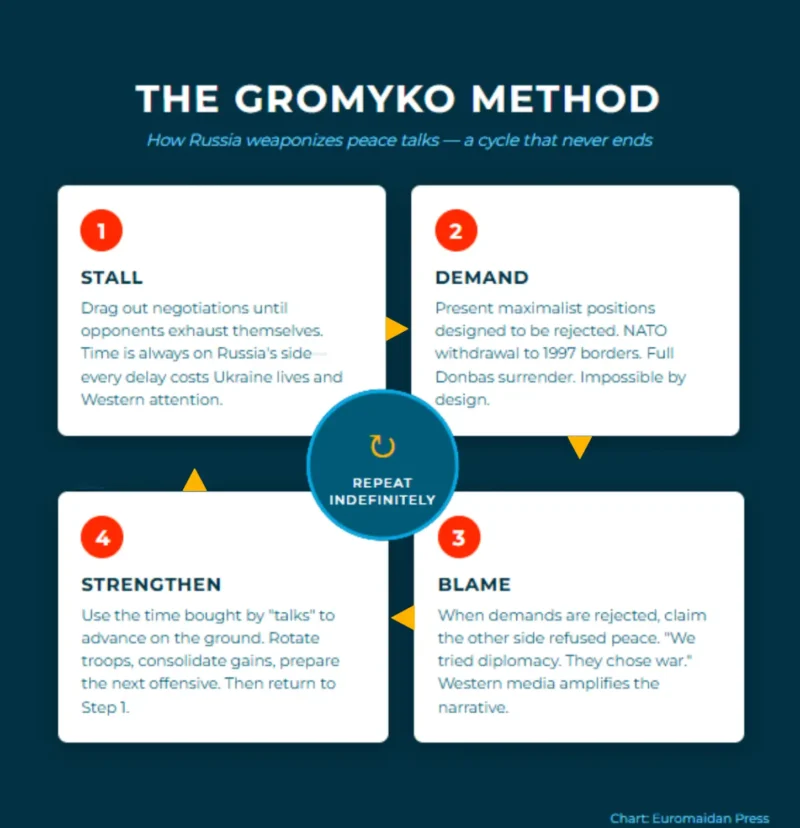
Prospects are undermined by facts
Firstly, it is an existential war for both Russia and Ukraine, for widely different reasons. Ukraine is fighting for its existence; Russia is fighting for its Great Power status. This is a “to be or not to be” moment for the Kremlin. It either succeeds or remains a pariah state forever, possibly risking implosion and collapse. The negotiation framework is in direct conflict with Russia’s true strategic aim.
Secondly, Russia shows no signs of compromising. On the contrary, it is digging in. On 22 October, Putin articulated his long-standing commitment to territorial aims far beyond Donetsk Oblast by invoking mythologized and false Russian “historical claims.” He also claimed that the “latest genetic research” identifies Russians and Ukrainians as “one people,” echoing his infamous 2021 essay, the ideological foundation for the full-scale war and its demand for all of Ukraine. Putin also emphasized his commitment to achieving all Russian war goals, which include Ukraine’s full capitulation, ISW argues. The Kremlin is willing to participate in “negotiations” solely to accept Kyiv’s surrender, not to reach a compromise, ISW concludes.
Putin demands that Ukraine surrender the unoccupied parts of Donbas as a precondition for a ceasefire and is planning a winter campaign of strikes on Ukrainian energy and transport infrastructure. “I will destroy all your infrastructure until you agree. By next year, Ukraine will have no infrastructure left. All bridges, ports, railways, energy infrastructure and power plants will be destroyed,” a source cited by the Financial Times said, recounting Putin’s position.
The Kremlin also rejects Ukrainian security guarantees based on European forces. On 7 November, Foreign Ministry spokesperson Maria Zakharova called any foreign deployment to Ukraine “categorically unacceptable” and said the Coalition of the Willing exercises starting 9 November confirm “Europeans have no place” at the table.
Putin did agree to discuss the “European security architecture as a whole” after ensuring Ukraine’s and Russia’s future security. As ISW notes, this refers to a long-standing demand first articulated in the 17 December 2021 ultimatum: no further NATO enlargement, no forces or weapons on the territory of states that joined after May 1997, and no military activity in Ukraine or elsewhere in Eastern Europe. The US was told to withdraw its nuclear weapons from Europe and eliminate the infrastructure for deploying them. The demands would effectively dismantle NATO as a security guarantor and establish a Russian sphere of influence over the post-Soviet space.
Thirdly, the Russian war of attrition is increasingly effective. It is designed to destroy the foundation of Ukrainian statehood from the air, and Russia’s ability to inflict death, suffering, and destruction grows by the day. It is ramping up missile production while Ukraine’s air defense lacks interceptors. Based on the General Staff’s daily reports, Ukraine is on course to destroy 7.6 times more drones (long- and medium-range; strike, intelligence, surveillance, and reconnaissance) in 2026 than last year. Strike drones are up 42%, and Russia is dropping around twice as many guided glide bombs.

Unless stopped, the Kremlin might still succeed. This is why the war continues despite Russia’s horrendous losses: Putin still believes he will win, and the West has failed to convince him otherwise.
Fourthly, Russia has launched its winter campaign to break Ukraine’s will to fight. A ceasefire in Abu Dhabi is unlikely because Putin believes he has regained the upper hand through it.
The 2026–27 campaign targets power plants, substations, nuclear-grid links, heating, water pumps, and sewage systems. An intercepted, unconfirmed Russian plan from August 2026 envisages up to 1,000 missiles, drones, and bombs against 60 key sites, potentially removing 15 GW of capacity, including equipment connecting the South Ukraine, Rivne, and Khmelnytskyi nuclear power plants to the grid. On 7 November, Russia hit the substation linking the Rivne and Khmelnytskyi plants to Kyiv, corroborating the plan. Russia even accepts undermining nuclear safety. Ukraine risks prolonged blackouts, freezing homes, disrupted water and sanitation, overwhelmed hospitals, and mass displacement.
As of 17 October, there had not been a single day without attacks on energy infrastructure since 16 July, with 2,147 attacks on energy facilities alone. Russia attacked Ukraine’s energy and oil and gas sectors 128 times between 2 and 8 November.
Fifthly, individual member states refuse Ukrainian NATO membership. Some are also erecting hindrances to its EU membership. This serves Russia’s strategic aim: it leaves Ukraine vulnerable to the war of attrition, undermines its resolve and resilience, undercuts European strategic autonomy, and blocks a European coalition of like-minded countries capable of deterring war, keeping Europe weak and vulnerable.
Sixthly, the global consequences of the war, the tsunami of reverberations, continue to support Moscow’s aggression. The war’s reverberations raise the cost of living and undermine food and energy security, spreading famine, recession, inflation, and rising interest rates, which in turn fuel social unrest, extremism, and riots, and ultimately threaten governments. It gave us President Trump, one of the most disruptive politicians in living memory, and the rise of right-wing political forces across Europe. European unity and support for Ukraine might be facing a downward spiral.
Lastly, Ukraine is now fighting two enemies. One is America. The US continues to support Russia’s war efforts, directly or indirectly. It is pushing a business plan dressed up as a “peace plan,” whose original 28-point draft gave Russia better terms than Moscow sought at the 2022 Istanbul talks. The administration has imposed sanctions on the International Criminal Court (ICC); lifted sanctions on Russian diesel exports; declared an “energy ceasefire” that only restricted Ukraine; suspended sanctions, restrictions, and tariffs on Russia required by the Graham Act; proposed that Europe resume buying Russian gas, strengthening Russia’s ability to wage war; sought control of Russian frozen assets in Europe while seeking to reset relations with Moscow; and sought to revive the NATO-Russia Council without demanding Russian concessions.
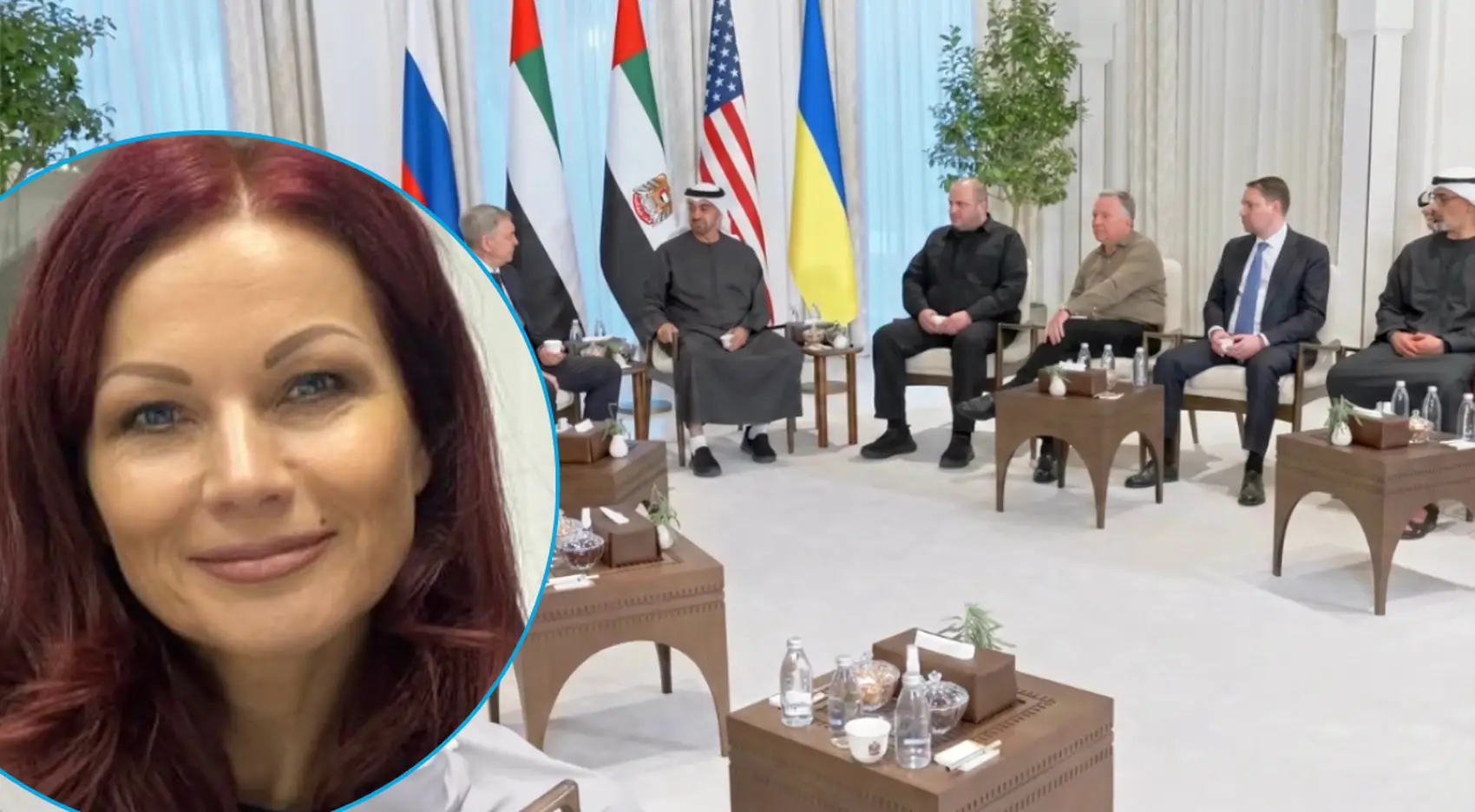
She spent 15 years decoding Russian talks. Her verdict: the battlefield will decide.
So why would Russia engage in meaningful negotiations?
The West has done nothing to motivate the aggressor to seek peace. The limited and temporary costs imposed on it are minuscule compared to Russia’s potential gains: Great Power status and strategic parity with the US and China, as one of the three powers that will define the world order. Europe lacks the strength to change Russia’s trajectory, and the US, having pivoted from value-based to transactional foreign policy, is willing to pressure the victim and reward the aggressor. The Trump administration is seeking the business opportunities the war is blocking, and peace at any cost, including giving Putin what he demands.
The bottom line is that the trilateral negotiations in Abu Dhabi will only help prolong the war. Nothing that ends the war will come out of the talks. They will only help convince Putin that time is on Russia’s side.
Editor's note. The opinions expressed in our Opinion section belong to their authors. Euromaidan Press' editorial team may or may not share them.
Submit an opinion to Euromaidan Press


