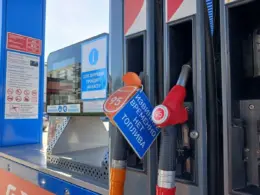
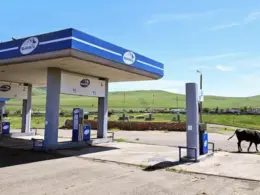
Kommersant’s Crimea correspondent reported on 1 July that gasoline in Russian-occupied Crimea was selling for 185–200 rubles ($2.37–$2.56) a liter at filling stations when fuel was available. In Sevastopol, the pump price had reached 199 rubles ($2.54) a liter. Resellers were asking 250–400 rubles ($3.20–$5.12).
Crimea’s Russian-installed leader, Sergey Aksyonov, said that large volumes of fuel would not reach the market soon, despite authorities’ ongoing efforts to resolve the fuel crisis.
On 30 June, Crimea’s Russian-installed leader Sergey Aksyonov said on Telegram that large volumes of fuel would not reach the market soon, despite authorities’ ongoing efforts to resolve what he called the fuel crisis. He asked residents to be patient.
At the top of that range, gasoline costs more than twice as much as at a station. Kommersant described a market split between intermittent retail sales and a separate resale trade, with drivers paying sharply different prices depending on where they can buy fuel.
Stations open without warning
Kommersant said some filling stations were opening only briefly and without notice, leaving price boards blank. Where fuel was available, gasoline sold for 185 rubles ($2.37) per liter and diesel for 199 rubles ($2.54) per liter. Drivers have begun queuing from early morning, standing for hours in summer heat, and many still leave without filling their tanks.
Aksyonov said that public transport and municipal services had been fully supplied with fuel. His post did not explain how long those protected supplies would last.
Russia’s Energy Ministry warned on 2 July that online services claiming to track fuel availability at filling stations could not be considered reliable. The ministry said such platforms had become more active since late June and that more than 30 Russian regions had imposed limits on gasoline and diesel sales since early May.

National averages miss the local shock
Rosstat’s weekly price release recorded a 1.6% nationwide increase in gasoline prices and a 2.2% rise in diesel prices during the week of 23–29 June. Gasoline was 6.69% more expensive than at the end of May and 11.58% above its end-2025 price. Diesel had risen 6.94% since the end of May and 11% since December.
Kommersant reported whether drivers can find an open station at all, and how much they pay when they turn to resellers.
Rosstat’s index is based on weekly price checks for 110 goods and services in 280 Russian cities. Kommersant’s Crimea correspondent reported a different part of the market: whether drivers can find an open station at all, and how much they pay when they turn to resellers.
Trending Now
Moscow acknowledges wider shortages
Kommersant reported on Wednesday that Deputy Prime Minister Alexander Novak acknowledged fuel shortages at some Russian filling stations, blaming logistical changes. He maintained that Russia’s domestic market was supplied overall and said he hoped the disruption would have only a limited effect on price growth and inflation expectations.
The Bank of Russia says the fuel-market disruption may have a longer-lasting effect on inflation.
The Bank of Russia says the fuel-market disruption may have a longer-lasting effect on inflation than in the past, as higher gasoline and diesel prices can filter through to other goods and services via transport and production costs.