


The Russian Orthodox Church has been quietly removing priests who refused to support Russia's war on Ukraine, an investigation by Systema, the RFE/RL Russian investigative unit, has documented. The church courts that hand down the verdicts operate behind closed doors with no procedural code, no defense lawyers, and prosecutors and judges drawn from the same circle. Patriarch Kirill personally signs off on the rulings.
A church court with no rules
Diocesan courts that defrock priests operate without a published procedural code, defrocked priest Andrei Kurayev told Systema. The accuser also acts as judge, hearings are closed, lawyers are barred, and defendants are not told the charges against them. The judges are appointed by bishops, receive no salary, and keep serving in ordinary parishes, leaving them fully dependent on those who appointed them, Kurayev said.
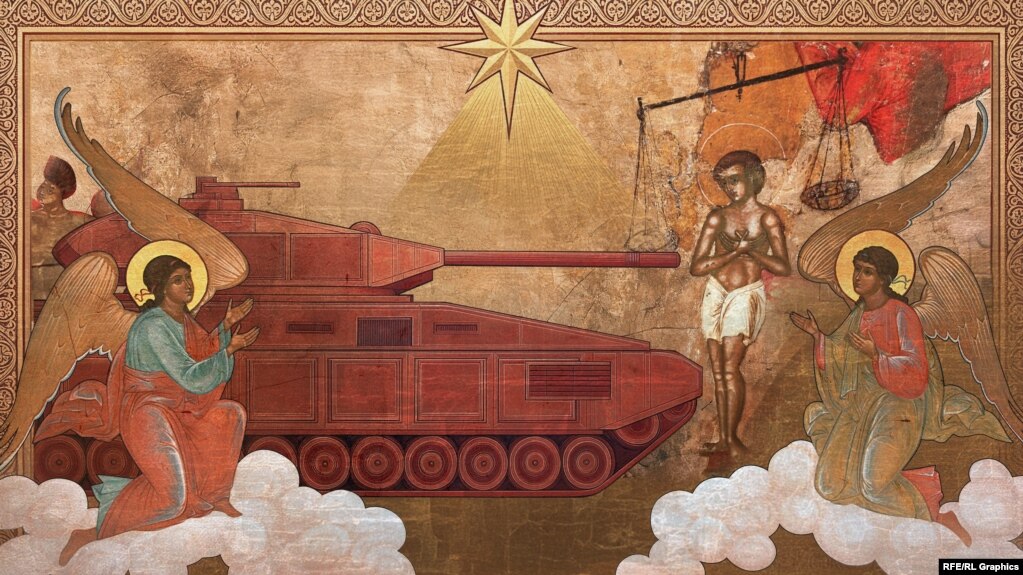
These ecclesiastical courts existed in tsarist Russia and were destroyed by the Soviet regime. The Russian state restored them in 2004, but they only began to function under Kirill, who, in Kurayev's account, drafts the rules on the fly when he wants to remove priests he finds inconvenient.
"I don't know what Holy Rus is"
The charge that has cost several of the targeted priests their robes is the same: refusing to read the so-called Prayer for Holy Rus — a reference to a foundational Russian state mythos that falsely casts Moscow as the sole heir of Kyivan Rus — during the Divine Liturgy. Patriarch Kirill, a vocal backer of Vladimir Putin and the invasion, invented the prayer and recited it himself in September 2022, about six months after Russia's full-scale invasion of Ukraine. The Moscow Patriarchate then made it mandatory across services nationwide, part of the same arc that ended in the church's March 2024 declaration of the war as a holy mission.
The prayer states that "those who wish to wage war have risen up against Holy Rus" and asks God to "grant us victory by Your power." It frames Ukraine, the country Russia invaded, as the aggressor.

Father Aleksei Uminsky, a Moscow rector for more than 20 years, was called in three days before Russian Orthodox Christmas in 2024, handed a suspension decree, and within an hour** questioned by an unidentified disciplinary committee over his refusal to read a prayer supporting the war.
"I don't know what Holy Rus is," he answered.
Trending Now

1966 math books, Russian films, no license: Ukraine exposes underground brainwashing school at monastery commemorating Patriarch Kirill
Church authorities suspended Uminsky, ordered him to remove his cross, and summoned him to trial. He fled Russia after being warned he would be arrested, and was defrocked with Kirill’s approval. Uminsky, 65, says former colleagues write to him in the same bind: they find it impossible to pray for the war but fear denunciation and church discipline.
Ecumenical Patriarch Bartholomew of Constantinople assigned Uminsky to a small church in Paris. He has a small flat above the church and no salary. He gives lectures and sermons on social media to make a living. He likened the separation from his former Moscow parish to losing his family.
From a Moscow cathedral to a Vilnius concert hall
The crackdown extends from Khabarovsk in the Russian Far East to Vilnius, Lithuania’s capital. Vladimir Selyavko was defrocked in 2022 with several colleagues from the city’s main Russian Orthodox cathedral. He says the case may have started when a new bishop found printouts of their antiwar statements on his desk — and then judged them himself.
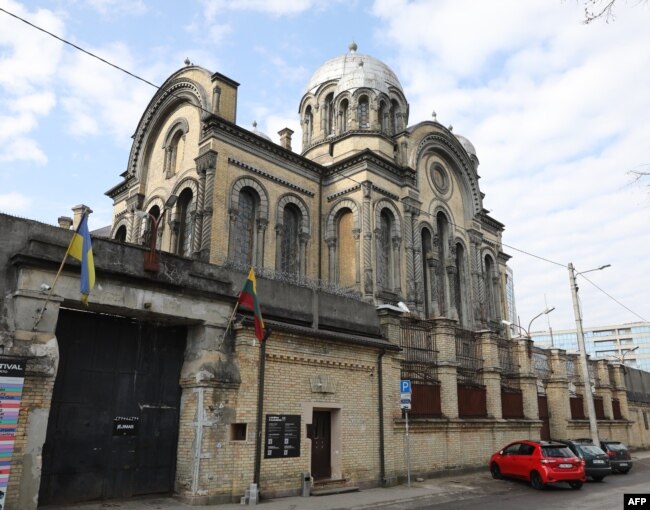
Selyavko, also reinstated by Bartholomew, now serves in a Vilnius church that was converted into a concert hall during the Soviet occupation.
Read also
-
“A warning to companies that remain”: Russia takes control of Nestlé and Auchan’s assets – companies that stayed in Russia following the full-scale invasion of Ukraine
-
“I can travel back to Finland and be safe. That is a luxury”: Sanna Marin on the Russian strike that stopped her train from Kyiv
-
Ukraine put its own peace proposals on the table as two US envoys reached Kyiv for the first time


