


Four years into the full-scale war, European debate keeps returning to one question: what would a deal with Putin look like? Capitals from Paris to Berlin float ceasefire frameworks and territorial trade-offs, premised on the assumption that a negotiated outcome with the Kremlin is achievable. French strategist Nicolas Tenzer thinks the premise is the problem.
A senior fellow at CEPA, former government official, and current lecturer at Sciences Po's PSIA, Tenzer has called for direct allied intervention against Russia since 2014, long before it was politically acceptable.
In his penultimate book, Notre Guerre (Our War), which has recently been translated into Ukrainian, Tenzer argues that Putin's regime is not only pursuing imperial expansion; it also pursues a nihilistic project of destruction — of Ukraine, of the post-Nuremberg international order, and ultimately of Russia itself. By proxy, "peace talks" with the Kremlin become a category error. Europe must devise a strategy for victory, not sue for peace.
Speaking with Euromaidan Press at this year's Kyiv Security Forum and in a written follow-up, Tenzer walked through the argument of his book and what Ukraine and its European partners must do to stem Russia's aggression.
Key takeaways:
- Putin is not negotiating territory — he is dismantling rules: the Kremlin's project is destruction itself, which means there is no settlement to be reached with it.
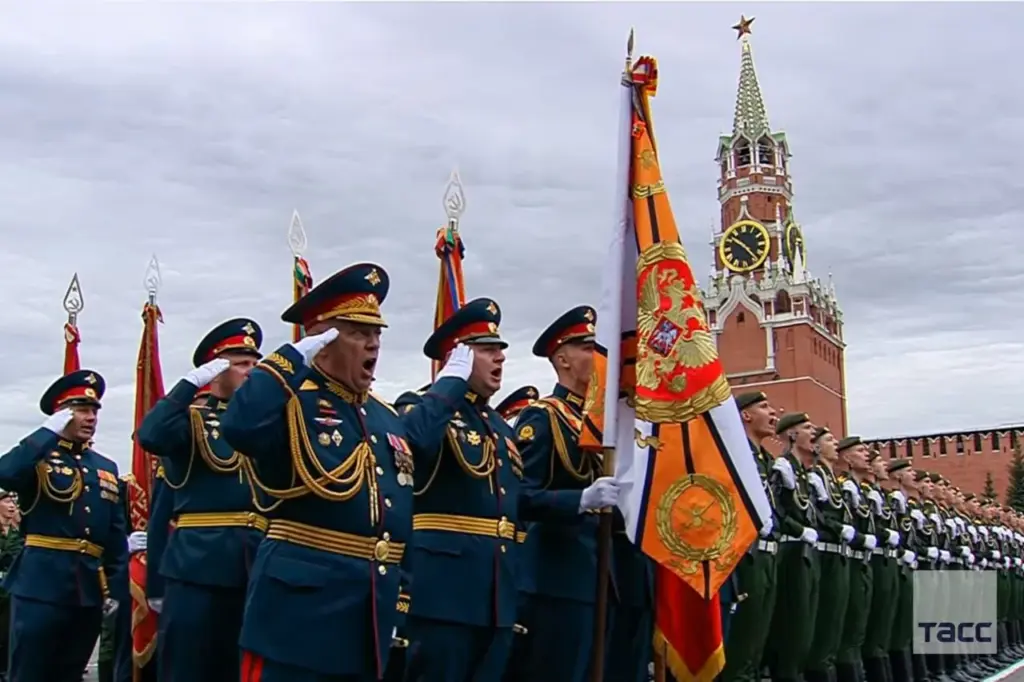
- The West has made four mistakes when dealing with Russia: ignoring Russia's crimes, treating its invasion as a land dispute rather than a war of extermination, being duped by Moscow's nuclear blackmail, and clinging to the romantic notion of a "Great Russia."
- Stop talking about peace; start talking about victory: every time a Western leader floats "peace talks," they hand Moscow leverage before negotiations begin.
- Europe has to build its own defense, with or without Washington: European leaders can no longer assume the US will show up — not under Trump, and not necessarily under his successor.
- From "as long as it takes" to "whatever the cost and until final victory": Europe must commit, not just support — and end business as usual with Moscow.
Interview conducted in person at the Kyiv Security Forum and supplemented by a written follow-up; edited for length and clarity.
What is "Our war"?: from the French Resistance to Ukraine's frontline
Daniel Thomas: You've said your family history played a formative role in your writing and stance on Ukraine. Could you elaborate?
Nicolas Tenzer: My father, in France, and my mother, in Belgium, were both active in the armed Resistance against the Nazi aggressors. They were Jewish immigrants from what is now Poland.
My mother was arrested by the Gestapo and deported to the Ravensbrück concentration camp. It was a miracle that she survived. She often told me that, in the face of the radical evil embodied by Nazi Germany, she and her fellow Resistance fighters had no choice but to fight.
[My parents] accepted the risk of dying. In the end, they would triumph, even if they were not certain they would still be alive to witness the victory.
When I called for direct allied intervention as early as 2014, and more urgently after February 2022, I was conveying the message my parents had passed on to me, especially since they were no longer here to deliver it themselves.
"[My parents] accepted the risk of dying. In the end they would triumph, even if they were not certain they would still be alive to witness the victory." — Nicolas Tenzer
Thomas: What do you mean by the title of your book, Our War?
Tenzer: "Our war" is the common war of all the democracies and people standing for international law, for dignity, for human rights. It's neither a limited war nor a territorial war. It's a war on principles, an all-out war, because Putin's plan is to tear down all the basic laws that the world after World War Two was founded on, to completely erase the legacy of Nuremberg.
Just imagine that Ukraine loses the war. That will be the end of Europe. It's the [front]line that the Ukrainian people are defending. They are fighting the war that other Europeans are not daring to or willing enough to fight.
"[Ukrainians] are fighting the war that the other Europeans are not daring and willing to fight." — Nicolas Tenzer
Putin’s project is not just imperial, but destructive
Thomas: You looked at the Russian imperial project a great deal in your book. What is the purpose of that project? Is that connected to your analogy that Putin is a direct successor to Hitler?
Tenzer: You can read Putin's project as neo-imperialist or neo-colonialist. But consider only that, and you miss the essence of the regime. Its essence is destruction, full destruction — a nihilistic project.
As Max Weber would have said, it's a kind of instrumental rationality — everything is linked to the project of destruction. And it's the destruction of Russia itself: its economy collapsing, its society destroyed, more than a million Russians killed or severely wounded. It's something completely without a future.
"The very essence of [Putin's] regime is destruction. That's a nihilistic project." — Nicolas Tenzer
The four Western mistakes
Thomas: In your book, you outline the West's four major mistakes in responding to Russia's aggression from 2014 onward. What are those mistakes?
First mistake: ignoring Russia's history of committing crimes against humanity
Tenzer: The first mistake was to turn a blind eye to Russia's past mass crimes: Chechnya, the 1992–1993 ethnic cleansing in Georgian Abkhazia, the massacres by Russian forces in Syria from 2015, and the crimes in Ukraine before 2022. They failed to understand that, from the Russian side, the crime was the message. Even after Bucha, Mariupol, Irpin, Izium, and Putin's indictment by the International Criminal Court, Western leaders have hesitated to call things by their name. They should be speaking out every day.
Second mistake: seeing Russia's invasion of Ukraine as a territorial struggle
The second mistake was to view the war as primarily a territorial war — a "classical war" insofar as such a thing exists — rather than as a total war or even a war of extermination. From that point on, they believed it was possible to negotiate with Russia and make compromises. In February 2016, I published an article titled "Why You Can't Negotiate with Putin's Russia." Many people at the time told me I was an extremist warmonger. Some leaders today still pretend to believe that it is possible to negotiate with Moscow and reach a peace agreement. This reveals a total lack of intelligence and realism.
Third mistake: falling for Moscow's "soft propaganda"
The third mistake was succumbing to Russian propaganda — or, more precisely, what I call "soft propaganda." Some leaders bought into the narrative of a Russian nuclear threat and a Third World War. They believed that confronting Moscow directly would catch them in a fatal spiral. They warned against a supposed "escalation," whereas I argued that stopping de-escalation was urgent. I still recall Jake Sullivan, Biden's National Security Adviser, telling us at the NATO summit in Vilnius in July 2023 that his aim was to avoid a war between Russia and NATO. But just because we respond to Russia — in accordance with Article 51 of the UN Charter — does not mean we are entering a global confrontation.
Fourth mistake: clinging to the cultural notion of a "Great Russia"
Finally, the fourth mistake: many Western leaders harbored an image of a "Great Russia" and viewed it through the lens of a so-called "great culture." This sentimental romanticism prevented them from perceiving the nature of Russian power and, above all, the reality of its ideology of pure destruction. They visited Russia but did not know it. They did not know Ukraine either and never went there — a country I have visited regularly for twenty years, and seven times since February 24, 2022. This reflects a sort of reverence for a so-called great power — which Russia is by no means — and a detestable contempt for a so-called small nation, Ukraine, when in fact it is the great nation of tomorrow.
"From the Russian side, the crime was the message."— Nicolas Tenzer
The peace trap: why European nations cannot engage with Russia diplomatically just yet
Thomas: That fourth mistake — the romanticized "Great Russia" lens — still shapes how Western media talks about the war. What needs to change?
Trending Now
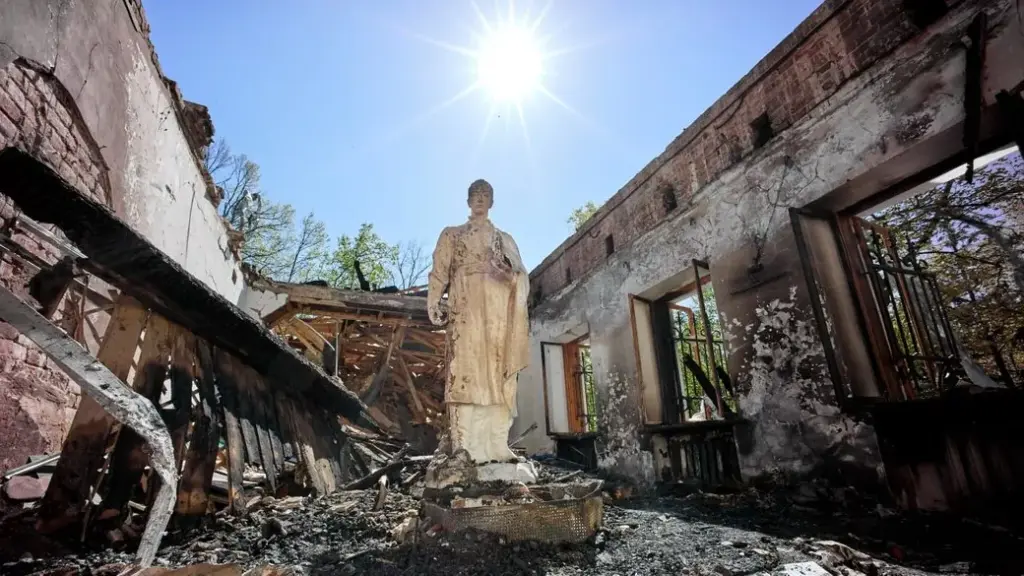
Tenzer: That’s why I'm saying to the Western leaders: “Stop talking about peace. The question is victory. Face the facts: peace is impossible unless Russia is completely defeated and its people and leaders accept their guilt.”
We are at war with Russia, not because we have declared war on Russia, but because Russia is at war with us. This war cannot end on some middle ground. No one in history has ever won a war whilst refusing to fight it. European leaders and people must understand this basic reality.
"We are at war with Russia, not because we have declared war on Russia, but because Russia is at war with us." — Nicolas Tenzer
The Iran revelation: how America has proven to be an unreliable partner
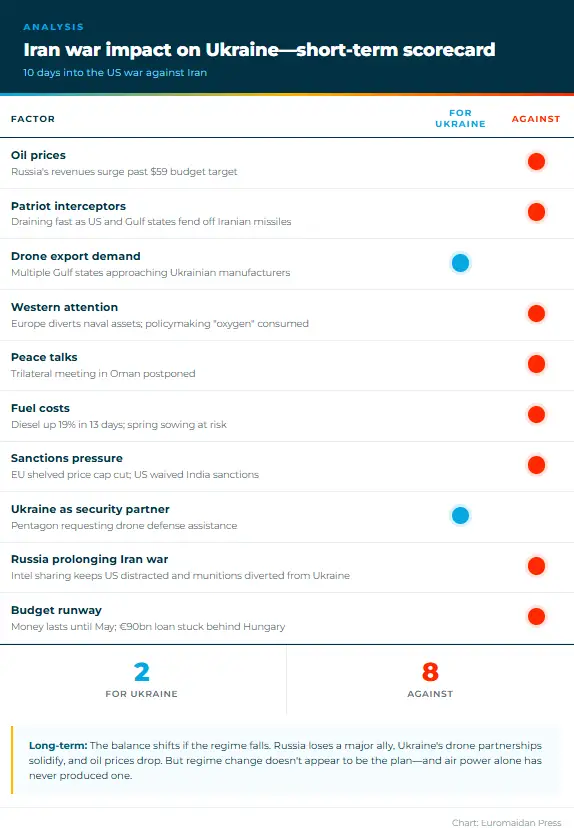
Thomas: In the Iran war, Ukraine has unexpectedly become a major security guarantor in the Gulf, providing drone and training assistance. How do you assess the impact of this war on Europe and Ukraine's ability to deter Russian aggression?
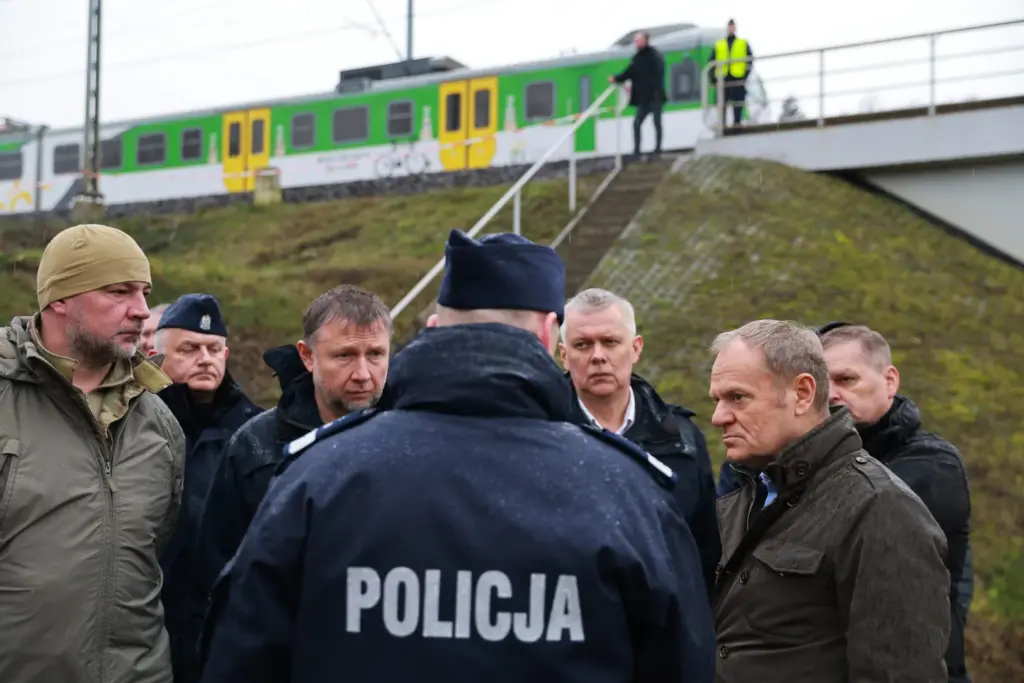
Tenzer: Since 2022, Ukraine has been Europe's primary guarantor of security. Imagine if the Ukrainian front had collapsed in 2023 or 2024; it would be Europe today under attack by Russia.
The two conflicts are largely unrelated. What matters is the reduction in stockpiles of certain American weapons — missiles for Patriot batteries, long-range missiles — and Washington's refusal to provide Ukraine with sufficient quantities of them. This marks a moment of truth for both Kyiv and Europe.
Let's imagine that the US had given Ukraine as many missiles as it used against Iran in just a few days during the first weeks of the war: Ukraine would have already won. I can't help but see this failure as a guilt that will be discussed in history books. The United States and the Allies could have saved tens of thousands of Ukrainian lives: they chose not to.
"I can't help but see this failure as a guilt that will be discussed in history books." — Nicolas Tenzer
It is Europe's imperative duty to supply Ukraine with all necessary weapons and dramatically increase production. Kyiv must be able to go even further in implementing what President Zelenskyy calls "long-range sanctions."
"They could have saved tens of thousands of Ukrainian lives: they chose not to." — Nicolas Tenzer
Europe without America: building strategic autonomy
Thomas: Now to the elephant in the room — the US. You have a regime in the White House that's far less amenable to Europe and often aligns with the Kremlin's worldview. What's to be done?
Tenzer: The US is not [our friend]. They are right now on the dark side of the force. As long as they are fully colluding with Russia, they should be considered our enemy. Actually, they are probably cozying up to China as well, and I would be very anxious for Taiwan as well.
We don't have the US with us, so we have to have strategic autonomy. Stop buying US weapons. Step up dramatically and quickly toward being able to create all the weapon systems. France, Poland, and others have good initiatives.
People say things will be better after Trump. In my view, no that much when it comes to foreign policy. Everything first started with Obama and Biden. When Obama decided not to enforce the red lines in Syria after the chemical attack on the Ghouta in 2013, he gave a signal to Putin that he had a blank check. Former president François Hollande perceived that as treason. France was ready to act. Obama said, "Okay, we'll do." And finally, he didn't.
Same in 2014 when Crimea and a part of Donbas were occupied by Moscow. Remember then Biden's August 31, 2021, Afghanistan speech: It was in substance: “No more boots on the ground. We will solve all the problems only with diplomacy.” We know what happened next in Ukraine. Putin knew that Biden wouldn’t take action, and until the end of 2024, he remained halfway in his support.
Thomas: Given the US's bellicosity and the growing rearmament of European nations, was De Gaulle right? Might strategic autonomy as a concept spread beyond France, to say Germany or other major players in European security? Or does Europe still lack the political cohesion and military capacity to make that vision viable in practice?
Tenzer: Today, most European leaders have understood the necessity of strategic autonomy. Even if, in 2029, you have a new US administration that is less pro-Russian, this will remain a necessity. Will they send conventional troops if a Baltic country is attacked? I'd rather not bet on it.
There are differences of opinion among European countries, and some — particularly the larger ones — are reluctant to share the benefits of a military reindustrialization of Europe. Behind this lie crucial questions: how can we envision a new NATO without the United States? How can it be coordinated with a European Security and Defense Policy that lacks NATO's resources and command structures? These are vital — even existential — questions.
"The US is not [our friend]. They are right now on the dark side of the force." — Nicolas Tenzer
What final victory requires: from frozen assets to Sky Shield
Thomas: Europe is treated as a coherent actor, yet internal divisions persist: pro-Russian figures such as Bulgaria's Rumen Radev, divergent priorities between, say, Spain/Portugal and Poland/Latvia, among other examples. How do these asymmetries hinder the framing of Ukraine's defense as a shared European cause, and what can be done?
Tenzer: These differences have not prevented us from maintaining and strengthening sanctions against Russia, though they need to be tightened further. Following Orbán's defeat, the €90 billion loan to Ukraine was released.
I am less concerned about Spain and Portugal, which support Ukraine, than about a country like Belgium, whose prime minister blocked the transfer of frozen assets from the Russian Central Bank to Ukraine and made unacceptable remarks about a renewed commitment to Moscow.
It is essential to solemnly declare that there will never be business as usual with Moscow — at least until reparations are paid (estimated at over €1 trillion), deported children and Ukrainian prisoners have returned, and all criminals have been brought to justice.
The major powers must change their strategy and the language used to describe it. We must no longer declare that we support Ukraine "for as long as it takes," but rather "whatever the cost and until final victory."
The major powers must stop referring to a so-called peace agreement that will never materialize. They must clearly state that Ukraine cannot cede any territory whatsoever. They must transform the Coalition of Volunteers — whose mandate is contingent on an impossible ceasefire — into a coalition that enforces airspace protection, as proposed by the Sky Shield project, which I publicly support.
What will happen if the far right wins in France in 2027? What will Poland's stance be if PiS wins again? This is precisely why Ukraine must ultimately rely on its own strength. Ukraine will be the quintessential European nation, the one whose historical consciousness will inspire the European nations that have lost theirs.
Nicolas Tenzer is a prominent French foreign-policy strategist. He writes the Tenzer Strategics Substack and serves as a fellow at CEPA and a lecturer at Sciences Po's PSIA. Tenzer has also written twenty-four books, including 2024's Notre Guerre: Le crime et l'oubli : pour une pensée stratégique (Our War. Crime and Oblivion: Re-Framing Strategic Thinking). Originally written in French, Our War is also available in Ukrainian.
This material was produced as part of a project by the Institute of Mass Information with the support of the Ministry of Foreign Affairs of the Netherlands. The content of this publication does not reflect the official position of the IMI or the Kingdom of the Netherlands.


