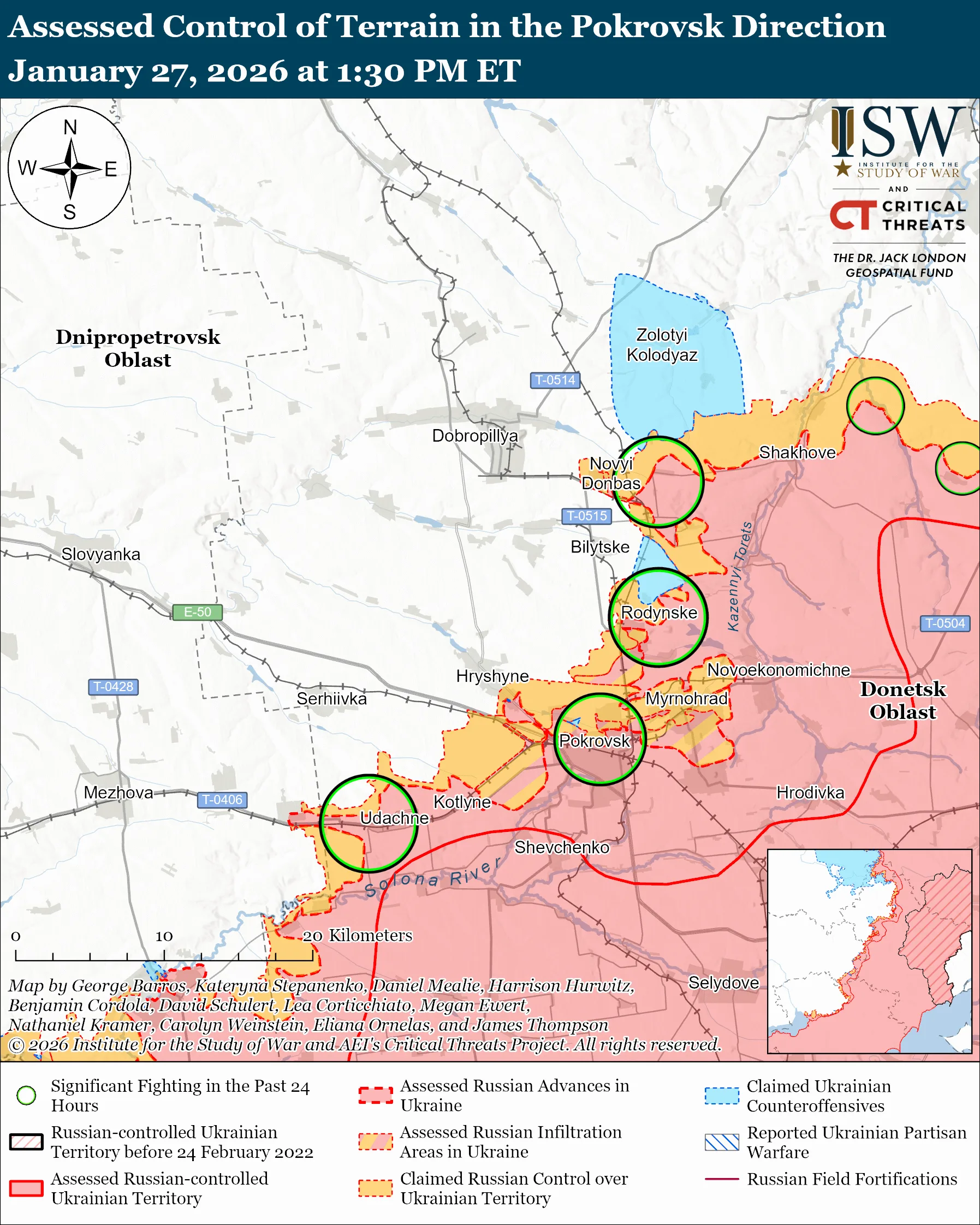
Russian forces have returned to infiltration tactics on the Pokrovsk front, sending small assault groups to sneak through Ukrainian defensive lines rather than engage in direct combat, RBC-Ukraine reports. The enemy aims to accumulate troops in rear areas before striking drone units and fire support positions. The Institute for the Study of War confirmed Russian advances in three areas of Donetsk Oblast, including in the Pokrovsk sector.
Since early December, Russia's operational reserve, including units of the 76th Pskov Air Assault Division, has suffered significant losses during active assaults. Russian commanders now have to bring in additional units to continue the offensive.
Small groups target drone units and fire support positions
Speaking on Ukrainian TV, Mykola "Odesa" Hrytsenko, chief of staff of the 4th operational battalion of the National Guard's Rubizh Brigade said Russian troops regularly attempt to direct small assault groups through Ukrainian combat formations. These groups avoid direct clashes at Ukrainian positions. Instead, they try to covertly penetrate and accumulate in Ukrainian rear areas. Later such infiltrators attempt to attack fire support positions and unmanned systems units.
"The enemy constantly tries to advance through our combat formations, pass through our lines, and move deeper. He doesn't change his infiltration tactics," Hrytsenko said.
The officer noted that while the enemy maintains intense pressure, Russian forces now deploy less armored equipment during assault operations. The shift suggests adaptation after recent costly attacks involving heavy vehicle losses.
ISW confirms Russian advances in three Donetsk Oblast areas
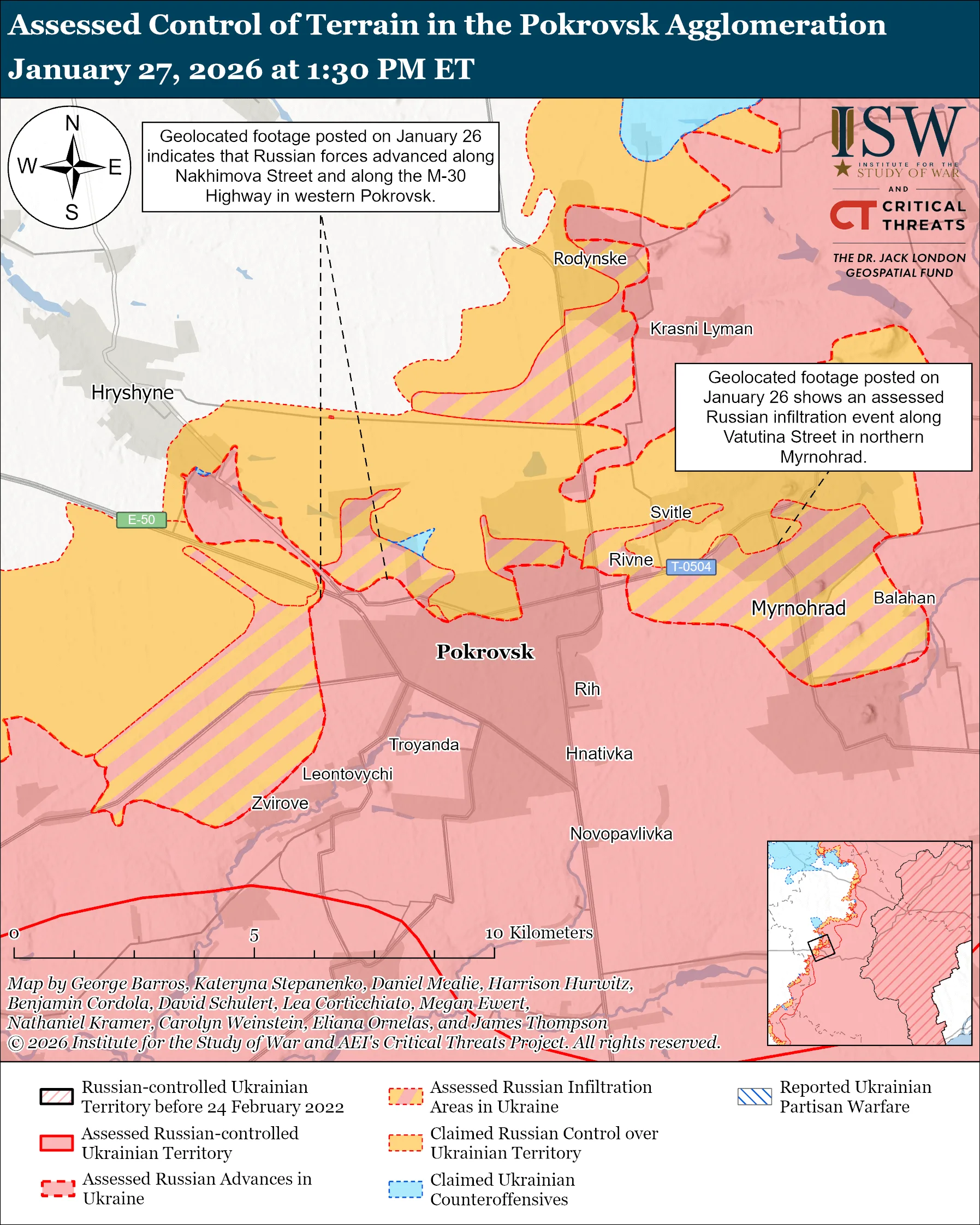
The Institute for the Study of War (ISW) confirmed Russian advances in three areas in its 27 January report. ISW identified gains near Sloviansk, in the Kostiantynivka-Druzhkivka tactical area, and near Pokrovsk — all in Donetsk Oblast.
Geolocated footage published on 26 January showed Ukrainian forces conducting precision artillery strikes on Russian troops in western Pokrovsk. ISW noted these strikes targeted areas where Russian forces had previously conducted infiltration missions. The footage suggests Russian forces consolidated control over these positions after their covert advances.
ISW also assessed a separate Russian infiltration mission in northern Myrnohrad, east of Pokrovsk. Geolocated footage from 26 January showed Ukrainian forces striking a Russian servicemember on a motorcycle during this operation. ISW assessed this infiltration attempt did not change terrain control at the forward edge of the battle area.

Drones now account for over 80% of all strikes on enemy targets, Zelenskyy announces
Russian attempts to capture Pokrovsk
Ukrainian Commander-in-Chief Oleksandr Syrskyi previously reported that Russia was pulling reserves toward Pokrovsk. He said the enemy was seeking breakthroughs using small groups. According to Syrskyi, Russian forces are increasing pressure and attempting to find weak points in Ukrainian defenses. The enemy employs both sporadic massed assaults and covert advances by small infantry groups.
Earlier, Ukraine's Air Assault Forces said Russian troops continue attempts to fully occupy Pokrovsk. The enemy is trying to break through into the northern part of the city, which remains under Defense Forces control.
Read also
-
Ukraine builds app to cut soldiers’ paperwork. It has just saved them $40 million, mostly on fuel
-
Russia has warned its cities about every strike for years. During the heaviest raid yet, on election day, it left the sirens silent
-
Warning sirens are going west: Russian jet-powered drones bring strikes closer to NATO country