

During the years after the Euromaidan Revolution, a powerful volunteer movement formed in Ukraine. Volunteers helped the army, the reform process, and fight against corruption, and took part in other important changes. However, there are volunteer movements not only within the country. The Ukrainian diaspora has also been very active during these years. Euromaidan Press found out how the life of Ukrainian community in Estonia has been affected by the war in Donbas and what drives Ukrainians in Estonia to help their motherland. For that, we talked to Volodymyr Palamar, the Head of the Association of Ukrainian organizations in Estonia.
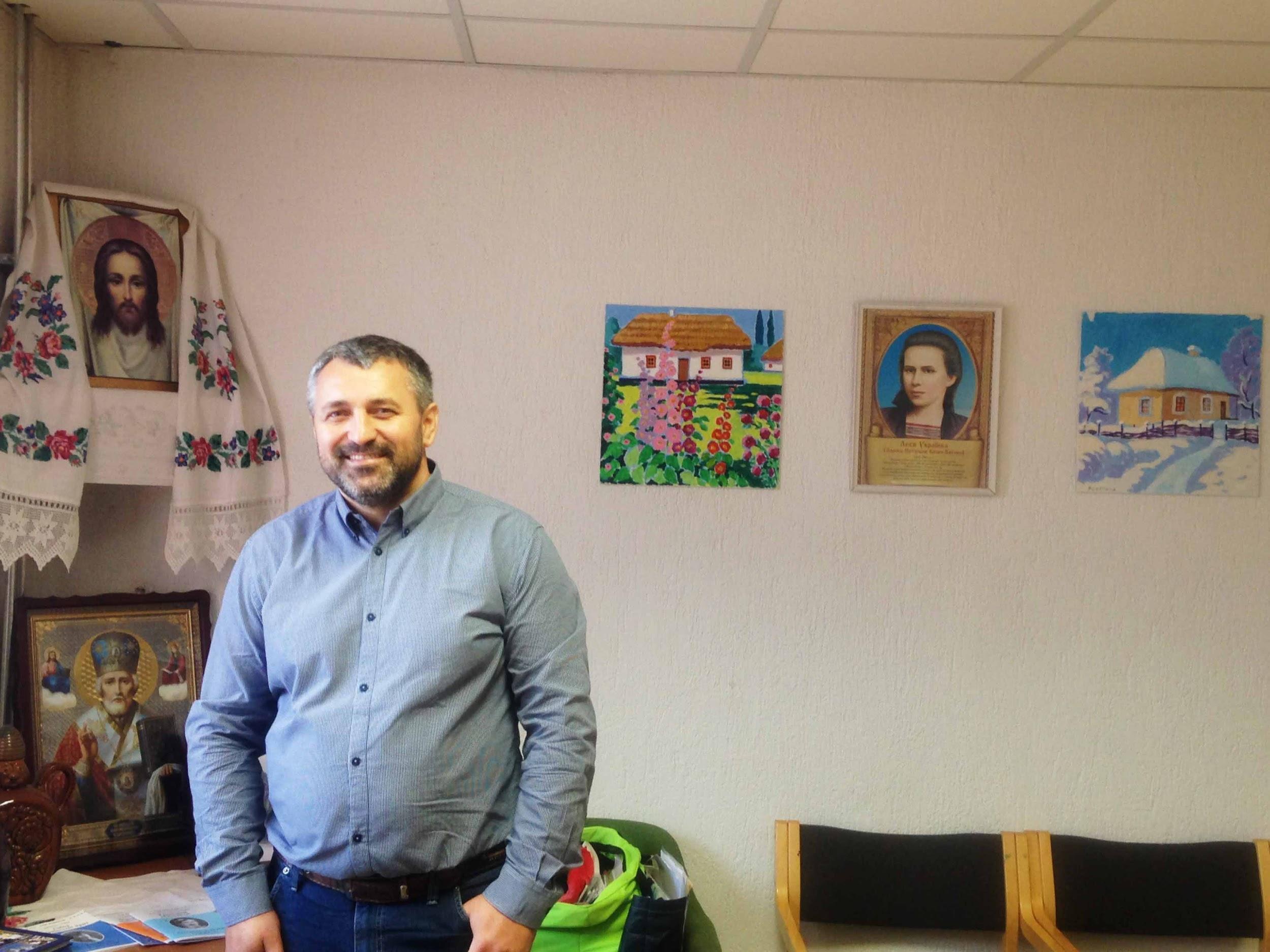 Volodymyr Palamar, the Head of the Association of Ukrainian organizations in Estonia
There are 28,000 Ukrainians in Estonia. 4,000 out of them are citizens of Ukraine. The rest have other passports.

Palamar moved to Estonia to study after graduating from school in Ukraine. In Tallinn, he owns a business. As a volunteer, he promotes Ukrainian culture in Estonia. The Association he heads is the coordinating organization for Ukrainian communities in Estonia.
“We direct the activities of such organizations for maintaining the identity, the language, and the culture which already became a part of Estonian culture,” says Palamar.
Now he considers Estonia as his second motherland, as he spent the biggest part of his life there and it became the motherland for his children. Still, supporting Ukraine is among Plamar's priorities.
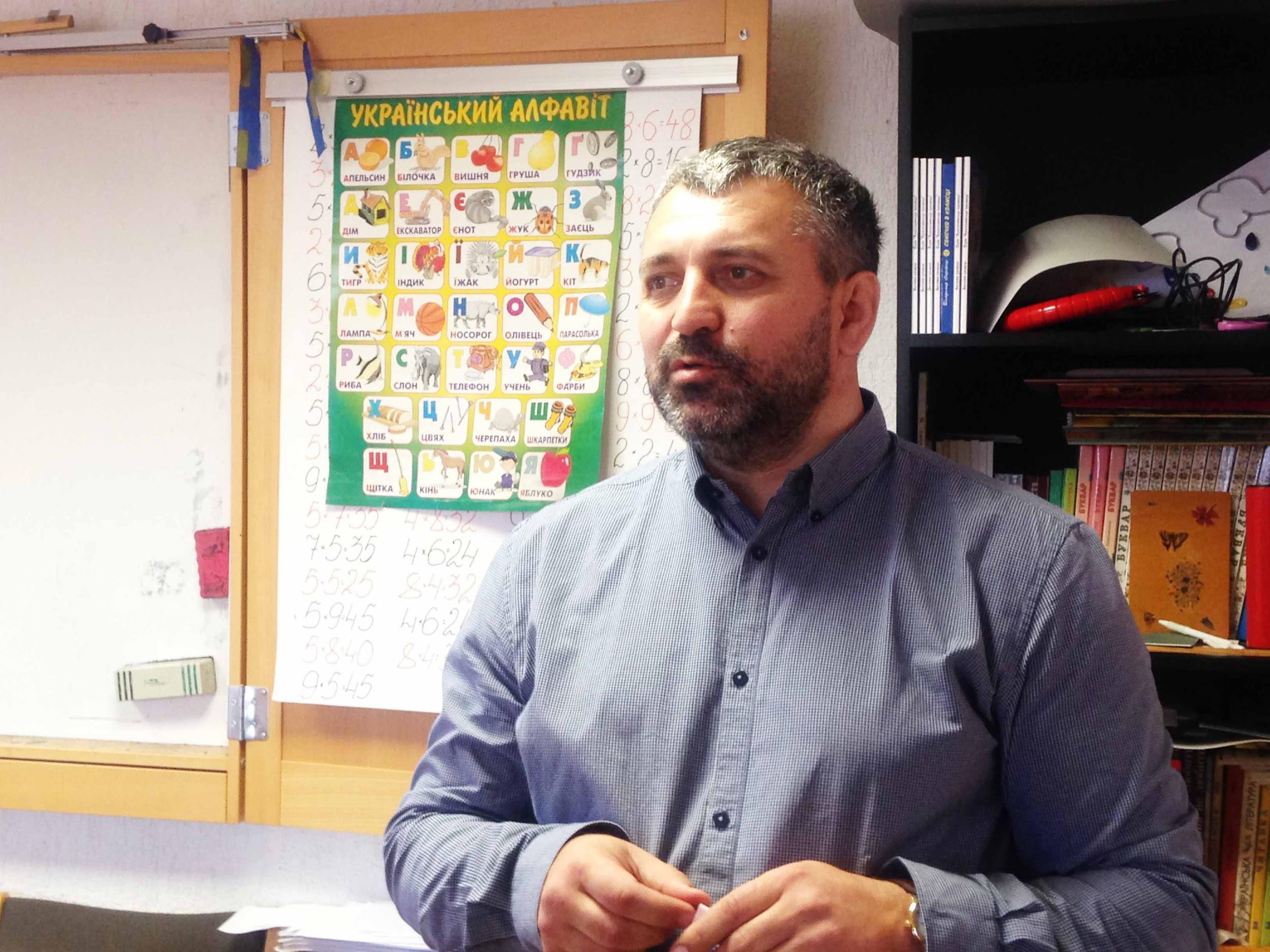
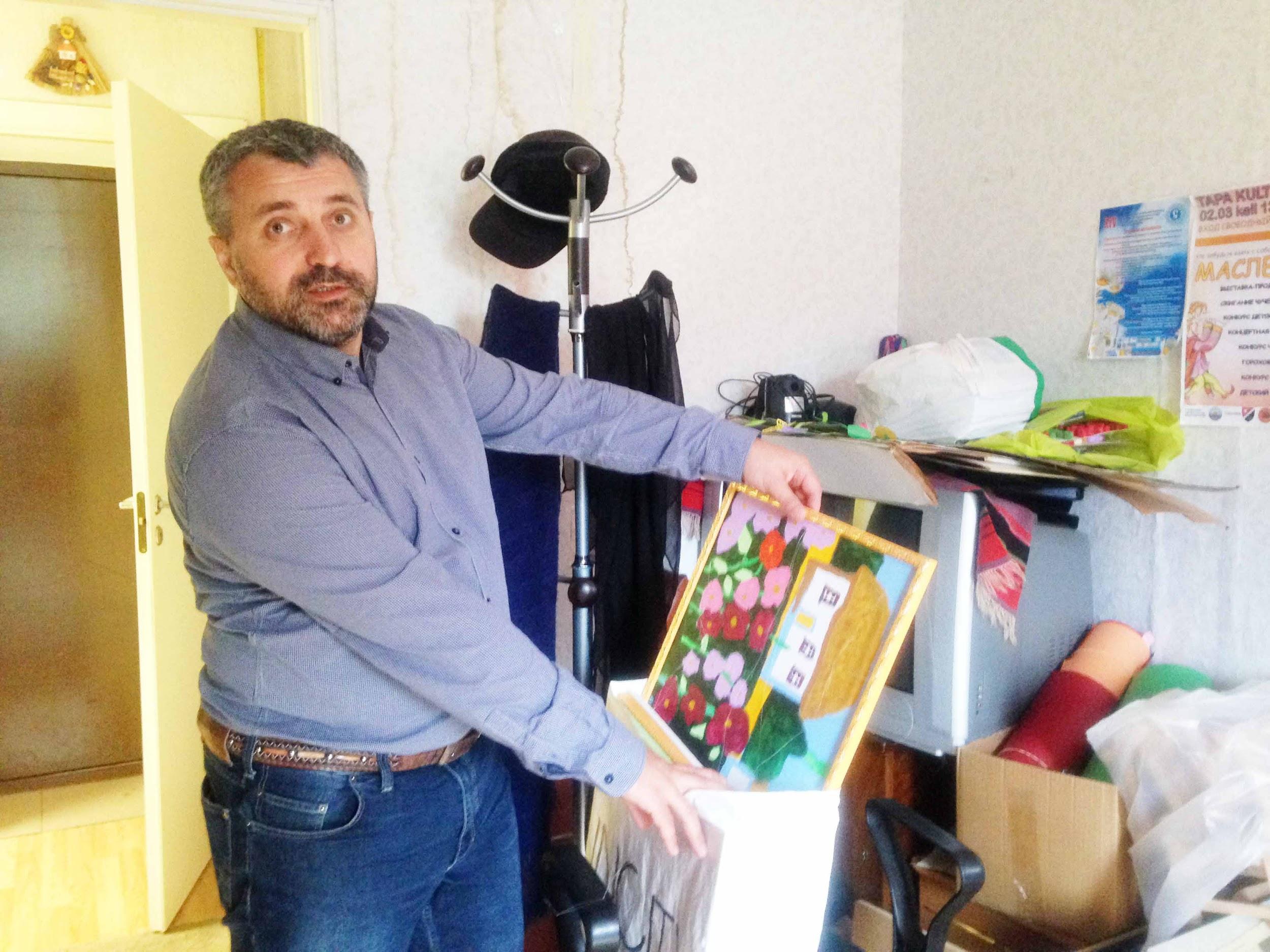
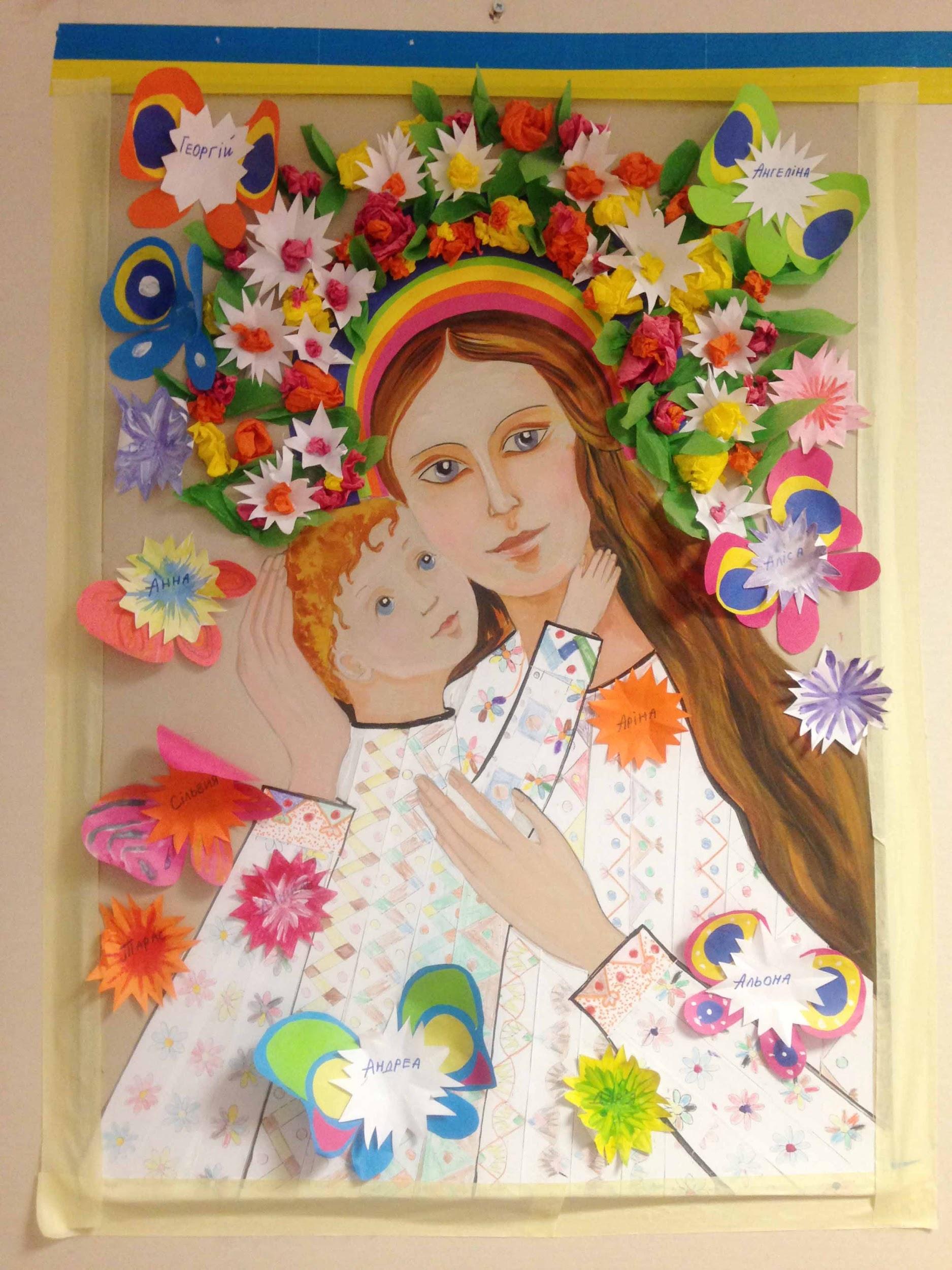
He took us to Ukrainian weekend school in Tallinn. It is full of Ukrainian symbols, children's works, cups, and medals won by the teams of Ukrainian kids at different kinds of competitions. He shows every corner in of the small premises with pride – takes paintings from the boxes, explains the maps and pictures on the walls.
There are other Ukrainian weekend schools in different cities of Estonia. The Association coordinates 6 of them. Children there learn the Ukrainian language and culture. There are also two classes with the optional learning of Ukrainian language in the state gymnasiums.
The Association receives some support from Estonian Ministry of Education – for the school’s retention, taxes, salaries for teachers and some materials.
Switching the focus after breakout of Donbas war
Just before the war in Ukraine broke out, the Ukrainian community in Estonia was working on establishing a monument to Taras Shevchenko, a 19th-century Ukrainian poet who is a symbol of Ukraine and its fight for independence.
“We found out that he was traveling from Saint-Petersburg to Stockholm, but became ill and was taken from the ship with a fever. He was treated in Tallinn and during this period started to write his famous poem Hamaliya. So there was an Embassy initiative to create a monument,” tells Palamar.
As Tallinn is a historical city it is not that easy to receive a permission for establishing a monument there. However, Ukrainian activists went through all the bureaucratic procedures. The plan was approved. A memorial stone has been taken from Ukraine and established on a crowded place in Tallinn.
The activists invited a Ukrainian artist to create the monument and started to collect money for it. The concept foresaw that there will be a shadow of Shevchenko in a boulder. The Head of the Association explains its meaning:
“The idea was that we are not invaders. It means that such a famous person of the world who was a Ukrainian, was in this country, left a shadow here, and went home.”
In the middle of the process, establishing the monument was stuck because of the lack of funds. The money collected by the activists went for work of a sculptor, the materials, and then for the soldiers at the front line of Ukraine, in particularly, for the volunteer battalions. That is how the events in Ukraine corrected the plans of the diaspora.
Another aspect of the life of Ukrainians in Estonia after the beginning of the war is that there is often misunderstanding between them and Russians, who make up about 25% of Estonian population. Talking about himself, Palamar says when he starts to describe what has happened in eastern Ukraine, some people understand him:
“I give examples of killings of innocent people, military hardware which was involved in this war, horrible traps for the Ukrainian army.” He stopped communicating with those who don’t understand.
Helping Ukraine
Palamar says that he tries to not dive deep into political events. In terms of helping Ukraine, he and his community friends chose the direction of medicine.
Palamar cooperates with Ukrainian initiatives, for example Estonian organization Vaba Ukraina. Also he told us about the initiative of Estonian Ministry of Defense and government on treating wounded. To date 64 wounded have been treated there.
Palamar and his colleagues care about those whom they sent help and try to find out where they are and what else they need.
Once, his friend visiting Kyiv told him that her media colleagues work in the warzone, but don’t have helmets. Ukrainians in Estonia collected helmets, wrote down their phone numbers on them, and sent them to Ukraine. The helmets were used by soldiers as well.
“One of them has ended up near Debalteseve, then in Donersk, and in some other places. The guys wanted to figure out where this helmet came from – nobody who wore it was even injured. So they called us. For us it was very emotional. We did not know whether we should cheer or to be sad.”
The most recent support for Ukraine from Estonian volunteers was a dentist chair for surgery - there are a lot of soldiers who come back from war with face injuries.
Palamar becomes modest when talking about their help, but says that not helping is not an option:
“We do not ask ourselves what the state should do for us. We ask what did I do for the state. It is easier to live when you do something, something good for someone. Also we understand that there are complicated processes of the state’s management, so we do not ask anything from the state.”
He also expresses his respect for all the other volunteers inside and outside Ukraine:
“I am not sure that other nations would do the same for their states. They took a heavy burden from the state and gave it an opportunity to reboot – to give an opportunity to its army and other institutions to become as they should be.”
Still, he has a small request:
“If somebody can help us with modern textbooks of the Ukrainian language, history, we will be very glad. As we understand that the language use changes. Another thing we need is banduras for our school band. So far, we can't afford it.”
From time to time, Volodymyr Palamar visits Ukraine. He is disappointed that people in the country are very into politics. However, he also emphasizes that the steps Ukraine made during the last 3 years are visible.


Read also:
- Three years of Estonian support for Ukraine. The story of Vaba Ukraina
- Vaba Ukraina calls for action to help Ukraine
- Estonian group ships medical supplies to Ukraine: “I did not want to just sit back and watch”
- First batch of Ukrainian medics graduate from combat medicine courses in Estonia
- Second batch of Ukrainian combat medics returns from training in Estonia
Read Also


