

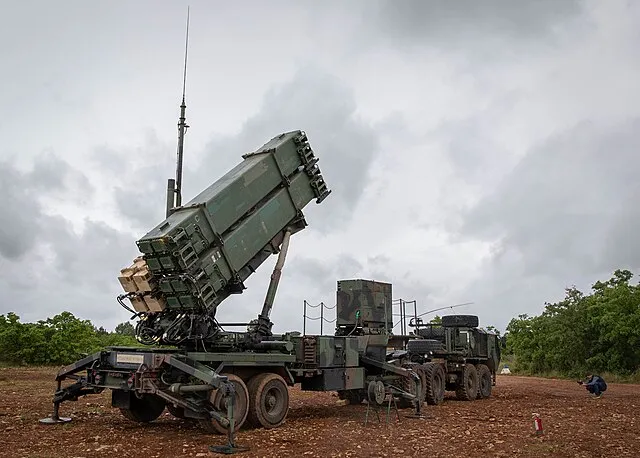
Russia has rebuilt its missile industry around the weapons most likely to pierce Ukraine's thinning air defenses. The Institute for the Study of War (ISW) made that case on 10 August. Kyiv's Patriot interceptor shortage, it assessed, now hands Moscow no reason to negotiate. Because Kyiv can no longer reliably stop ballistic missiles, the Kremlin sees a clear military path to its maximalist aims.
Factories retooled around the missiles that get through
Since April 2026, Russian plants have prioritized ballistic and cruise missiles built to evade interception. HUR Deputy Head Major General Vadym Skibitskyi reported the shift. Monthly ballistic launches have more than tripled between April and July, he said. Meanwhile, output of key missile types runs 10 to 20% above plan. Moscow also met its full-year Zircon and Onyx targets by 3 August. To free capacity, it suspended the less accurate Kinzhal and Kh-32 lines. Skibitskyi flagged a newer twist, too: S-400 launchers now fire specially developed RM-48U rounds along a ballistic path. Russia is also striking Ukraine's defense plants, he warned, to choke off Kyiv's own ballistic-missile program.
Fired fresh, not from the stockpile
Crucially, these strikes draw on newly built missiles rather than war reserves. That approach lets Moscow sustain larger, more frequent salvos. Its stockpile stays intact for the occasional very large barrage. Unmanned Systems Forces commander Major Robert "Magyar" Brovdi put numbers on the trend. Russia can already loose a simultaneous salvo of 77 missiles, and it is pushing toward 200. He stressed that he meant weapons of all types, not ballistics alone. Kalibr cruise missiles, by contrast, are piling up unused. Moscow is shipping them to fleets beyond the Black Sea as Ukrainian crews down nearly all of them. Repeated strikes have meanwhile driven the Black Sea Fleet back to the port of Novorossiysk.
"The Patriot shortage hands Russia an opening to do serious damage over the winter — and a reason to keep meaningful talks at bay," - Institute for the Study of War assessed
Why the Patriot interceptor shortage stalls negotiations
This reprioritization feeds a winter strategy meant to break Ukraine's will to fight, ISW assessed. The Patriot is still the only system Kyiv fields that can down Russian ballistic missiles. And Kyiv has warned partners it cannot close the interceptor gap before the cold months. As a result, the Kremlin thinks it can hammer cities without paying a battlefield price. That calculation could drag the war into 2027, ISW noted. Putin's theory of victory still rests on outlasting Ukraine's defenses and Western resolve. On 9 August, Deputy Foreign Minister Mikhail Galuzin restated Moscow's line. Any "freeze" that ignores the war's "root causes" is unacceptable, he said — shorthand for the Kremlin's original demands.
Read Also
-
Ukraine keeps finding ways to replace its MiG-29s. It’s running out of MiG-29s to find
-
41 Ukrainians made the long journey from occupation to Ukrainian-controlled territory after enduring Russian pressure, detention and control
-
Russia retaliates after Hungary expels 10 diplomats, deepening Budapest-Moscow rift since Orbán’s ouster


