

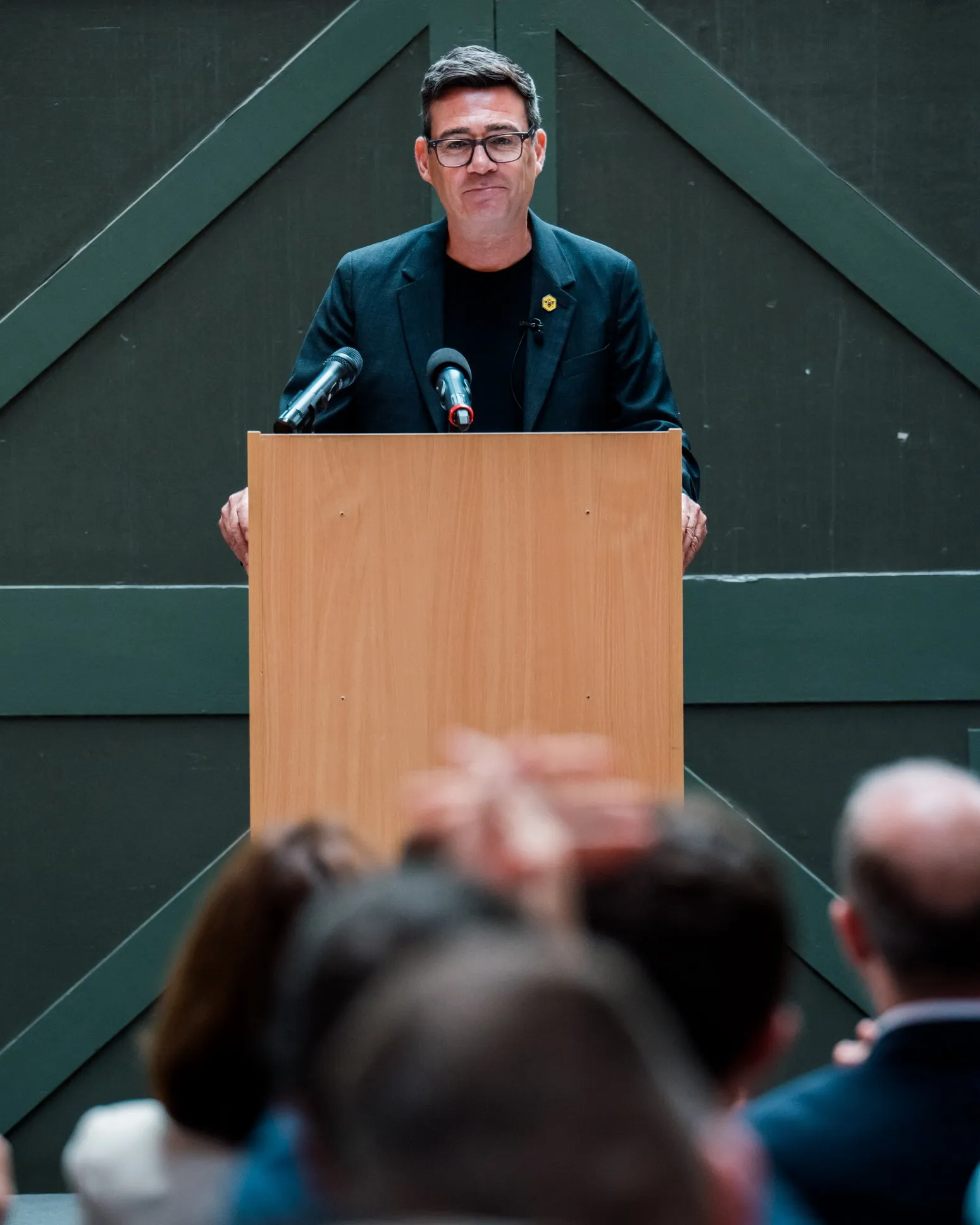
A plan presented to the UK's new Prime Minister, Andy Burnham, would extend Britain's nuclear umbrella to Ukraine and other non-NATO European states. In exchange, Britain would regain access to the EU single market for goods, The Telegraph reported on 9 August.
The proposal comes as European governments question whether they can rely on US protection and struggle to turn moral support for Ukraine into troops and weapons. Russia's invasions, despite the assurances Kyiv received from the US and the UK when it surrendered its nuclear arsenal under the Budapest memorandum, have also revived calls for nuclear-backed guarantees.
Former Conservative MP Nick Boles drafted the plan. He proposes a "European Confederation" that combines single-market access with NATO-style mutual defense commitments.
For Ukraine, it would provide protection modeled on NATO Articles 4 and 5 while Kyiv pursued full EU membership.
Ukraine would maintain a large army as Europe's bulwark against Russia and share defense technology with other members of the Confederation. Britain would raise defense spending to 3.5% of GDP, while both countries would gain full access to the EU's single market for goods.
Boles said Europe needed a new security model because neither US President Donald Trump nor a future US president could be guaranteed to "defend Europe as if it were Kansas."
Boles's plan is not Burnham government policy. Nevertheless, it has circulated among officials, including National Security Adviser Jonathan Powell, as London considers deeper cooperation with the EU.
Britain's support bumps against Europe's political limits
Prime Minister Burnham entered Downing Street as a firm supporter of Ukraine. He assured Ukrainian President Volodymyr Zelenskyy that British support remained unchanged and pledged to preserve aid levels.
Britain also co-leads with France the Coalition of the Willing, which plans to deploy forces in Ukraine after a ceasefire to deter another Russian attack.
The Coalition has brought together representatives of 40 countries. Still, members remain divided over how far to support Ukraine.
Britain and France have formally declared their intention to deploy forces after a potential ceasefire in Ukraine. Yet Poland offered logistical support but ruled out troop deployment, while Bulgaria has withdrawn from the Coalition. Europe has promised deterrence, but key deep-strike missiles may not arrive until 2029.
Boles's plan would pair Britain's nuclear deterrent with Ukraine's conventional military strength. Unlike the Coalition’s voluntary plans, Boles's proposed European Confederation would place its defense guarantees in a treaty. NATO would initially be responsible for carrying them out.
From surrendered weapons to a nuclear shield
Ukraine inherited the world's third-largest nuclear arsenal after the Soviet collapse, including about 1,900 strategic warheads.
Kyiv relinquished them under the 1994 Budapest Memorandum after receiving security assurances from Russia, Britain, and the US. Despite these promises, Russia invaded Ukraine in 2014 and launched its full-scale war in 2022.
Russia's invasions have revived calls among Ukrainian lawmakers for nuclear-backed security guarantees. Politician Roman Kostenko has called for guarantees that could include British and French nuclear retaliation in the event of another Russian attack.
Under Boles's proposal, Ukraine would not regain its own warheads. It would instead come under Britain's nuclear shield.


