

The pace at which Russian forces are occupying Ukrainian territory has fallen sharply since the start of 2026, while the scale of Russian losses has not, Radio Svoboda's Russian Service reports, citing data from the Ukrainian project DeepState, which tracks the front line.
DeepState's figures show Russia seized 450 to 550 square kilometers a month at the 2025 peak. The rate then declined steadily from December 2025 through July 2026: 445 square kilometers in December, 160 in April, and 27 in July. A comparable Russian project, Slivochny Kapriz, which by contrast credits the Russian army with any area where its personnel have been spotted—even without confirmed control—recorded a similar slowdown, from 550–600 square kilometers a month last year to 112 in June.
A shrinking prize in northern Donbas
At the end of last year, roughly 5,000 square kilometers remained under Ukrainian control in northern Donbas, including three "fortress" cities larger than Pokrovsk: Kostiantynivka, Kramatorsk, and Sloviansk. Even using Slivochny Kapriz's more generous estimate of the current pace, capturing that territory would take a year and a half.
Losses hold steady as gains shrink
Despite the slowdown, Ukrainian military estimates of Russian losses have not fallen and remain at roughly the level recorded in the second half of 2025. Both Ukraine's General Staff and its Ministry of Defense now publish official loss estimates. According to the General Staff, Russia lost nearly 164,000 people from February through June 2026—five months—an average of 32,800 a month. The Ministry of Defense's verified count for the same period was 157,000 killed and wounded, or 31,500 a month on average. The General Staff puts Russia's total losses since the start of the full-scale invasion at 1.4 million, a figure that includes killed, missing, wounded, and other losses, not only irrecoverable ones.
Western officials have offered comparable figures. UK intelligence chief Anne Keast-Butler said in May 2026 that the Russian army had lost 500,000 servicemen killed alone; at a ratio of two to three wounded per fatality, that implies total Russian losses of 1.5 to 2 million, according to British intelligence. US Secretary of State Marco Rubio estimated Russian losses at 7,000 soldiers a week roughly six months ago, a figure that broadly matches Ukrainian military estimates.
The cost of a square kilometer has tripled
The American Institute for the Study of War calculated in 2024 that Russia lost 125,800 people while capturing 2,356 square kilometers between September and November—53 losses per square kilometer. Radio Svoboda's own calculations, based on General Staff and DeepState data, put the 2025 figure at 85 losses per square kilometer. By the latest 2026 estimates, that figure has risen to 290—3.5 times the 2025 rate.
Drones make breakthroughs impossible, officials say
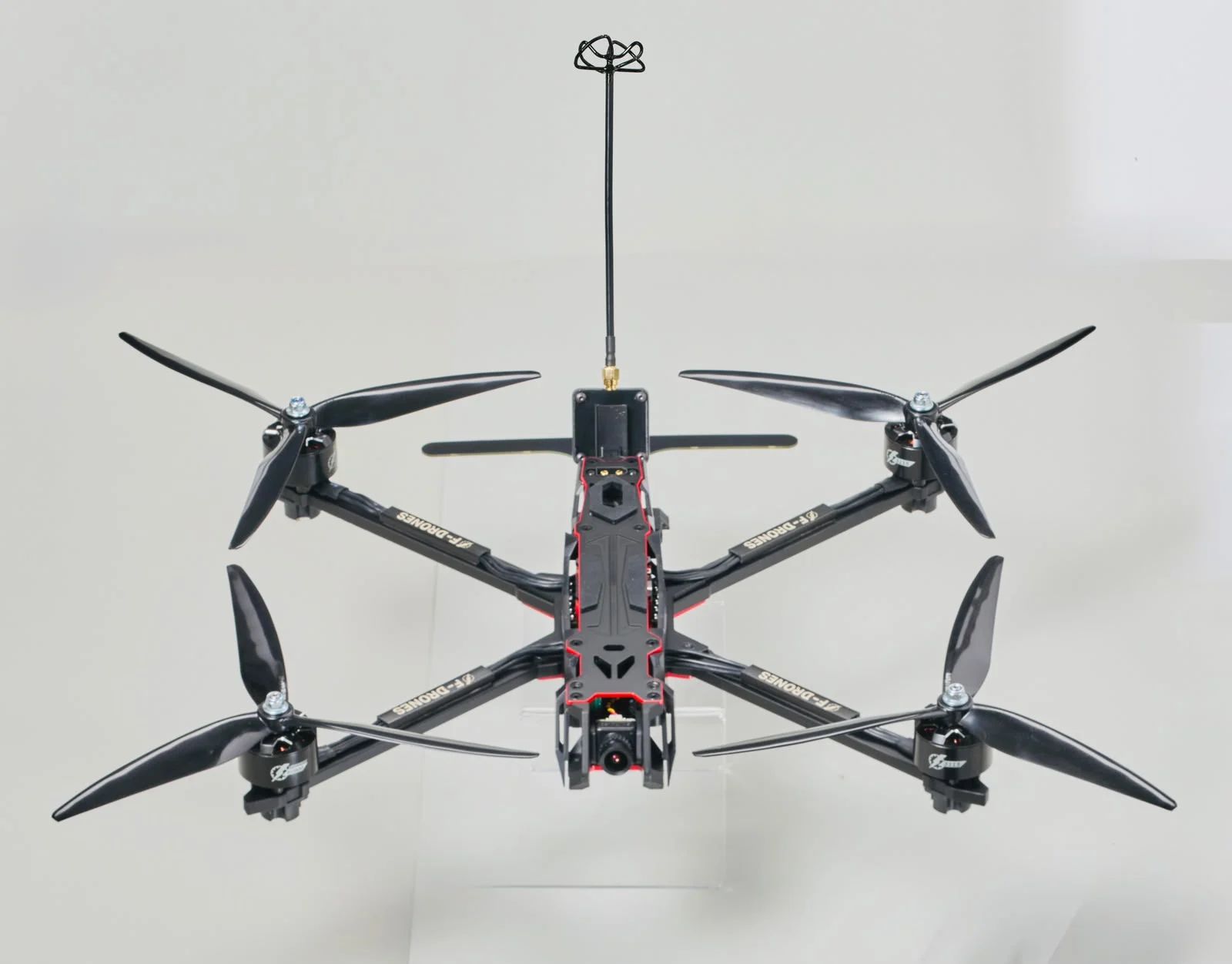
The slowdown is now widely attributed to Ukraine's growing advantage in drone warfare. CIA Director John Ratcliffe, citing US intelligence, said the average lifespan of a Russian recruit arriving at the front in Ukraine is 20 to 30 minutes. He said the Russian advance has slowed because Ukraine has made major gains in the use of drones and asymmetric warfare methods that are leveling the battlefield: "AI drones have become specialized and inexpensive killing machines."
Current Time, the Russian-language network run by Radio Svoboda, reports that the slow pace of both armies' advances today stems from the specific nature of this war: drones have made rapid breakthroughs impossible.
A Ukrainian drone operator, whose name Radio Svoboda withheld for security reasons, said the decline in the Russian advance stems from a collapse in the training level of Russian troops: "He's worse than he was a year ago. Actually, he's simply not there. They grabbed men from the garage, gave them a rifle, and said: 'Run!'"
The operator said Russian commanders now resort to any means necessary to force some forward movement: "In Kostiantynivka, they now drop supplies for the [infiltrated] soldiers a block away from where they're sitting, just so there's some kind of advance. It's absurd, but unfortunately, that's the reality." That tactic helps Russian forces advance, he said, but at a catastrophic cost: only one soldier in 15 survives.
Russian infiltration groups of two to six fighters cover 15 to 20 kilometers on foot to reach positions, carrying "everything that will help them survive," which makes them, in the operator's words, "the easiest possible target for us." He acknowledged that some Russian soldiers still slip through: "Recently, while we were destroying Russian equipment near one settlement, we missed some motorcyclists who are now hiding somewhere in the tree lines." Stopping the Russian advance entirely, he said, is simply not possible: "We're constantly adjusting our tactics, but so are they—though technology helps us, while for them, as usual, everything is done with an axe."
Kremlin prepares for a new mobilization wave
President Volodymyr Zelenskyy said recently that Russian leader Vladimir Putin is preparing to announce a new mobilization wave after Russia's State Duma elections in September, aiming to recruit 300,000 to 500,000 people. The Kremlin denies planning a mobilization, but the Institute for the Study of War says Russian authorities are taking steps consistent with preparations for a large-scale draft.
Analysts point to a law Putin signed in November 2025 allowing reservists to be sent into combat zones without a formal mobilization declaration. On 22 July, the State Duma passed in three readings a law expanding the pool of people with criminal records or under investigation who may sign military service contracts during mobilization and martial law. The day before, a draft amendment was published under which Russia's National Guard would revise its civil defense rules to explicitly reference mobilization and martial law, requiring advance protective measures for its employees, civilian staff, and their families "from dangers arising during mobilization, during martial law, in wartime," according to Meduza.
The Ukrainian drone operator said mobilization could increase the pace of the Russian advance: "You can't keep track of everyone."
Read also
-
Ukraine destroys record 76 Russian air-defense systems this month, losses analyst says Russia “will never be able to restore”
-
Asked if Ukraine would send troops to defend NATO, Zelenskyy offered something else: know-how to stop drones now reaching its neighbors
-
Combat shows speed alone can’t catch Russia’s jet-powered drones, despite eight Ukrainian makers’ assurances. So why can’t they stop them?


