

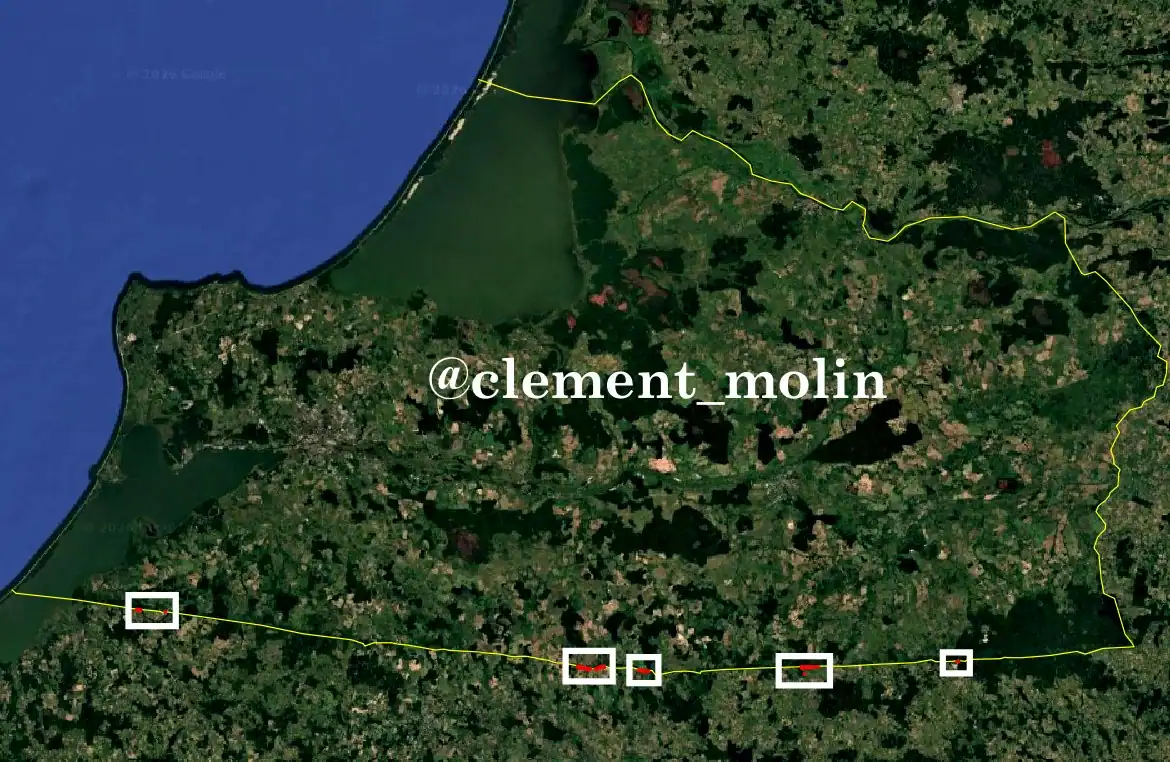
Poland and the three Baltic states have not built a continuous, defense-in-depth line of fortifications along their borders with Russia and Belarus, according to open-source intelligence (OSINT) analyst Clément Molin. He assessed Poland and the three Baltic states, while the Polish account Służby i Obywatel separately examined one fortification section near Poland’s border with Russia. The works mentioned in Molin’s review remain patchy and shallow, and he called Lithuania both the country most at risk and the least fortified.
What the satellites actually show
Molin wrote on X about Poland and the Baltic states, while the Polish account Służby i Obywatel argued separately about the placement of one Polish fortification section visible on Google Maps.
On Poland's 210-kilometer border with Kaliningrad, Russia's heavily militarized exclave, defenses appear in only four zones, according to Molin. The longest runs about two kilometers. The visible fortifications include a discontinuous anti-tank ditch and one or two rows of dragon's teeth — concrete anti-tank blocks. Neither forms a continuous line.
Poland prepares €2 billion anti-drone barrier to deter future Russian UAV incursions
The ditches break off wherever they reach a forest line. Molin wrote that bunkers and trenches sit in open fields, most key roads stay unprepared, and little barbed wire is visible. The researcher said he could see only anti-migrant barriers in open areas along the Belarusian border, with little additional reinforcement underway.
Molin's sweep also rated Finland's groundwork as strong despite its recent entry into NATO, while Norway, he wrote, offered "nothing particular to see."
Trenches at the fence line
Near the Polish village of Rutka, trenches were dug just 300 meters from the border fence. Militarnyi wrote that positions this close would remain under observation and drone control, while Służby i Obywatel said a defending unit would face concentrated fire at the outset of fighting.
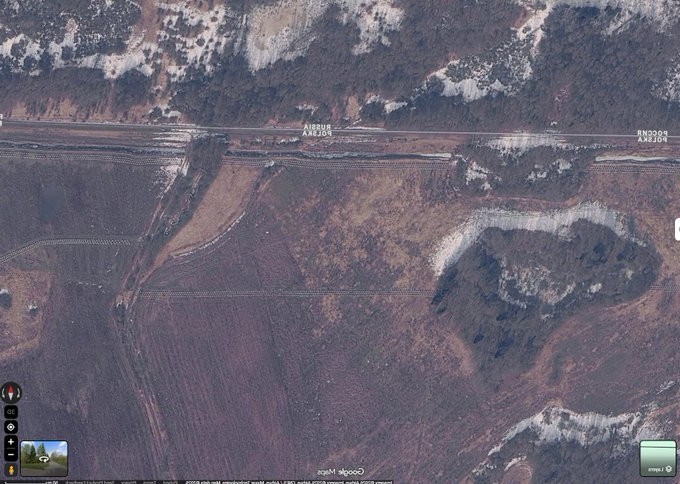
Służby i Obywatel compared the works to the historical Mława Position, built five to 15 kilometers back from the frontier, which gave troops time to occupy defenses once an invasion started. They also noted that such border barriers can be bypassed or flanked, while Militarnyi wrote that their placement does not always channel enemy movement. Służby i Obywatel questioned whether building so tight to the fence makes sense, arguing that positions a few kilometers back on better terrain would make Russia deploy its forces and reveal its intent before attacking.
The Baltic states
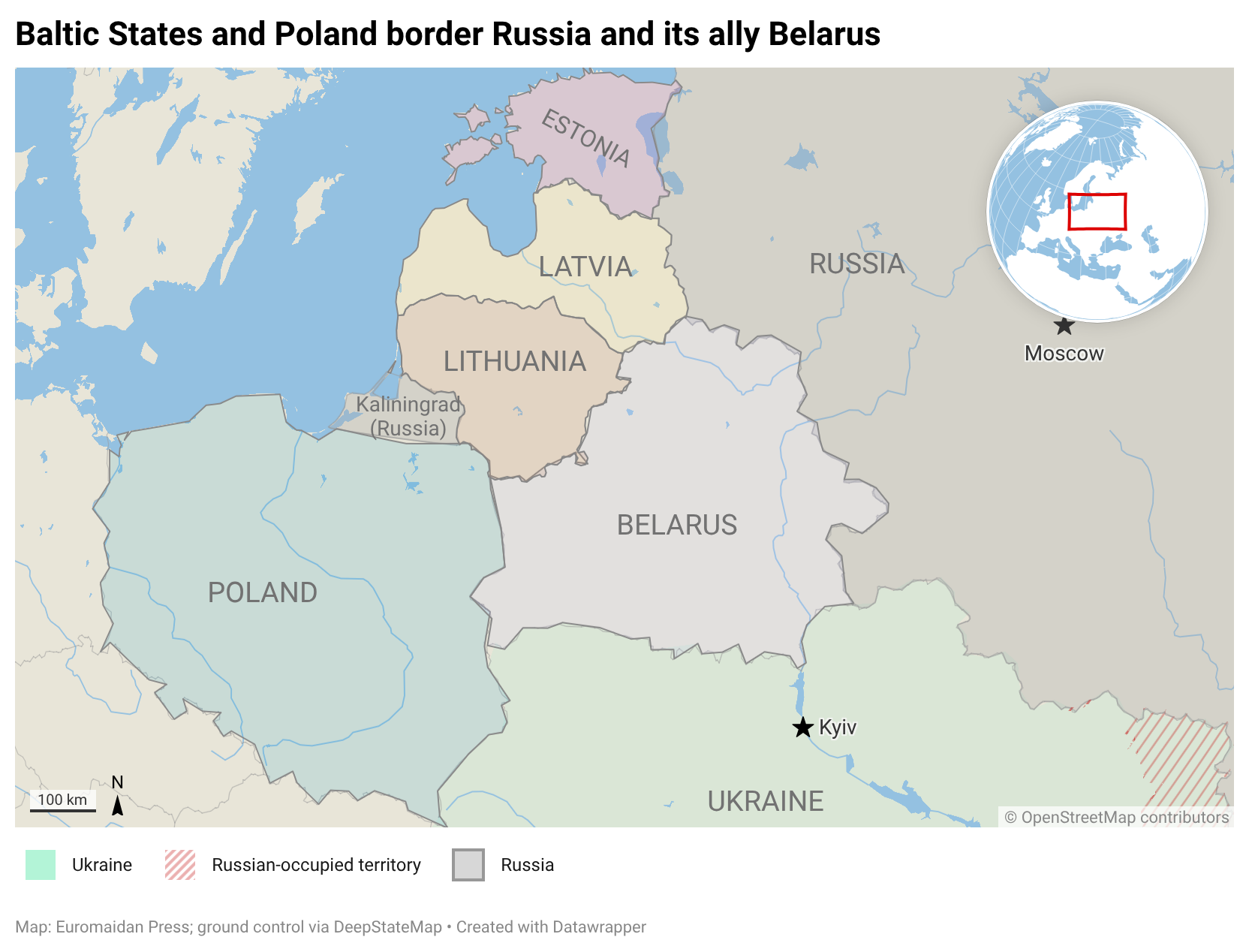
The Suwałki Gap is a 65-km strip along the Poland–Lithuania border between Kaliningrad and Belarus—NATO's only land link to the Baltic states, whose loss would cut them off by land, leaving only sea and air routes exposed to Russian missiles.
Molin called Lithuania the country most at risk because it borders Kaliningrad and Belarus and sits beside the Suwałki Gap. It has fortified the least. Despite an official roadmap, Molin said he found no prepared defenses and no coverage of key roads on the imagery. The country is, however, building road infrastructure to reach remote areas along its eastern border.

Lithuania and Finland to start domestic landmine production for themselves and Ukraine amid Russian threat
Estonia’s current fortification level as very low and pointed to the persistent threat around Narva, according to Molin. Direct construction work has not begun.
Latvia is further along than either neighbor. Crews have started installing dragon's teeth and clearing a strip to create a defensive line, helped by extensive border forests and greater strategic depth, though the works there remain fragmentary too.

Estonia switches on first border sensors to detect drones as Baltic incursions mount
The "Eastern Shield"
Poland began building its Eastern Shield fortification system on the borders with Russia and Belarus in October 2024. The system is meant to cover nearly 700 kilometers, with 400 to 500 kilometers protected by various fortification types and the rest by natural barriers. The plan calls for a coherent network of engineering obstacles and storage sites on designated land. The government intends to invest about €2.3 billion, with completion set for 2028.
From October 2024 to mid-July 2026, Poland reportedly built 61 kilometers of defensive lines under the program. Of that, linear fortifications account for only about 10 kilometers.


