

Russia is buying back gasoline refined from its own crude oil in India, shipping it 14,000 kilometers home and paying a premium for it, because Ukrainian strikes have knocked out more of its refineries than it can repair. An oil superpower is importing fuel made from its own oil.
The trade loses money, so the Russian state is now covering the gap. Since 1 June, a signed law has paid importers a subsidy tied to the price of gasoline on the Indian market.
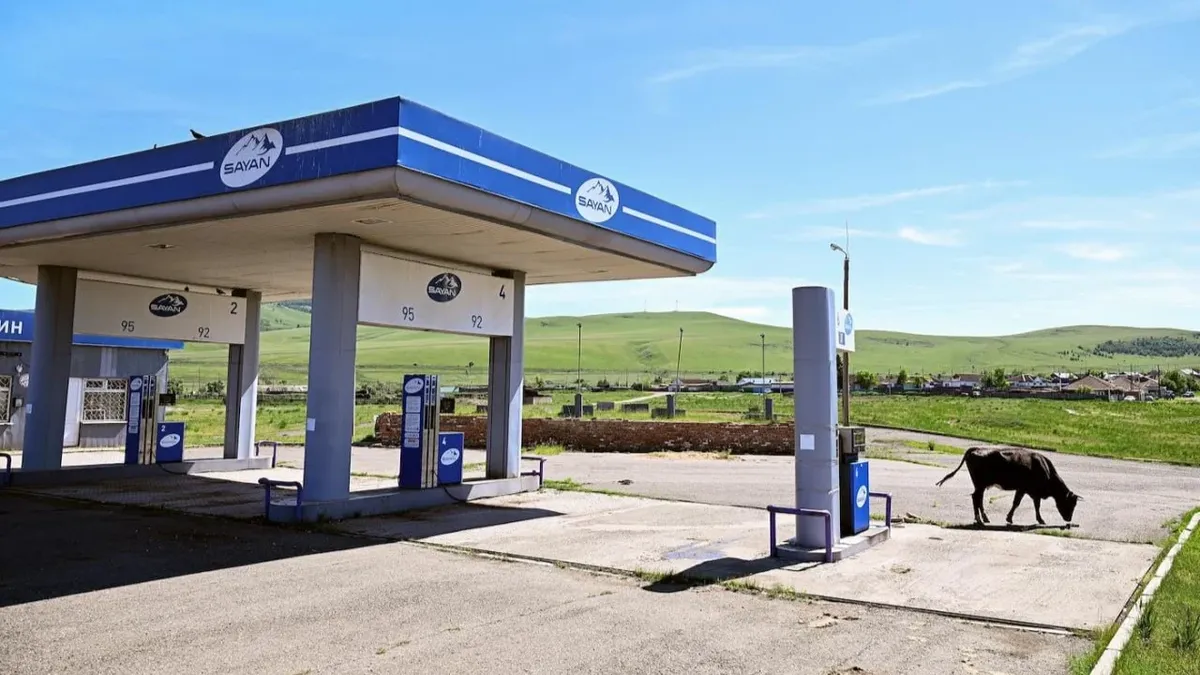
Rationing now covers more than 55 of Russia’s regions, with odd-and-even-day sales, purchase caps, and price spikes.
The strikes have driven Russian refining to a 21-year low, and the shortage is no longer confined to a few regions. Rationing now covers more than 55 of Russia’s regions, with odd-and-even-day sales, purchase caps, and price spikes reaching areas far from any front line.
In the southern grain belt, farmers have been pushed onto engine-wrecking lower-grade fuel and told to stockpile diesel. By early July, the harvest was running three times behind last year’s pace.
Importing Indian fuel refined from Russian crude makes almost no economic sense, KSE Institute sanctions lead Yuliia Pavytska told Ekonomichna Pravda; she called it a costly forced measure to prevent bigger losses.

A sanctioned Russian refinery—in India
The plant at the center of it, Nayara Energy’s refinery at Vadinar, is Indian on paper only. Rosneft and a Russian investment consortium own more than 98% of the operator between them.
India’s oil minister Hardeep Singh Puri said Indian firms do not sell fuel to Russia directly.
EU sanctions in July 2025 drove away non-Russian crude suppliers, so Nayara switched to Russian oil and now buys and sells through traders—which is how its gasoline reaches Russia without an official India-to-Russia sale.
India’s oil minister Hardeep Singh Puri said Indian firms do not sell fuel to Russia directly, while conceding that buyers could route Indian-origin fuel through traders.
The first cargo moved like shadow-fleet oil in reverse. The tanker Agni loaded at Vadinar on 20 June under a manifest for Fujairah, UAE, then bypassed the port and transited the Red Sea and the Suez Canal.
Once in the Mediterranean, it handed the cargo to a second tanker, with both vessels’ transponders switched off. Ship-trackers expect the fuel at Russia’s Vitino port around 26 July.
The pressure should reach the shipowners, managers, and insurers behind the vessels.
Selling the fuel breaks no sanction—nothing bars India-Russia petroleum trade—yet the sanctioned tankers still sailing point to an enforcement gap more than a gap in the rules, Pavytska told Ekonomichna Pravda; the pressure, she argued, should reach the shipowners, managers, and insurers behind the vessels, not the vessels alone.
Trending Now
The budget pays the difference
Russian gasoline is cheaper at home than abroad—domestic wholesale runs about a third below what the fuel is worth on the export market, so imported fuel lands well above what drivers pay at the pump. The reworked “damper”—the subsidy Russia uses to hold pump prices down—now reimburses importers for that gap.
Even the full plan—up to 400,000 tonnes a month from India, Belarus, and Kazakhstan combined—would meet only about a third of the monthly gap.
Ukraine’s Ekonomichna Pravda estimates that the first cargo alone will cost Russia 5.4–6.1 billion rubles ($69–78 million), with the budget covering more than half of that.
The first cargo covers little more than a day of Russia’s shortfall, and even the full plan—up to 400,000 tonnes a month from India, Belarus, and Kazakhstan combined—would meet only about a third of the monthly gap. Rosneft, Gazprom Neft, and Lukoil have asked Indian refiners for more, but have been refused by three state-owned firms.
The Russian market is not built for world prices, Serhii Kuyun, director of the consulting group A-95, told Ekonomichna Pravda: the state must either keep draining the budget with subsidies or let prices rise and take the political hit.
Moscow has also banned exports of gasoline, diesel, and jet fuel, allowed producers to sell lower-grade fuel, and floated the idea of reviving Euro-2 gasoline, a grade banned more than a decade ago. Whether any of it holds depends on the drones.
Serhii Vakulenko of the Carnegie Russia Eurasia Center has cast Russia’s available refining capacity as the product of a running race between Ukrainian strikes and Russian repair crews—one now tilting toward Kyiv. If the plants come back and the tankers keep arriving, Russia buys itself calm by late summer. If the strikes keep landing, the time bought with Indian gasoline runs out fast.


