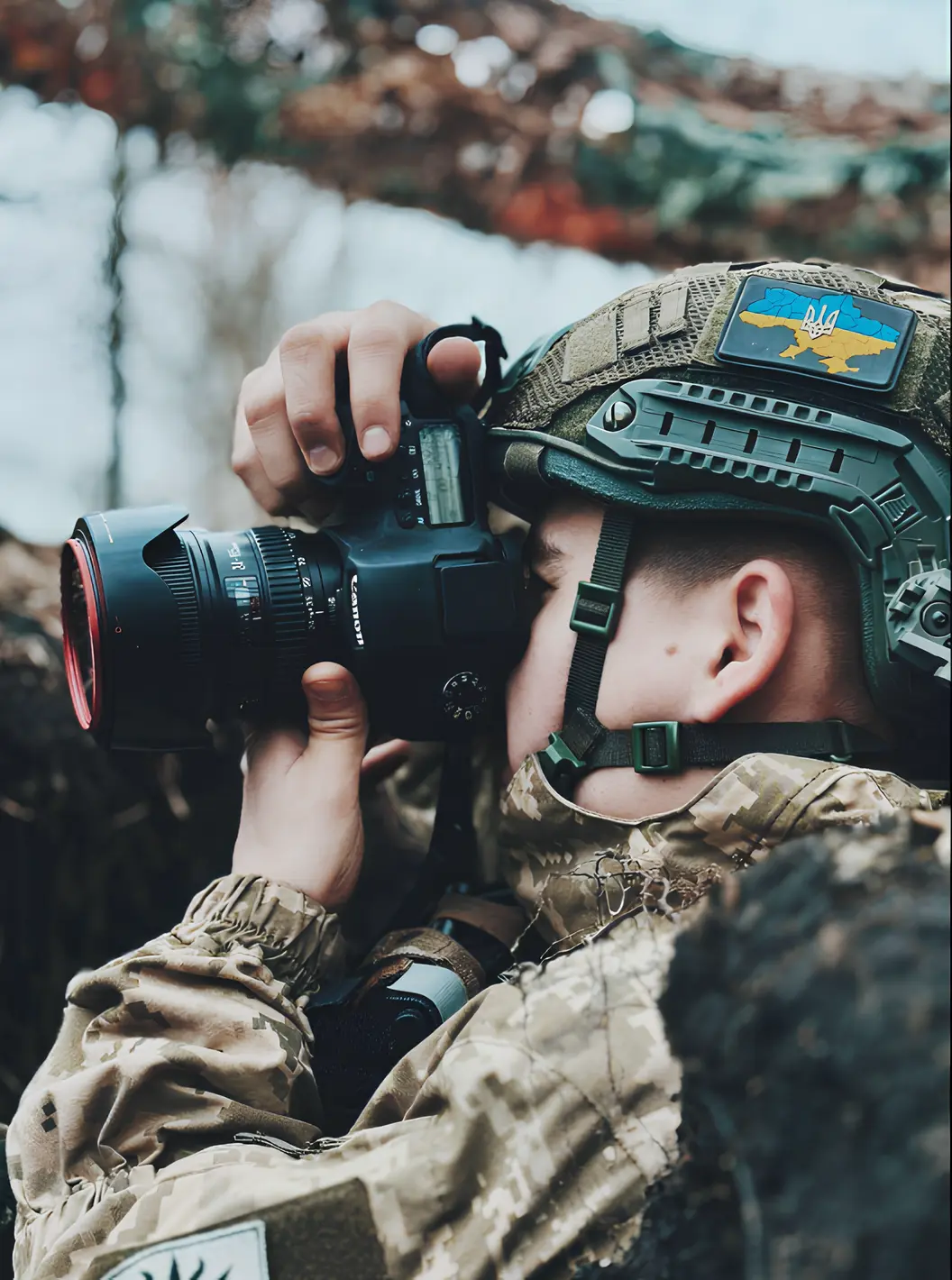
Since Russia's full-scale invasion of Ukraine in February 2022, over 1,600 journalists have been accredited to cover the conflict, according to the Ukrainian government. Staying connected in the field is not a comfort — it is a matter of safety, editorial accuracy, and sometimes survival. For journalists and NGO workers operating in Eastern Europe's active conflict zones, connectivity has become a core operational concern.
Why eSIM UK іs a strategic tool for field journalists
Most international journalists and aid workers covering Eastern Europe are based in or transiting through London. Their workflow requires maintaining a British number for editorial contacts, source communication, and coordination with headquarters, while simultaneously needing a functional local data connection in Ukraine, Moldova, or Poland.
Physical SIM swaps are slow, error-prone, and impractical under pressure. An eSIM UK solves this: it allows a journalist to hold their UK number active while switching to local data plans without touching hardware.
Key advantages in the field:
- No physical SIM to lose or damage in difficult conditions
- Instant activation, even remotely before deployment
- Compatible with most modern flagship devices (iPhone XS and above, Samsung Galaxy S20 and above)
- Can be pre-loaded before entering a restricted area
How journalists manage multiple connectivity layers in Eastern Europe
Experienced field journalists don't rely on a single connection. They operate with layered redundancy:
Layer 1: Satellite communication. Starlink terminals have become common in Ukrainian frontline regions since 2022. They provide base connectivity when ground infrastructure is damaged.
Layer 2: Local SIM or eSIM. Kyivstar and Vodafone Ukraine remain the dominant operators in government-controlled territory. Signal in major cities like Kyiv, Lviv, and Odesa is generally stable.
Layer 3: UK or home-country eSIM. Maintaining an active UK data line ensures fallback access and keeps editorial communication on a single, known number. Providers offers unlimited data eSIM plans for the UK, pre-activated before departure, which is exactly the kind of friction-free setup field professionals need.
Layer 4: VPN. Mandatory in several Eastern European countries for security and source protection.
What aid workers and NGO staff prioritise differently
Journalists prioritise transmission speed and source confidentiality. Aid workers from organisations like MSF, UNHCR, or the Red Cross prioritise reliability and cost control over extended deployments.
For NGO staff rotating in and out of Eastern Europe, with Poland, Romania, and Moldova serving as coordination hubs, an eSIM compatible with multiple coverage zones reduces administrative overhead and avoids roaming charges on organisational budgets.
A data plan covering the UK plus key transit countries eliminates the need to manage separate SIM logistics at each border crossing.
Practical checklist before deployment
Before entering a conflict-adjacent zone, connectivity preparation should include:
- Verify your device is eSIM-compatible and carrier-unlocked
- Download and activate your eSIM before departure (activation requires internet access)
- Save your QR code and eSIM details offline as backup
- Check coverage maps for the specific region, not just the country
- Inform your editorial desk or field coordinator of your active numbers
The bigger picture: Connectivity as a press freedom issue
The Committee to Protect Journalists (CPJ) documented 67 journalist imprisonments linked to coverage of Eastern European conflicts in 2023. Connectivity failures are not just technical inconveniences. They contribute to information blackouts, delayed safety check-ins, and compromised source networks.
Governments and editorial safety organisations, including Reporters Without Borders (RSF), now include connectivity planning in hostile environment training. The eSIM, once a traveller convenience, has become part of the professional toolkit.
FAQ
Can I use a UK eSIM in Ukraine?
A UK eSIM provides UK data coverage. In Ukraine, you need a separate local eSIM or physical SIM. Some multi-region plans include roaming in Ukraine, but check coverage before relying on it.
Is eSIM safe to use in conflict zones?
eSIM has no physical vulnerabilities compared to a standard SIM. Digital security (encryption, VPN, device lock) remains the journalist's responsibility regardless of SIM type.
Which devices support eSIM in the UK?
All iPhones from XS onwards, Google Pixel 3 and above, and most Samsung Galaxy flagships from S20 support eSIM in the UK.