

Ukraine has again promised to sell two of its state-owned banks by the end of this year. It has been making that promise—and breaking it—for a decade. The obstacle is no longer political will but price. The state wants top money for its big banks; the foreign buyers actually turning up will pay little, and only for small ones—never the state giants the sale is really about.
Sense Bank and Ukrgasbank have a “good chance” of being sold before the end of 2026.
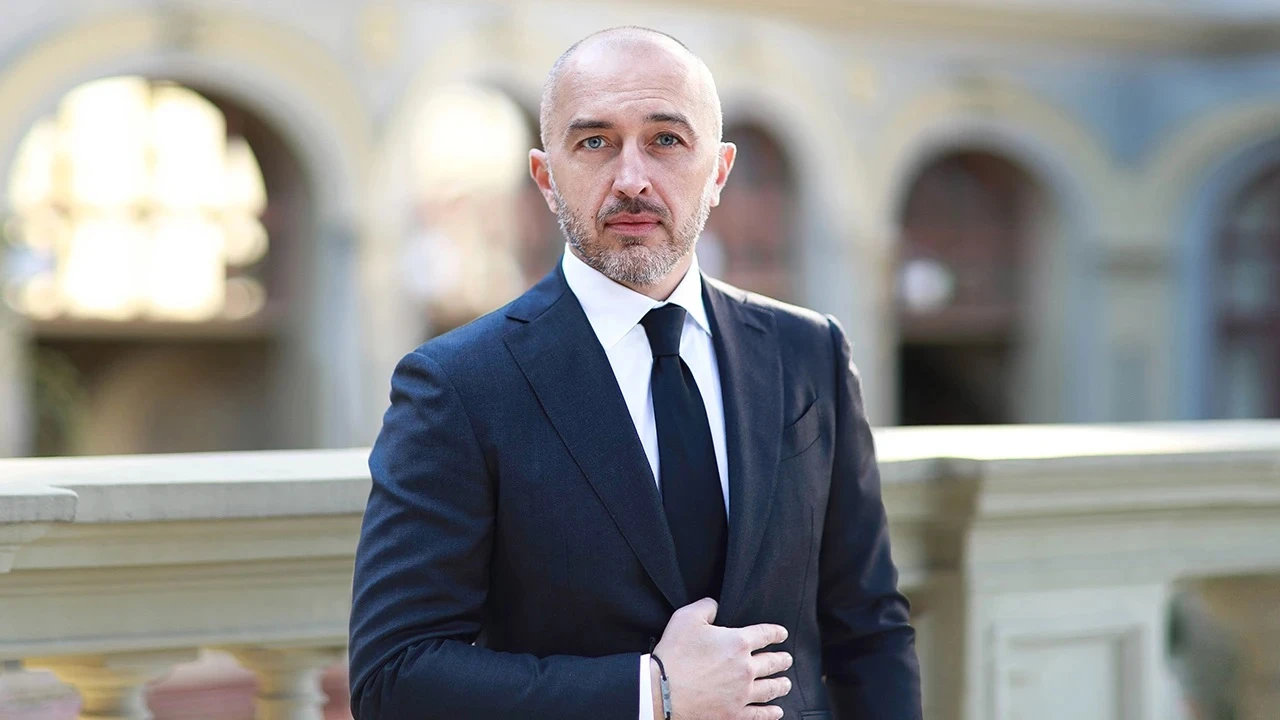
The latest promise came on 24 June, when the governor of the National Bank of Ukraine (NBU), Andrii Pyshnyi, told the Kyiv Independent that Sense Bank and Ukrgasbank have a “good chance” of being sold before the end of 2026, with an “ambitious strategy” for state banks due by the end of the month.
He said it on the sidelines of the Ukraine Recovery Conference in Gdańsk—the event Ukraine holds to draw the very foreign investors who have so far declined to buy its banks.
The sales are not optional. They are written into Ukraine’s memorandum with the IMF, which obliges Kyiv to shrink the state’s grip on a banking sector it controls more than half of today, and they sit inside the wider reform agenda Ukraine must deliver to join the EU.
A 2016 strategy set deadlines to bring in the World Bank’s investment arm and the EBRD as shareholders by 2020; by 2021, those had all been missed.
That makes the stall a test of something Western taxpayers have a stake in: whether the conditions attached to billions in aid are being met, and whether private capital will follow that aid into Ukraine.
And the plan is not new. A 2016 strategy set deadlines to bring in the World Bank’s investment arm and the EBRD as shareholders by 2020; by 2021, those had all been missed, and the goal of cutting the state’s share to a quarter had been pushed out to 2025. That year has passed, too, and the banks remain in state hands.
The price nobody agrees on
The official line is that buyers are waiting. NBU deputy governor Dmytro Oliynyk said this month that foreign investor interest is “already emerging,” that one large European banking group has hired an adviser to prepare a bid, and that strategic investors are expected to be the main buyers, each committing €200–300 million ($228–342 million).
One side wants one and a half times book value. The other is offering half of it.
Officials have even floated listing PrivatBank shares on the Ukrainian or Polish exchanges, at a price they expect to reach one and a half times book value—roughly half again as much as the banks are worth on paper.
The professionals are less sure. Serhii Budkin of FinPoint, who helped sell Aval Bank for $1 billion two decades ago, reckons even banks in EU countries change hands at half their capital, and that expecting more for a Ukrainian bank in a country at war is unrealistic unless the state sweetens the deal—by letting a foreign buyer send its profits home, for instance. One side wants one and a half times book value. The other is offering half of it.

Footholds, not flagships
Foreign money has not stayed away, but none of it is heading for the giants. Two European fintechs bought into Ukrainian banking this year through failed lenders picked up cheaply for the license: Estonia’s Iute, which capped its bet at €15 million ($17.5 million), came in via the collapsed RwS Bank, and Poland’s ZEN.com, with €20 million ($22 million) to invest, won the auction for insolvent PINbank.

50% profit tax, no dividends, no new licenses—Eastern European fintechs are buying Ukrainian banks anyway
Even the incumbents stay small: France’s Crédit Agricole, in Ukraine since 1993, is expanding not by bidding for a state bank but by bolting on Bank Lviv, a small regional lender in the west.
A state bank is worth more to the state, which keeps both the tax and the dividend.
Trending Now
The market they are all buying into punishes ownership—bank profits are taxed at 50% this year, and private banks cannot pay dividends to their owners at all. A state bank is worth more to the state, which keeps both the tax and the dividend, than to any private buyer.
Why the state will not let go
There is a reason the seller keeps quoting a high price. PrivatBank alone generated 39% of all Ukrainian banking profits in 2024, and state banks together accounted for 65% of the sector’s total profits.
In the same year, they transferred more than UAH 67 billion ($1.64 billion) to the budget through taxes and dividends—money that, in wartime, flows straight back out as defense spending. Selling the banks means handing a private buyer a revenue stream the state now spends on the war.
The Finance Ministry had wanted to delay any sale until martial law ended.
The reluctance is not new. Before the Financial Stability Council cleared the path last August, sources at Ukraine’s largest state bank told the Kyiv Post the Finance Ministry had wanted to delay any sale until martial law ended.
The wartime nationalizations worked. They steadied the sector and made it profitable. That success is the problem: a state that has learned to run banks at a profit, mid-war, partly to fund that war, is not a motivated seller.
The one bank that might actually move
One counterweight applies specifically to Sense Bank. The former Alfa-Bank Ukraine became state-owned in 2023 after Ukraine sanctioned its Russian owners, among them the Ukrainian-born oligarch Mikhail Fridman, who are now pursuing $1 billion in arbitration against Kyiv.
An open-tender sale would set a market price, and a market price undercuts that claim, while delay leaves Ukraine’s legal position weaker. For this one bank, the state has a reason to sell that owes nothing to the IMF—which may be why Sense, not the more profitable giants, leads the queue.
The six people appointed to Sense Bank’s supervisory board on 18 June 2025 had been named, to the seat, in leaked recordings from the Midas corruption case.
Even that incentive does not close the price gap by December—and Sense carries a problem money cannot fix. Ekonomichna Pravda reported that the six people appointed to Sense Bank’s supervisory board on 18 June 2025 had been named, to the seat, in leaked recordings from the Midas corruption case some 40 days earlier—a conversation in which figures in the case discussed shaping the make-up of a board that is supposed to be independent.

The Mindich tapes: anti-graft recordings expose Zelenskyy associate’s $100M nuclear operator protection racket
Pyshnyi’s strategy is due any day. Whatever it sets out, the buyer and the seller are still pricing two different banks—and the deadline they are pricing toward is the same one Ukraine has been chasing since 2016.


