


The Polish-Ukrainian memory war is no longer in the past. In 2026, it has spilled into the streets of Poland and its chambers of power.
Four years ago, Poland and Ukraine’s relationship looked nothing like this. In February 2022, Poles met Ukrainian refugees at the border with food, beds, and other vital supplies; within months, Poland had taken in 1.6 million refugees, provided 318 tanks to Kyiv, and supplied Western military aid to Ukraine’s defense.
In a March 2022 poll, 94% of Poles backed taking in Ukrainian refugees; by early 2026, the figure had fallen to 48%, with 46% opposed.
The opinion reversal has turned violent. On a Warsaw bridge in May 2026, a 16-year-old Ukrainian refugee named Artem had his skull fractured. He had fled Russian missiles in Zaporizhzhia, only to be assaulted abroad.
Weeks later, Lublin's city hall took the Ukrainian flag down. In Kielce, a Law and Justice (PiS)-dominated council canceled a bus donation to its Ukrainian sister city over a street named after Ukrainian nationalist Stepan Bandera. Pro-Ukrainian Polish activists raised the funds anyway.
These incidents come as relations strain over the Zelenskyy administration's decision to commemorate the Ukrainian Insurgent Army (UPA), an armed group that fought Nazi Germany and the Soviet Union. Poland holds the UPA responsible for killing up to 100,000 ethnic Poles in Volhynia and Eastern Galicia between 1943 and 1945, killings that its parliament has declared genocide.
In Ukraine, the UPA is revered for resisting Soviet occupation into the 1950s; in Poland, the same fighters are remembered for massacring Poles.
On 26 May 2026, Volodymyr Zelenskyy signed Decree 440/2026 granting a special forces unit the honorary title "Heroes of the UPA." On 19 June, Polish President Karol Nawrocki responded by stripping Zelenskyy of the Order of the White Eagle, Poland's highest state honor. The next day, Zelenskyy returned it by post, and three former Ukrainian presidents renounced their own White Eagles in protest.
The recent memory conflict is not an aberration, nor proof of some ancient hostility between Poles and Ukrainians. It is a postponed reckoning breaking open when Kyiv and Warsaw can least afford to reopen the bloodiest parts of their shared past, even as nationalist politicians on both sides use it to their advantage.
The history behind the Polish-Ukrainian memory war
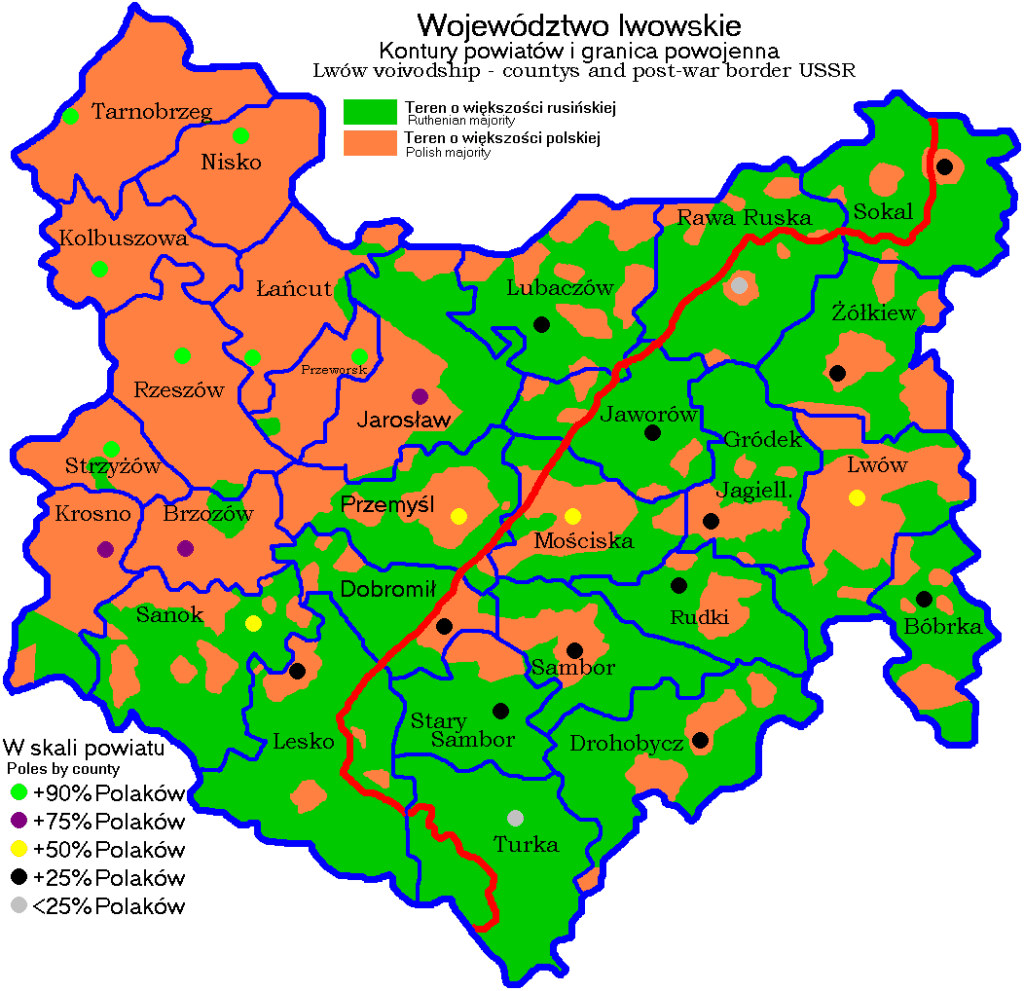
The conflict stems from a confluence of historical trends. For generations, Polish nobles ruled Galicia and Volhynia (today’s Western Ukraine and Southeastern Poland). Most Ukrainians worked the land as peasants.
As rival nationalisms sharpened through the 19th and early 20th centuries, that hierarchy turned into open antagonism. In 1930, after rising attacks from Ukrainian nationalist groups, Warsaw launched the Pacification of Galicia—collective reprisals, mass arrests, and the closure of Ukrainian organizations. Polish nationalist narratives often elide this state repression.
World War II turned rising antagonisms into mass killing. Between 1943 and 1945, the UPA killed and expelled those it saw as standing in the way of an independent, ethnically homogeneous Ukrainian state. The victims were mostly Poles, but also Jews, Czechs, and Ukrainians who sheltered them.

In reprisal, members of the Polish Home Army — which made up the majority of Polish resistance fighters to the Nazis — killed Ukrainians, with hundreds dying at Sahryń in March 1944.
Ukrainian scholar Tamara Zlobina did not minimize the massacres, calling the UPA's killing of tens of thousands of Polish civilians "a crime and a tragedy, regardless of what the figures are." Her objection was the hypocrisy: Poland commemorates Polish resistance fighters who killed Ukrainian civilians as freedom fighters, while treating their Ukrainian counterparts as something morally reprehensible.
The USSR's grip cooled the dispute for decades, with elites in both nations finding themselves on the same side of the Cold War.
After communism fell, the wounds reopened. In 2016, the Polish parliament declared Volhynia a genocide, and Kyiv answered with a moratorium on exhuming Polish remains.
A thaw came only in late 2024, when a deal lifted the ban.
Why the dispute now draws blood
The question, then, is not simply why Ukraine honors the UPA. It is why this dispute now draws blood. Part of the answer is that the reckoning was deferred rather than resolved. For years, Polish journalist Piotr Malinowski told Euromaidan Press, Warsaw's instinct was to avoid the hardest parts of the shared past and wait for the war to end. "However, what is repressed eventually returns," he said.
Smaller grievances piled up and gave nationalists on both sides, but particularly in Poland, useful material. In Malinowski's reading, Nawrocki "is not a reason; he's a result," while Zelenskyy's decree became the decision that "sparked the present wave of hysteria."

Polish society's reaction to the UPA decree
The uniformly negative reaction of Poland’s political class showed how deep a nerve the decree struck. Prime Minister Donald Tusk called it "disturbing," saying the move "delights Putin and shocks our allies." Bartosz Cichocki, Poland's wartime ambassador to Kyiv, returned his Ukrainian Order of Merit, and Solidarity icon Lech Wałęsa removed the Ukrainian flag pin from his lapel—the escalation that ended, on 19 June, in the revoked White Eagle.
The force of the elite backlash is striking because better-educated Poles have usually viewed Ukrainians more favorably, noted Malinowski.
The Mieroszewski Center's 2025 poll of Poles’ attitudes toward Ukraine bears this out: 49% of Poles with higher education viewed Ukrainians positively, against 30% of those with primary or vocational education.

How the war rewired Ukrainian memory
Russia's initial invasion of Ukraine in 2014 flipped Ukrainian opinion on the UPA. In 2013, 22% of Ukrainians viewed the UPA positively, against 42% negatively; by September 2022, the numbers had reversed to 43% favorable, 8% unfavorable, according to a Kyiv International Institute of Sociology (KIIS) poll.
The UPA, long "the most controversial and divisive issue within Ukrainian national memory," Ukrainian historian Yaroslav Hrytsak told the Spectator, became after 2022 "a symbol of anti-Russian resistance."
American historian Timothy Snyder, in a recent interview with Newsweek Poland, called Zelenskyy’s decree a mistake but warned that Poland's fixation on grievance only benefits Moscow if it causes Warsaw and Kyiv to stop viewing Russia as the two capitals’ main strategic threat.

From open arms to closed borders
Trending Now
In the first months of Russia’s full-scale invasion, solidarity, not grievance, defined Poland’s attitude toward Ukraine. Seeing itself as a potential frontline state, Poland understood Ukraine’s defense as tied to its own survival.
Nevertheless, the first serious rupture soon appeared. On 15 November 2022, a Ukrainian missile, fired against a Russian airstrike, veered across the border and killed two men at a grain facility in the village of Przewodów. Zelenskyy disputed it—"I have no doubt that it was not our missile", even as Biden, NATO, and a later Polish investigation concluded it was Ukrainian. Kyiv never acknowledged the deaths or apologized.
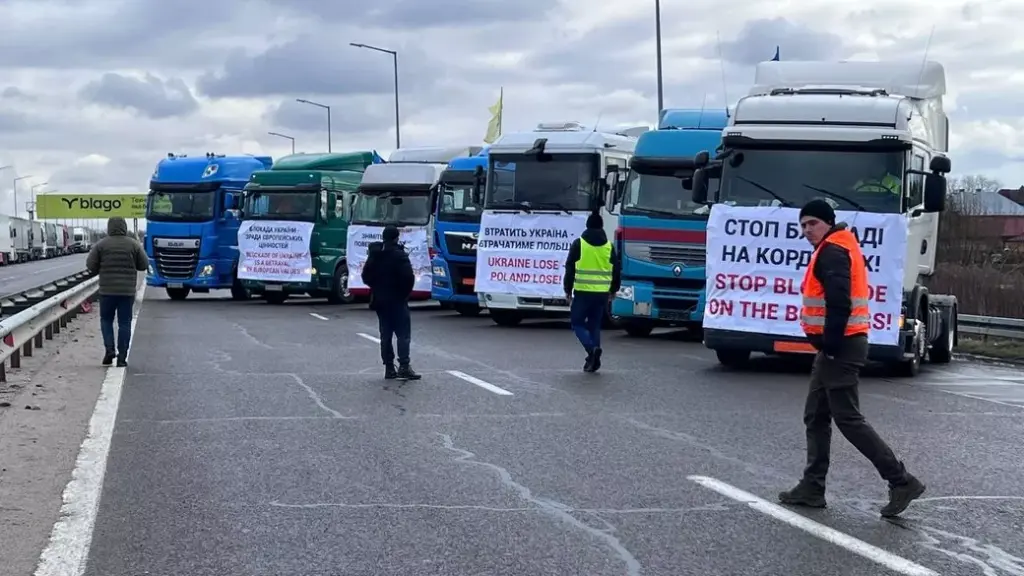
Cracks deepened the next spring. In April 2023, Polish farmers began blocking the border after duty-free Ukrainian grain depressed prices; by November, over 1,000 trucks were stuck at the frontier, according to a CSIS analysis.
Polish nationalists began using past grievances to garner votes: in its 2023 platform, the far-right Konfederacja placed historical policy at the center of relations with Kyiv, calling a Polish-Ukrainian alliance a "pipe dream."
But by 2026, politicians who peddle historical grievance are no longer confined to the margins. Before becoming president, Nawrocki led Poland's state memory body, the Institute of National Remembrance (IPN), from 2021 to 2025, a period in which critics accused him of advancing nationalist narratives.
The IPN investigates historical crimes committed against Poles from 1917 through the communist period. However, the organization also serves as Poland's main institutional vehicle for its memory politics.
After Poland's parliament declared Volhynia a genocide in 2016, the IPN amended its mandate in 2018 to require documenting crimes committed by “Ukrainian nationalists.”
When talking to Euromaidan Press, Polish journalist Jerzy Wójcik, co-founder of the Polish-Ukrainian magazine Sestry.eu and a former Gazeta Wyborcza deputy editor-in-chief, said the IPN now acts less as an investigator of history than "a mouthpiece for the far right."
Nawrocki ran on cutting social support for refugees. After he vetoed a broader extension that September, a compromise law tied benefits to employment. By early 2026, Polish opposition to accepting Ukrainian refugees had reached its highest level since the invasion began: 48% in favor, 46% opposed.
The violent results of the Polish-Ukrainian memory conflict
For Polish supporters of Ukraine, the biggest danger is not the argument over history itself. It is what happens when rhetoric about Bandera, Volhynia, and the UPA spills into daily life and turns ordinary Ukrainians in Poland into targets. Wójcik told Euromaidan Press that the danger is structural.
"The risk starts when 'Banderite' stops describing a man who died in 1959, and starts describing a random nineteen-year-old." — Wójcik
The evidence accumulates. Polish branches of the Drunken Cherry, a Ukrainian bar chain, have been tagged with signage branding them "zones infected with Banderism." In September 2025, Polish teenagers lured a 23-year-old Ukrainian man in Wrocław to a fake date, beat him, shaved his head, and painted Nazi symbols on his face, according to a Warsaw-based outlet.
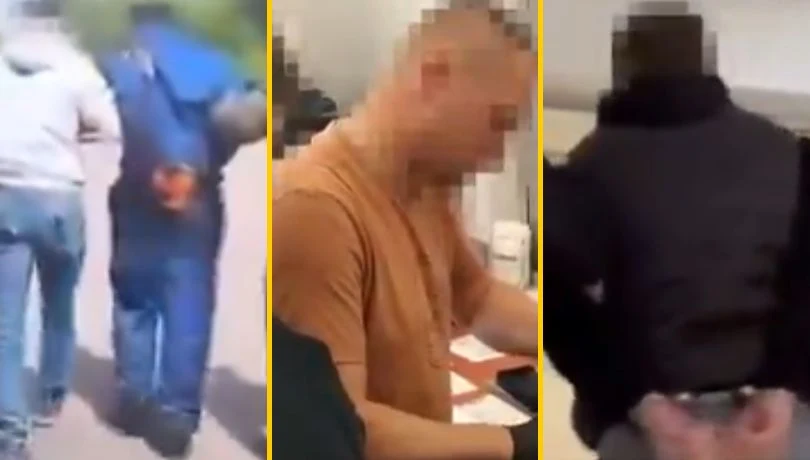
In May 2026, the attack on Artem on Warsaw's Świętokrzyski Bridge followed the same pattern; police detained five Polish suspects aged 15 to 18, and Warsaw's mayor publicly blamed right-wing rhetoric. Poland’s former prime minister Mateusz Morawiecki has floated deporting people for displaying "Banderite symbols." Wójcik’s fear is that, as the line between honoring Ukrainian nationalist figures and simply being Ukrainian collapses, old historical grievances will become a license to demonize Ukrainians in Poland.
What is the memory conflict's potential strategic cost for Ukraine?
By Kyiv’s own accounting, Poland ranks among Ukraine’s top backers. Rzeszów Airport in southeastern Poland remains a primary hub for Western military aid. For now, Polish lifelines remain irreplaceable.
The crisis also shadows Ukraine’s EU accession, though Nawrocki’s threats extend beyond his formal powers.
Karol Nawrocki said Poland would bar membership for anyone refusing to renounce the “cult of totalitarianism and violence.”
However, the Polish president cannot block accession alone; that is the government's call, and Polish Prime Minister Tusk backs Kyiv's path. What Nawrocki does control is real: he opposes Ukraine's NATO bid and, as head of state, sets a national narrative that has turned actively hostile.
Then there are the 1.5 million Ukrainians in Poland, one of the EU’s largest Ukrainian diasporas. If they become unsafe, the Polish-Ukrainian front against Russia weakens. Wójcik offered a cautious note of realism, arguing the two nations are too intertwined to sever ties over “one decree.”
Why goodwill alone won't fix this
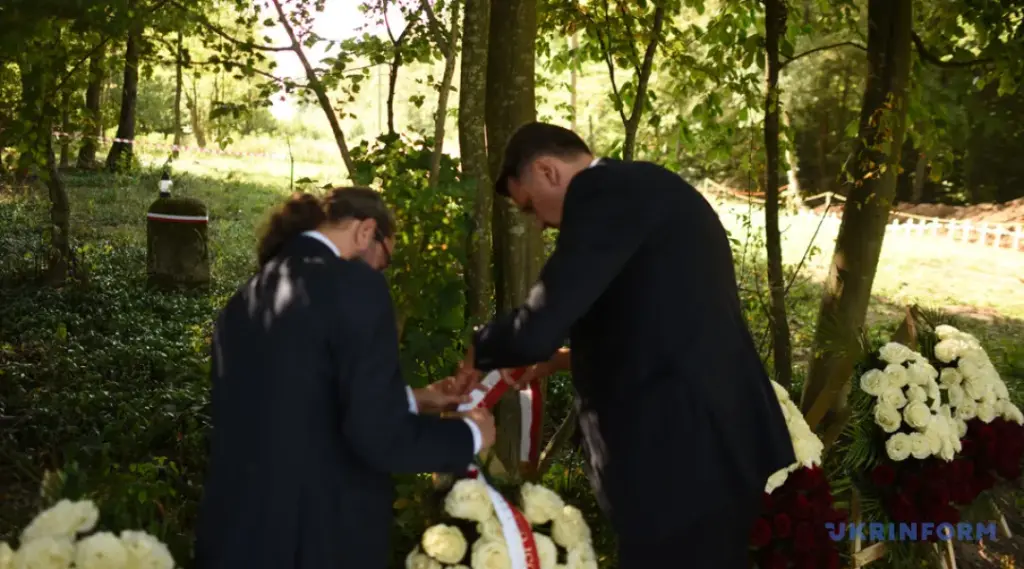
The work at Puźniki offers rare good news from one of the darkest chapters of the shared past. By September 2025, joint Ukrainian and Polish forensic teams had exhumed and reburied 42 Volhynia victims there, in the first such dig in a decade.
"Forensic specialists from Ukraine and Poland work in the same pit. There are no incidents. They are reconciling faster than the politicians." — Wójcik
But goodwill alone will not fix the crisis, Wójcik argues. The Volhynia massacres have become too useful to Polish nationalists, especially for Nawrocki's PiS supporters, to look past.
Therefore, Wójcik says, history needs to be separate from political bargaining. Polish and Ukrainian historians and exhumation teams should continue working beyond politicians' reach, and Ukraine's future in the EU should not be held hostage to a memory dispute.
Some of those in power agree. Former Ukrainian president Petro Poroshenko, renouncing his own White Eagle, warned that history should not define relations, lest a Russian conquest of both countries leave Poles and Ukrainians with “a mutual textbook from Moscow.”
Whether that separation holds depends on two things: whether Ukrainian politicians address the issue plainly, and whether Polish far-right rhetoric returns to the margins or keeps affecting Ukrainian teenagers on Warsaw bridges.
The Volhynia massacres happened over 80 years ago. Artem, beaten on that bridge, is 16. He inherited this quarrel; he didn't make it.
This material was produced as part of a project by the Institute of Mass Information with the support of the Ministry of Foreign Affairs of the Netherlands. The content of this publication does not reflect the official position of the IMI or the Kingdom of the Netherlands.


