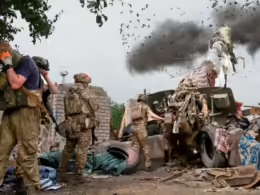
Ukrainian forces have expanded strikes on Russian targets deep behind the front line in May as part of the “Logistics Lockdown” program, which Kyiv says is reshaping the battlefield by targeting supply chains, transport routes, and rear-area infrastructure.
Ukrainian Defense Minister Mykhailo Fedorov said Ukraine has doubled the number of successful strikes on Russian targets located more than 50 km from the line of contact in May, as part of a coordinated push to disrupt logistics supporting frontline operations.
The shift reflects a broader pattern of sustained pressure on Russian rear areas, where Ukraine is increasingly targeting the systems that enable offensive operations, including transport networks, depots, and command infrastructure, which Fedorov says “forces the enemy to spend resources on survival instead of advancing.”
“Logistics Lockdown” expands deep-strike pressure
The “Logistics Lockdown” program, launched in May 2026, is a Ministry of Defense initiative aimed at scaling medium-range drone strikes against Russian logistics networks at operational depth, typically 20–150 km behind the front line.
It channels funding to the most effective drone units through Ukraine’s “ePoints” system, prioritizing brigades that demonstrate consistent impact on Russian supply routes, depots, command posts, and transport infrastructure.
The program also includes centralized procurement of medium-range strike drones, designed to expand Ukraine’s ability to sustain pressure on Russian rear-area operations.
Fedorov said the ePoints system relies on real-time battlefield data to scale the most effective technologies and tactics across the military, with logistics disruption now a central axis of Ukraine’s operational approach.
31,530 Russian casualties reported in May
Fedorov also said Ukrainian forces killed or seriously wounded 31,530 Russian servicemen in May, with an increasing share of losses occurring away from the immediate front line.
He added that Ukrainian units are striking Russian forces more frequently at operational depth, where troops are exposed during movement, logistics operations, and regrouping rather than in trench-to-trench combat.
Logistics disruption and vehicle losses reach record levels
He said strikes on Russian logistics infrastructure have intensified, contributing to record levels of destroyed vehicles and disrupted supply movements over recent months.
According to Fedorov, Russian losses per square kilometer of advance have nearly tripled since the autumn, reflecting rising attrition tied to logistics disruption.
He describes the shift as part of an effort to raise the cost of Russian advances by degrading the systems that enable them, rather than focusing solely on front-line engagements.
Air defense pressure intensifies across Ukraine
Fedorov said Russian forces launched more than 10,000 Shahed drones in May, around 25% more than in April, but Ukrainian interception rates increased by 50%, reaching record levels.
He credited interceptor drones with strengthening Ukraine’s air defense performance amid higher Russian strike volumes and sustained pressure on infrastructure.
Robotics and battlefield logistics scale up
Ukraine also carried out more than 14,000 logistics and evacuation missions using unmanned ground systems during the month, averaging 455 missions per day.
Officials say the growing use of battlefield robotics is reducing risk to personnel while maintaining operational support in high-threat areas.
Read also
-
From making interceptors to guarding sky: Ukrainian drone maker gets its own private air defense unit and will pay for it from weapon sales
-
Russia burned 628,000 new school textbooks in Kharkiv at the peak of back-to-school season
-
Ukraine wants to aim Starlink at Russian targets—and build a version Elon Musk can’t switch off