


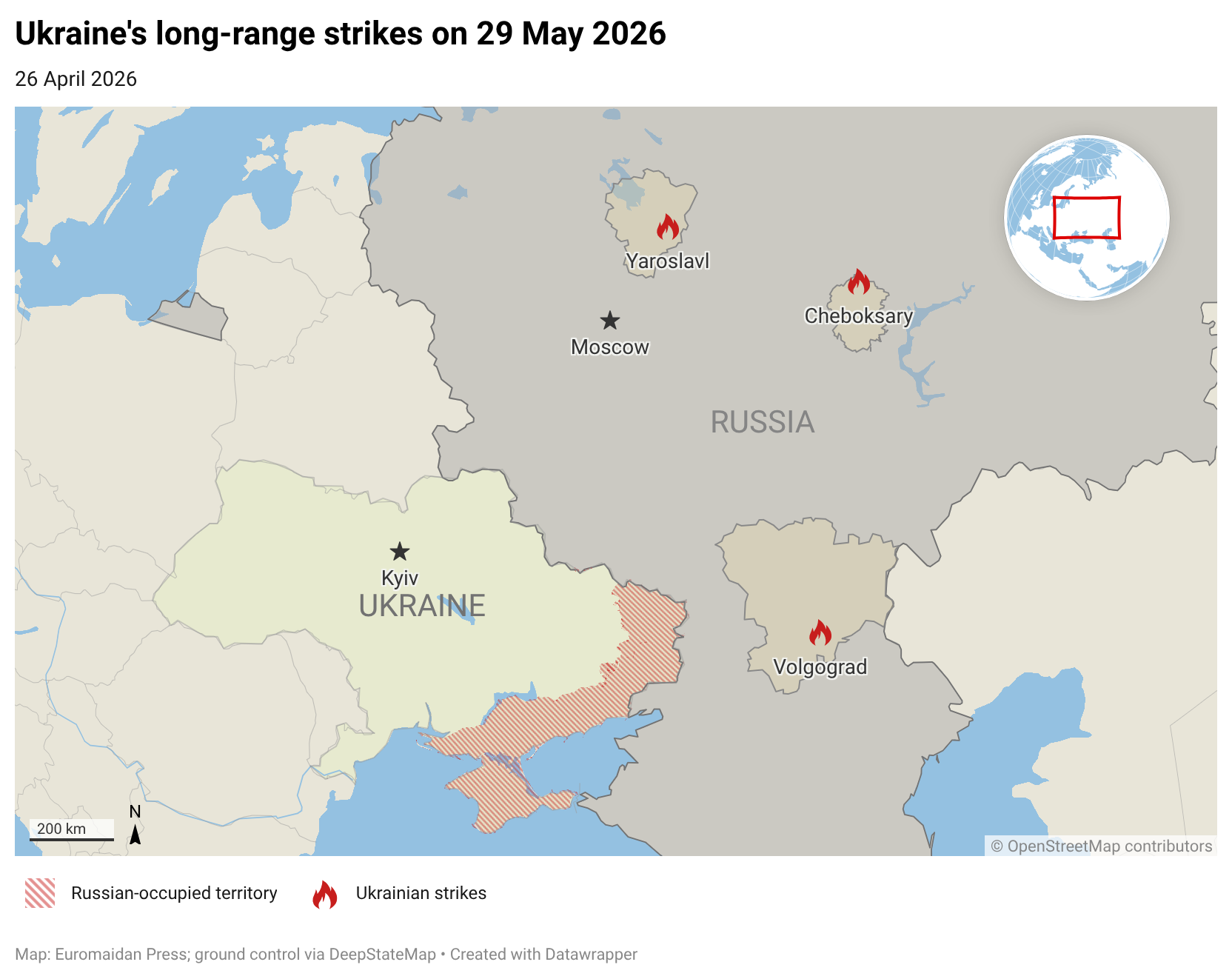
Ukraine's Defense Forces struck a string of targets deep inside Russia overnight, halting a major oil refinery and igniting a fire at a strategic pipeline station, Ukraine's General Staff confirmed. By the next afternoon, Russia had declared missile danger across roughly 20 regions, reaching parts of the country thousands of kilometers from the war. The raids extended Kyiv's long-range campaign against the fuel and industry that sustain Moscow's invasion.
Volgograd refinery halts production
The General Staff said drones struck the Volgograd oil refinery on the night of 29 May, sparking a fire and damaging the primary oil processing units AVT-1, AVT-3, AVT-5, and AVT-6, as well as secondary systems. Volgograd is located about 500 km east of the war zone. The plant stopped its production processes, according to the GenStaff.
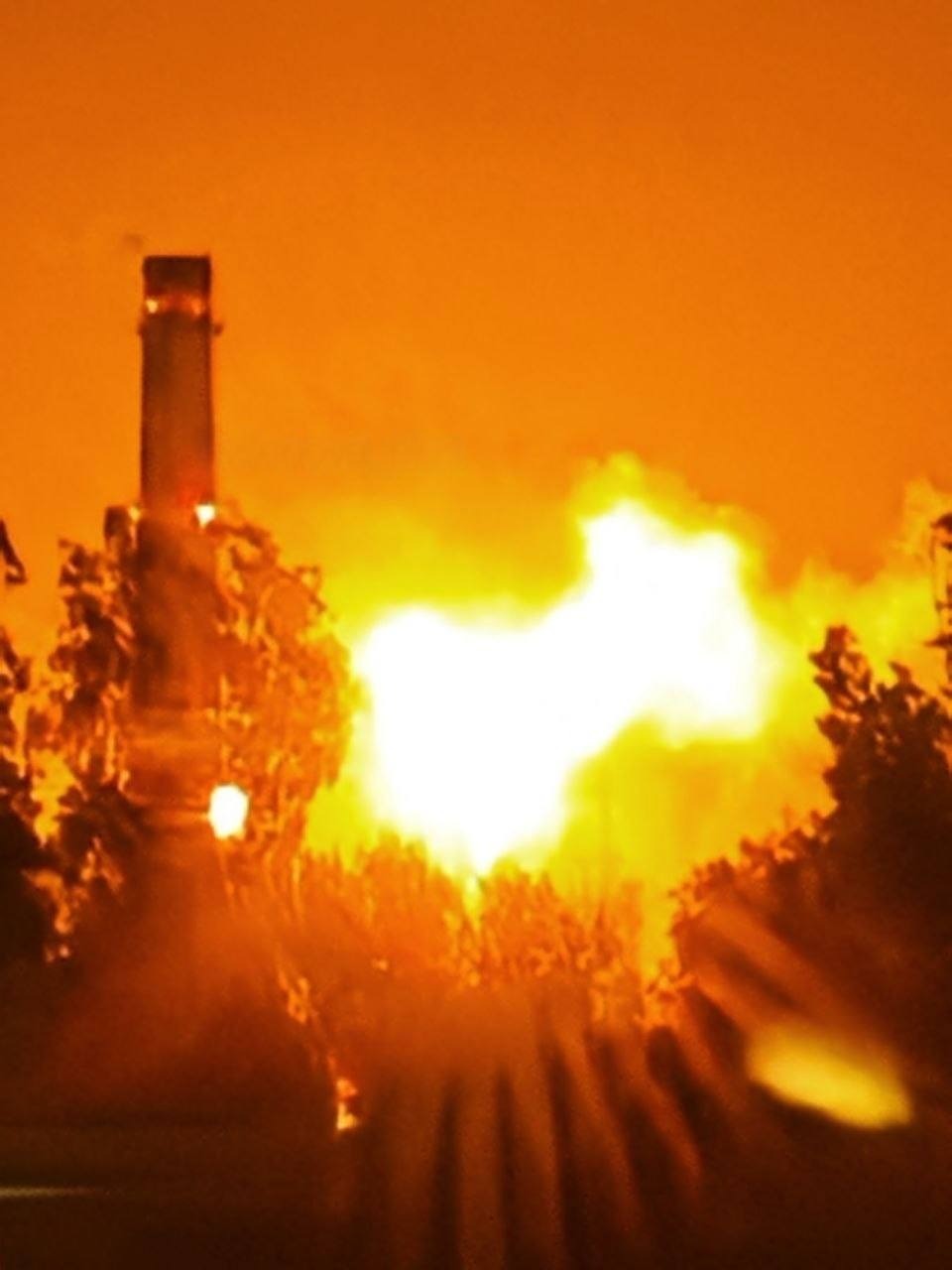
The Ukrainian Telegram channel Exilenova+ began sharing photos and videos of the Volgograd fire around 00:50, before the military confirmed the strike. The Russian news Telegram channel Astra reported that the Lukoil refinery was burning and called it at least the tenth attack on the refinery during the full-scale war.
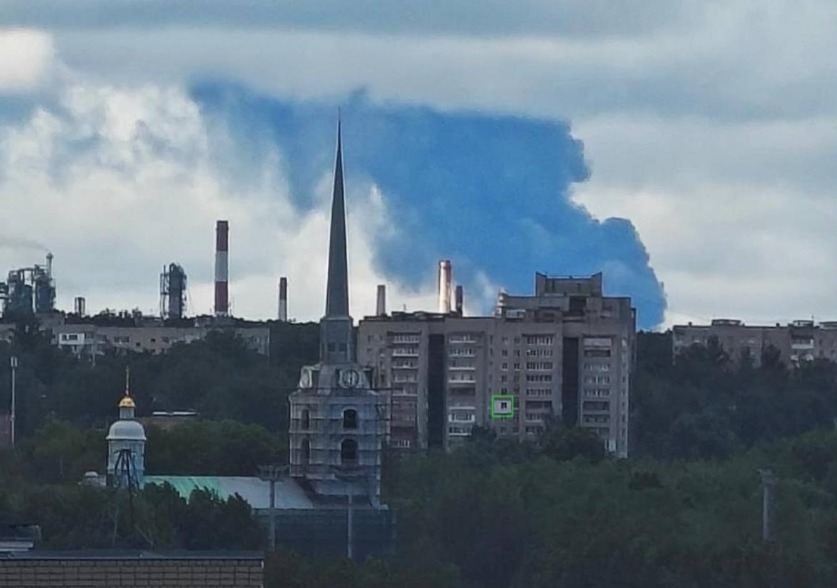
Volgograd's governor claimed a drone hit an apartment building in the Krasnooktyabrsky district, with no casualties. Astra later noted that the building stands about 2 km from Titan-Barrikady, a heavily classified Russian defense plant that builds launchers for the Yars, Topol-M, and Iskander-M missile systems.
Ukraine struck the facility for the ninth time in two years back in February.
Yaroslavl pipeline station ablaze
Ukraine also hit the Yaroslavl-3 oil pumping station in Yaroslavl Oblast, the General Staff said, recording a fire and confirming two burning oil tanks holding 50,000 and 20,000 cubic meters. Yaroslavl is 700 km northeast of Ukraine. The station is a node on the Surgut-Polotsk pipeline, which carries crude from Siberia and northern Russia to the Baltic ports of Primorsk and Ust-Luga and on to Belarus. It belongs to the Russian state company Transneft.
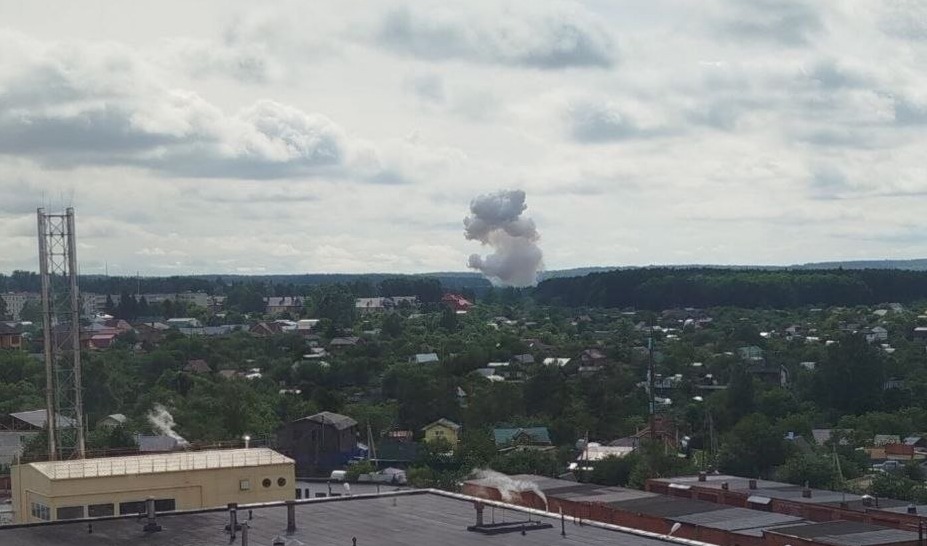
Yaroslavl Oblast Governor Mikhail Evraev claimed a massive drone attack on the region, saying most drones were shot down but that a hit struck industrial fuel-storage sites, with no casualties. An Astra OSINT analysis confirmed the strike on Yaroslavl-3, tying it to Transneft-Baltika and the Baltic Pipeline System that feeds the nearby Slavneft-YaNOS refinery and the Primorsk export terminal.
The hit fits a recent expansion of Kyiv’s campaign from mostly targeting refineries to also striking the pipelines and pumping nodes that move crude between them.
Other overnight targets
A seaport in Temryuk, Krasnodar Krai, also caught fire after the attack. Krasnodar's operational headquarters blamed falling drone debris and reported no casualties, using the phrasing Russian officials routinely lean on to play down successful Ukrainian strikes.
Beyond the oil sites, the General Staff said Ukraine also struck a Tor-M2 air defense system near Berdiansk in occupied Zaporizhzhia Oblast, and hit a command post, three enemy drone-control points, a logistics depot, and several troop concentration areas across occupied Ukraine and Russian border regions.
Afternoon: the alarm reaches the Urals
Hours later, the strikes appeared to widen. Astra reported at 15:25 that Russia had declared a missile threat in at least 10 regions, from Rostov and Volgograd to Sverdlovsk, Chelyabinsk, and Chuvashia, and had restricted airports in Cheboksary and Perm. By 16:20, the warning covered the entire Urals federal district, reaching the Yamal peninsula more than 2,000 km from Ukraine for the first time, with airports in Yekaterinburg, Chelyabinsk, and Perm shut and alerts spreading to at least 20 regions.
Around 17:00, an Astra OSINT analysis identified an explosion near the Chapaev plant in Cheboksary, Chuvashia, 970 km from Ukraine. The Rostec-owned plant mainly makes anti-hail rockets, but defense products account for at least 30% of its order book.
Read also
-
Ukraine and Hungary have a rare moment of cooperation, agreeing to build fuel storage beyond Russia’s reach
-
Russia has already destroyed more than two-fifths of Ukraine’s modern warehouse space as it escalates attacks on economic infrastructure – FT
-
Ukraine retakes ground in a region Russia has fought for years to capture. “Vivaldi” is only getting started but is already “one of the most important victories for Ukraine in 2026”


