


Even if the war ended tomorrow, only 43% of Ukrainian refugees say it would motivate them to return. That single number, from late-2024 surveys in a 2025 LSE Growth Lab report, inverts the Western frame on Ukraine’s displacement. It is also the gap that defines Violetta Dvornikova’s work.
She is trying to convince a generation of Ukrainian women—including, eventually, her own children’s generation—to come back.
Dvornikova stayed in Irpin and ran the evacuation of the city while Russian forces shelled the bridge out, for which Ukraine’s National Security and Defense Council awarded her its Decoration, Third Degree, that April. Her two children left. Four years later, she is trying to convince a generation of Ukrainian women—including, eventually, her own children’s generation—to come back. Her third leadership forum at European Parliament opens on 11 May.
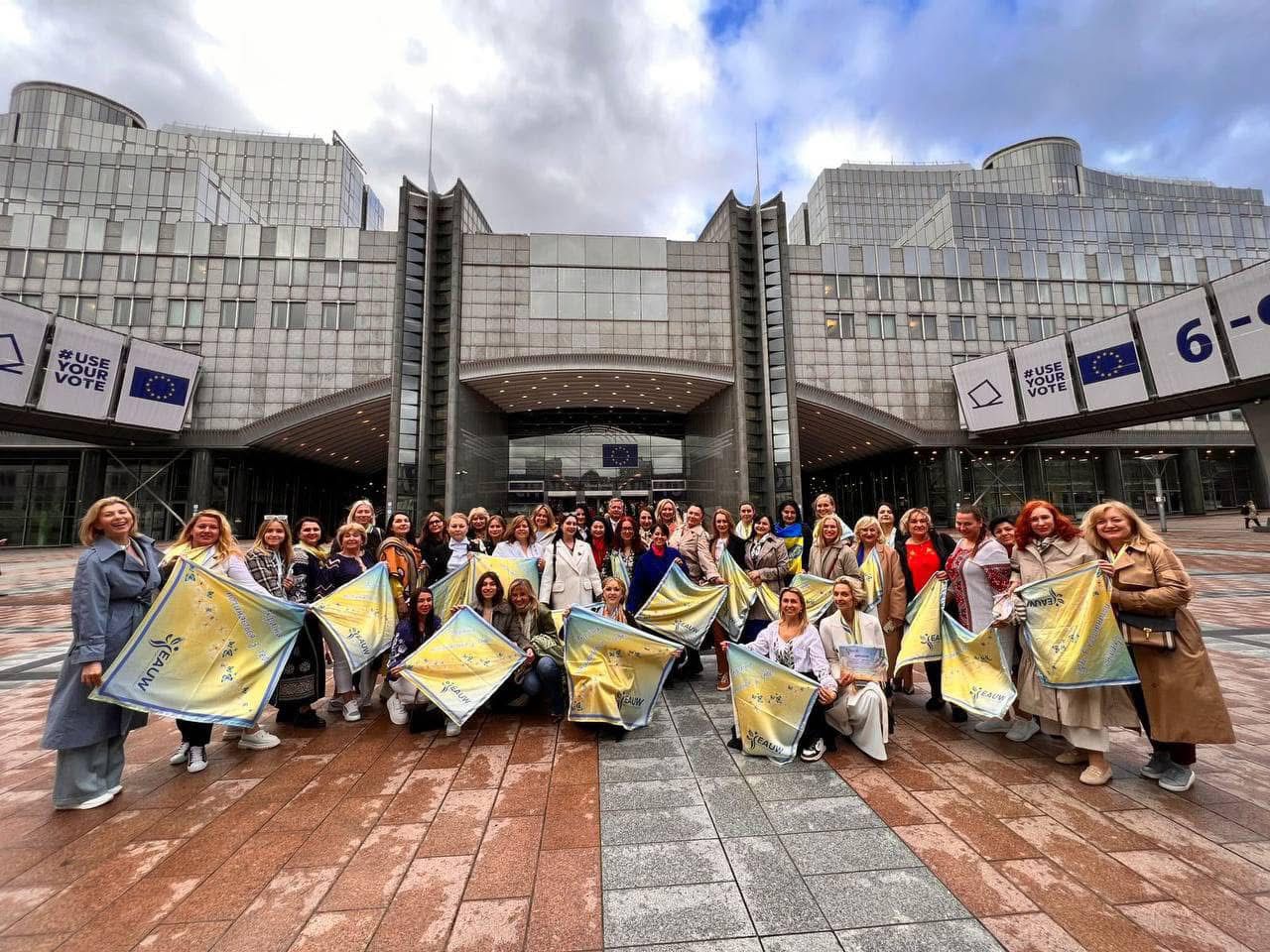
What they tell her matches the LSE survey data: 46% cite higher living standards as a precondition for return, 33% well-paying jobs. Among women with children, only 23% intend to return at all, the Centre for Economic Strategy found in its refugee survey.
Russian disinformation has actively targeted Ukrainian refugees, framing them as ungrateful.
5.9 million Ukrainians live abroad as of 2026. In January, 4.38 million held EU temporary protection status. The European Council extended that protection in June 2025 until 4 March 2027.
Russian disinformation has actively targeted Ukrainian refugees, framing them as ungrateful and warning their host countries will turn against them—patterns tracked by the EU’s diplomatic service and reported by the Washington Post.
Peeter Helme: You lead the European Association of Ukrainian Women. How would you describe your mission?
Violetta Dvornikova: I represent a union of Ukrainian women living abroad. We formalized it in 2024 because we saw that the work needed to be done more systematically. From 2022 onward, the women who were forced to leave proved themselves remarkably organized. They built channels, helped one another, and the diaspora already in place stepped up to receive new arrivals—finding housing, getting children into schools, helping with the basics of starting over.
Irpin was 70% destroyed and is now rebuilt. So is Bucha.
I myself stayed. I am from Irpin. I served as the operational headquarters coordinator and led the evacuation of the population. In April 2022, I was awarded the Decoration of the National Security and Defense Council of Ukraine, Third Degree, for the defense of the motherland.
My children left, but I decided this is my country and my city—Irpin and Bucha. We went through a very difficult time, but we coped. Today, life is coming back. People have returned. Irpin was 70% destroyed and is now rebuilt. So is Bucha. We are working on the infrastructure.
Many had no home to return to because their houses had been destroyed.
While I was in Ukraine, many of the volunteer men working with me had families abroad. They talked constantly about how hard it was for those families—the loneliness, the sense of having nowhere to come back to.
For half a year, we had no electricity or connection. Many had no home to return to because their houses had been destroyed. Men sometimes find it easier when they are alone. For a woman with two or three children under shelling, it is very hard.
After the war, they should return with the experience they gained in Europe.
Three months after the full-scale invasion, I went abroad to see my own children. I started meeting Ukrainian women in shelters. They talked about their problems, especially the need for psychological support. When I was invited to Brussels to head the Ukrainian Civil Society Hub at the European Parliament, I thought: everyone has their front. Maybe this is mine.
The most important thing I understood was that we need to help these women come home eventually. After the war, they should return with the experience they gained in Europe.

Peeter: Millions of Ukrainians have gone abroad. Many of them have jobs there now, their kids are in school in another country. Will people like that actually come back?
Dvornikova: This is very relevant. Millions have gone abroad, and the flow has not stopped—especially among young people. It is a huge problem.
But from my daily contact with these women—and this is my personal opinion, state representatives might disagree—I believe many would return if they felt safe. If Ukraine were a safe country, if the state could provide economic protection, they would come back.
Children from territories occupied since 2014 will find it very hard even to understand that they are Ukrainian.
We also sincerely believe we will become members of the European Union. That would matter enormously, because it would give Ukrainians the sense of protection they need to come back.
We are losing entire generations. Children from territories occupied since 2014 will find it very hard even to understand that they are Ukrainian. Children who left in third grade are now in high school abroad, with new friends and new lives. But when I visit schools in different countries, the children themselves all say they want to go home. That is my subjective observation. They want to come home.
It is good to be a tourist, but eventually we all have to come home.
Trending Now
Some do return for a few months after years away, only to conclude they have to leave again because they don’t feel protected. The EU offers them protection of their rights, their interests, and a future for their children. Ukraine cannot match that level of protection right now because of the war. I believe that is temporary.
I tell the women: it is good to be a tourist, but eventually we all have to come home. The experience they are gaining now should be used to rebuild our economy.

Peeter: You said safety is important for the future. Ukraine is discussing a new Civil Code. In your opinion, what should change in Ukrainian law or society to give women a stronger position?
Dvornikova: Legal reform is critical because it builds trust—both for people to return and for businesses to grow. For women considering returning to Ukraine, it is important to have concrete guarantees that their rights will be protected.
When an entrepreneur knows that a contract will be honored and protected in court, that affects whether they invest or come back.
For example: the ability to open a business safely and be confident that property will be protected; access to fair courts when disputes arise; transparent rules on employment and social protection.
For business, this means concrete things—fast, clear company registration, effective mechanisms for resolving commercial disputes, investor protection, and simplified tax administration. When an entrepreneur knows that a contract will be honored and protected in court, or that state bodies act transparently, that directly affects whether they invest or come back.
Reducing contact with the bureaucracy lowers corruption risks and makes the system more accessible.
Digitization is also important. Reducing contact with the bureaucracy lowers corruption risks and makes the system more accessible—particularly for women combining business with family obligations.
These are the practical changes that create a sense of stability, security, and predictability. And those are what bring Ukrainian women back. They are also what build an economy that lasts.
Peeter: Let’s talk about the Brussels forum. It is called “Power. Voice. Legacy.” Why is this important now, and why in Brussels?
Dvornikova: I represent the Hub at the European Parliament in Brussels, so we have the know-how and the presence there. This is our third forum. It brings together female opinion leaders from across the diaspora. It is not just speeches—these are panel discussions about real projects and what they actually contribute to Ukraine and Europe.
Ukrainians in Europe have done enormous work to win recognition for our culture through major events, theater, and cinema.
Take culture. Ukrainians in Europe have done enormous work to win recognition for our culture through major events, theater, and cinema. They find grants and use their voices to speak about the pain happening here.
In education, they are introducing the Ukrainian language and opening schools abroad. We have legal experts working on rights. Women are speaking out against bullying.
In Poland alone, 8% of such businesses are now Ukrainian.
In the economy, Ukrainians abroad have opened more than 150,000 small businesses. In Poland alone, 8% of such businesses are now Ukrainian. These are women working in IT, retail, and beauty services. We have designers winning grants and selling clothes in Parisian boutiques and in Cyprus.
One of our forum speakers raised over €1 million ($1.18 million) for Ukraine. Many of these women hire people still in Ukraine for online work—social media, marketing, and services. That is what unites us.
We are one. We proudly raise the yellow-blue flag in every country.
I always say: we should never split into “those who left” and “those who stayed.” Russian propaganda works hard to manufacture that division—to convince Ukrainians at home that the women abroad have abandoned them, and to convince the women abroad that there is nothing left to come back to. It is not true. We are one. We proudly raise the yellow-blue flag in every country.
Why Brussels? Because it is the center of Europe, and we can hold the forum at the European Parliament. Krzysztof Brejza, who has stood with Ukraine since the full-scale invasion began, is hosting us.
The panels will cover Ukraine’s role in the European future and our strategic vision. I think the guests will be surprised at how much these women have accomplished in Europe in just a few years.


