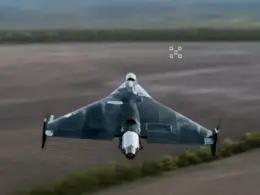
Ukraine launches mass production of “Shahed killers”. The country is procuring 8,000 Octopus interceptors, systems with automatic target guidance developed within the Armed Forces, says Defense Minister Mykhailo Fedorov.
These drones have already proven their effectiveness in combat and are now moving to a new level of large-scale deployment.
Meanwhile, Ukraine's military has already got twice as many interceptor drones in the first months of 2026 as in all of 2025. They cost hundreds of times less than missile systems and dozens of times less than the Shaheds they bring down.
29 companies and UK support
A total of 29 Ukrainian companies have joined production after receiving the necessary licenses. The UK government has also joined the effort, significantly accelerating the rollout of manufacturing. Four producers have already signed state contracts.
This model not only enables rapid scaling of output but also supports parallel development of the defense-industrial base.
A key factor was the government’s decision to open access to military technologies for manufacturers. In practice, this creates a mechanism that enables battlefield innovations to quickly transition into serial production without losing intellectual property rights.
95% destruction: focus on drones resistant to EW
Octopus is designed to counter aerial threats, particularly “Shahed” drones. It can operate day and night, is effective at low altitudes, and maintains performance even under electronic warfare conditions.
The Ministry of Defense ensures the full cycle from technology transfer to procurement and delivery to frontline units.
“The goal is ambitious: to achieve full detection of aerial targets and at least 95% destruction,” Mykhailo Fedorov claims.
This means Octopus is no longer an experiment, but a component of a next-generation, large-scale air defense system.