


Ukraine's Unmanned Systems Forces (SBS) — the world's first military branch dedicated entirely to drone warfare — are formally scaling up their middle-strike and deep-strike operations against targets deep inside Russia and occupied territories, SBS commander Major Robert "Madyar" Brovdi announced on 21 April evening. More trained pilots from additional units are set to join the deep-strike campaign from the start of May, Brovdi said.
Six units running, more joining in May
Brovdi confirmed that drone pilots from six SBS units are already running middle-strike and deep-strike missions:
- the 1st Separate SBS Center
- the Kairos and 13th battalions of the 414th "Madyar's Birds" Brigade
- the 412th Nemesis brigade
- the 413th Raid regiment
- the Feniks unit.
Behind the loud headlines, it is painstaking and laborious work, according to Brovdi. But he noted that the work of expanding the range and intensity of strikes would continue. From May, trained pilots from several more unnamed SBS units will join deep-strike operations, according to the commander.
Custom Code
Middle-strike drones operate at depths of 50 to 250 km from the front line and, unlike purely GPS-guided platforms, maintain live operator contact throughout the flight — allowing real-time target confirmation and course correction. Deep-strike drones rely on GPS and AI navigation for autonomous flight to targets hundreds of kilometers inside Russia, with some strikes confirmed at distances exceeding 1,700 km from Ukrainian territory.
Campaign already reshaping Russia's war economy
The scaling-up announcement follows a period of intensifying results. In the first two weeks of April alone, SBS put 12 Russian air defense systems out of action — Tor-M1 and Pantsir-S1 systems, ammunition depots, and logistics hubs. In January, a single week of strikes by the 412th Nemesis brigade destroyed an estimated $300 million worth of Russian air defense equipment.
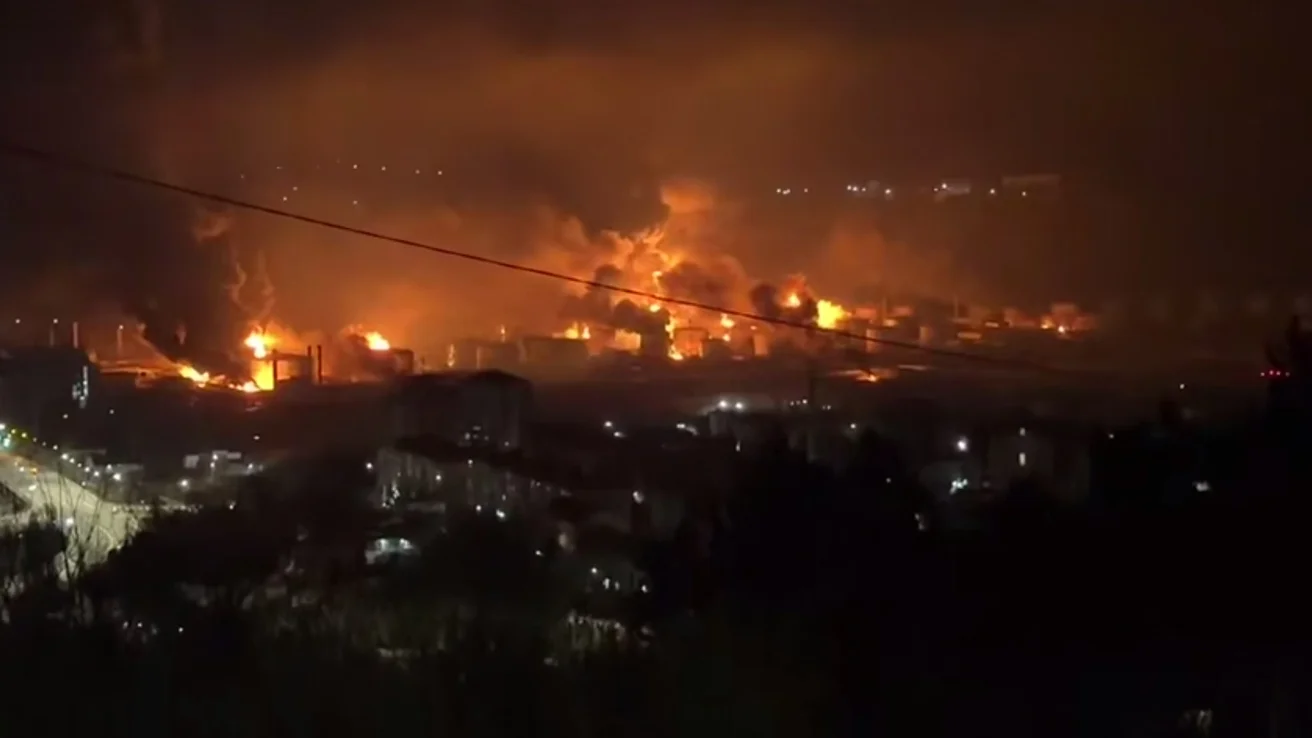
Tuapse burns again: drones hit the port city three days after the last fire was put out
The campaign has also struck deep into Russia's energy infrastructure. In March alone, Zelenskyy estimated that Ukrainian long-range strikes cost Russia at least $2.3 billion in oil revenue. Reuters reported on 25 March that Ukrainian strikes had halted roughly 40% of Russia's oil export capacity — the worst disruption in modern Russian history. In April, Russia cut oil output by an estimated 300,000 to 400,000 barrels per day, the sharpest monthly drop in six years, according to Reuters sources.

HUR’s “Ghosts” hit two Russia’s landing ships, $5 million radar, and fuel depot in one overnight peration
Despite the expansion, Ukraine's deep-strike program faces a persistent constraint: the supply of mini jet engines, produced by only three European companies. Faster than propeller drones and cheaper than cruise missiles, jet-powered strike drones are central to the campaign's scaling ambitions — but production bottlenecks continue to limit how fast the program can grow.
Read also
-
Investigators say prosecutors shielded scam call centers. Their office has now fired eight people and is checking how its ex-chief left Ukraine
-
Trump says Russia agreed to supply millions of tons of diesel to US and global markets as he blames Ukraine for fuel price hikes driven by Iran war
-
Head of Russian military propaganda network to be expelled from Montenegro over suspected anti-EU operation


