

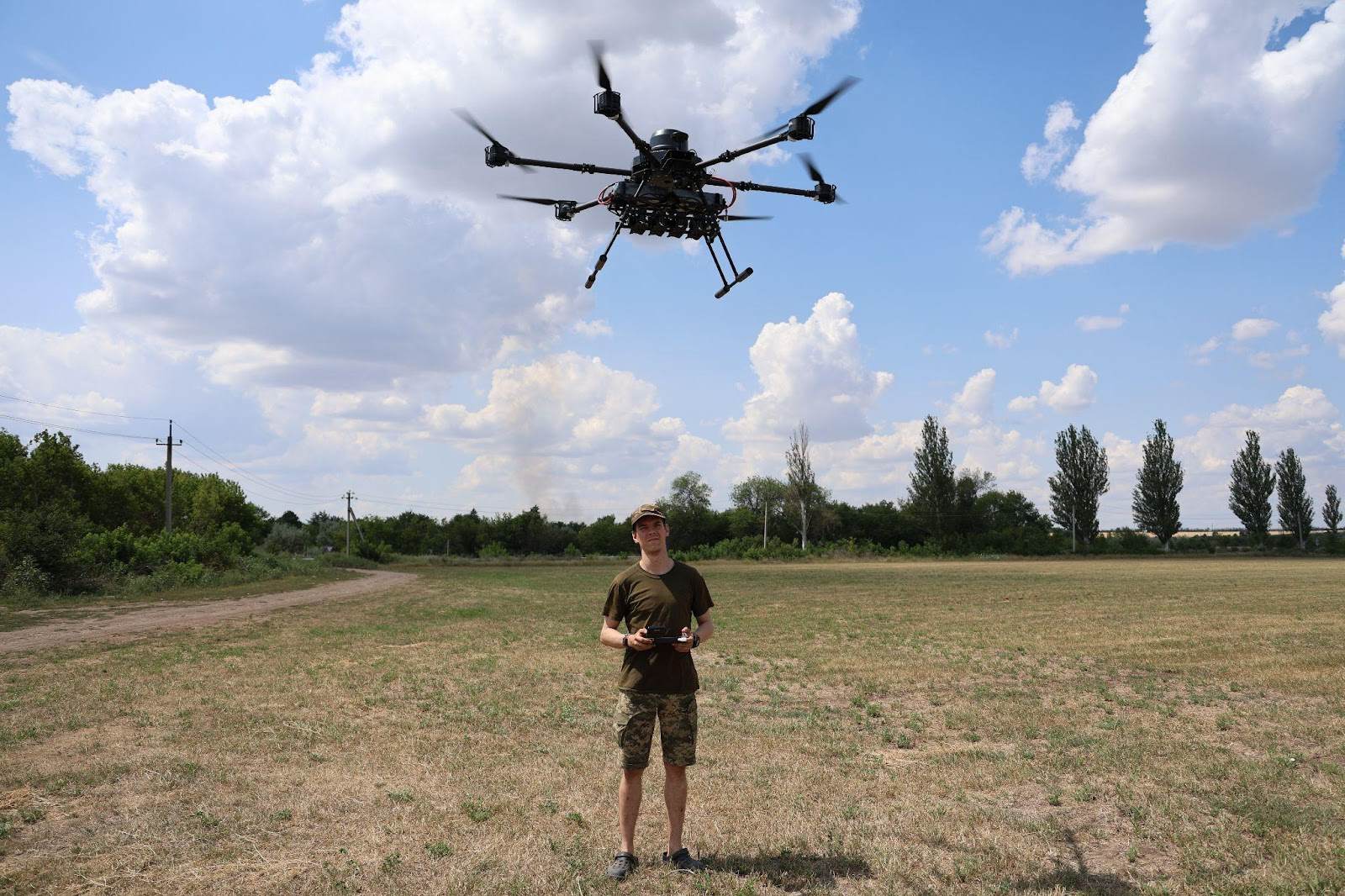
Ukrainian interceptor drones destroyed a record 33,000 Russian UAVs of various types in March — twice as many as the previous month, Mykhailo Fedorov has announced.
Interceptor drones have already become a key component of Ukraine’s air defense, demonstrating scalability and effectiveness in countering mass attacks.
In just one month, a wide range of aerial targets was destroyed, including Shahed, Gerbera, Molniya, Zala, Orlan, and other drone types.
New-generation challenge: Jet-powered UAV
A key challenge remains jet-powered Shahed drones, which Russia is beginning to scale more actively.
Their increased speed significantly complicates interception and requires new technological solutions.
In response, the Ukrainian side, together with manufacturers, analyzed existing products, identified bottlenecks, and synchronized efforts to rapidly scale effective solutions.
Engineering mobilization: state, industry, and innovation clusters unite
Recently, the Brave1 cluster supported 12 technologies under the EU4UA Defence Tech joint grant program.
Companies will receive up to €150,000 to develop high-speed interceptor drones capable of exceeding 450 km/h, as well as advanced counter-air systems.
Fedorov also recently met with manufacturers of interceptor drones to gather market feedback and define next steps to protect the skies.
They discussed systemic issues, including contracting for 2026, pilot training, testing ranges, shortages of ground control stations, exports, and updates to performance evaluation criteria within the “Army of Drones” initiative.
Interceptors: Ukraine is shaping market
A number of systemic steps have already been implemented to develop the interceptor market.
A unique incentive model rewarding companies for intercepting Shahed drones has been launched, and within this framework, such a drone was successfully shot down by an interceptor for the first time.
Since 2024, Brave1 has issued over 40 grants to manufacturers, and today, around 100 companies operate in this sector within the cluster.
A dedicated platform, Brave1 Dataroom, has also been created for training and validating artificial intelligence models. More than 30 companies are testing over 50 AI models to detect and intercept targets under various conditions.
Two critical tasks for industry
During the meeting, manufacturers were assigned two key priorities:
- Develop and scale jet-powered interceptor drones to counter jet-powered Shaheds
- Create alternative guidance systems capable of operating in complex weather conditions
The government, in turn, is ready to rapidly procure effective solutions in a transparent market environment if they provide real protection for Ukraine’s airspace.