
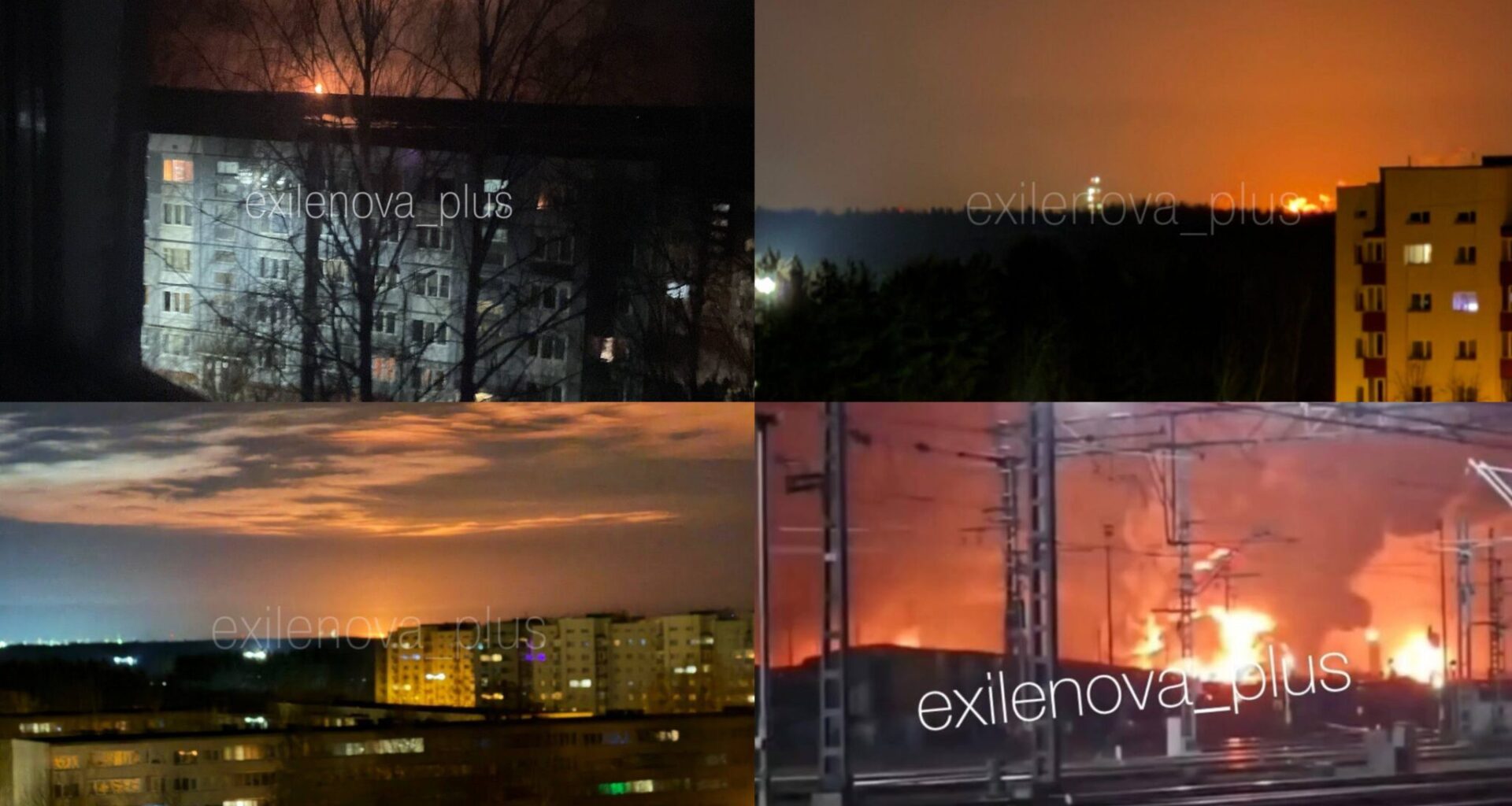

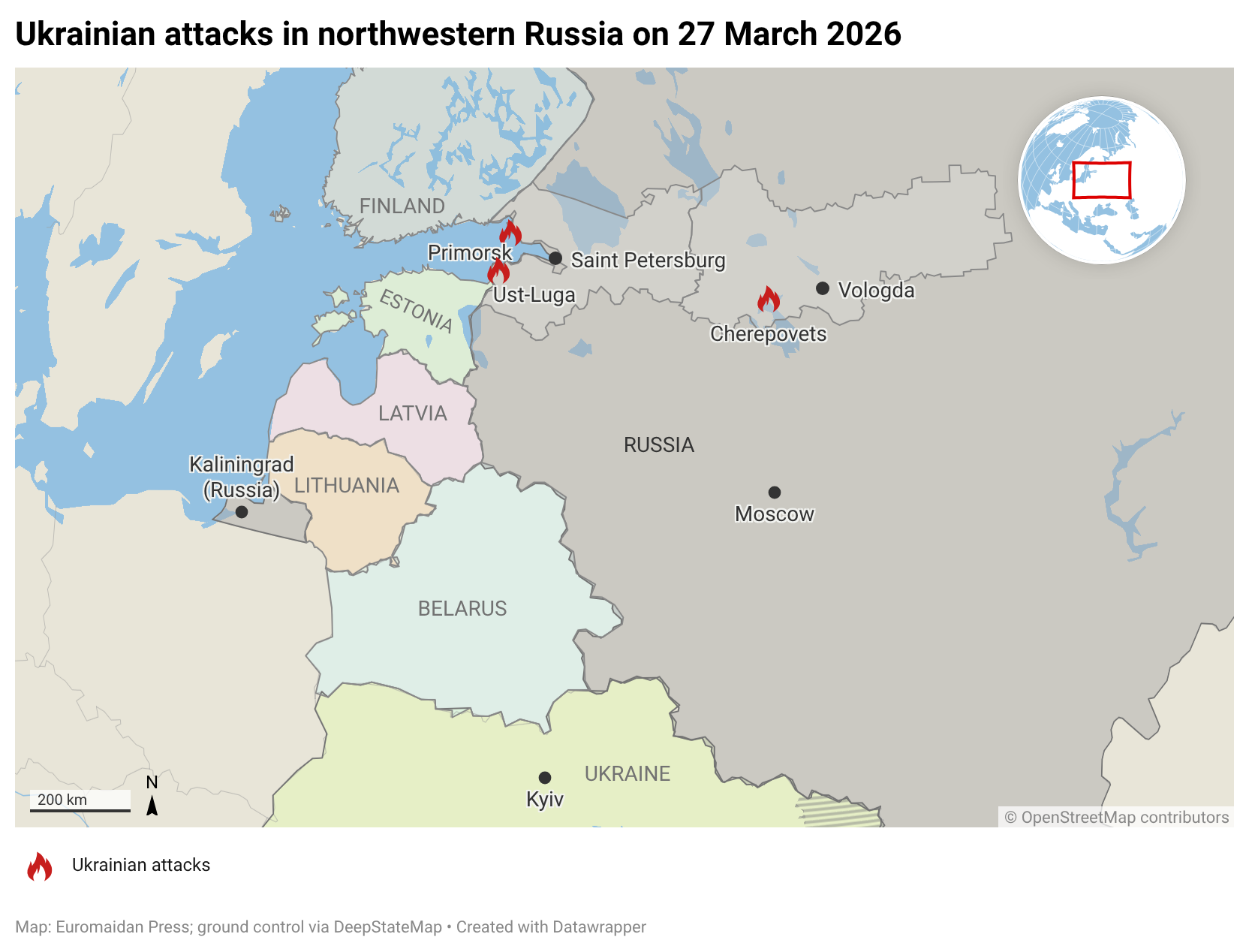
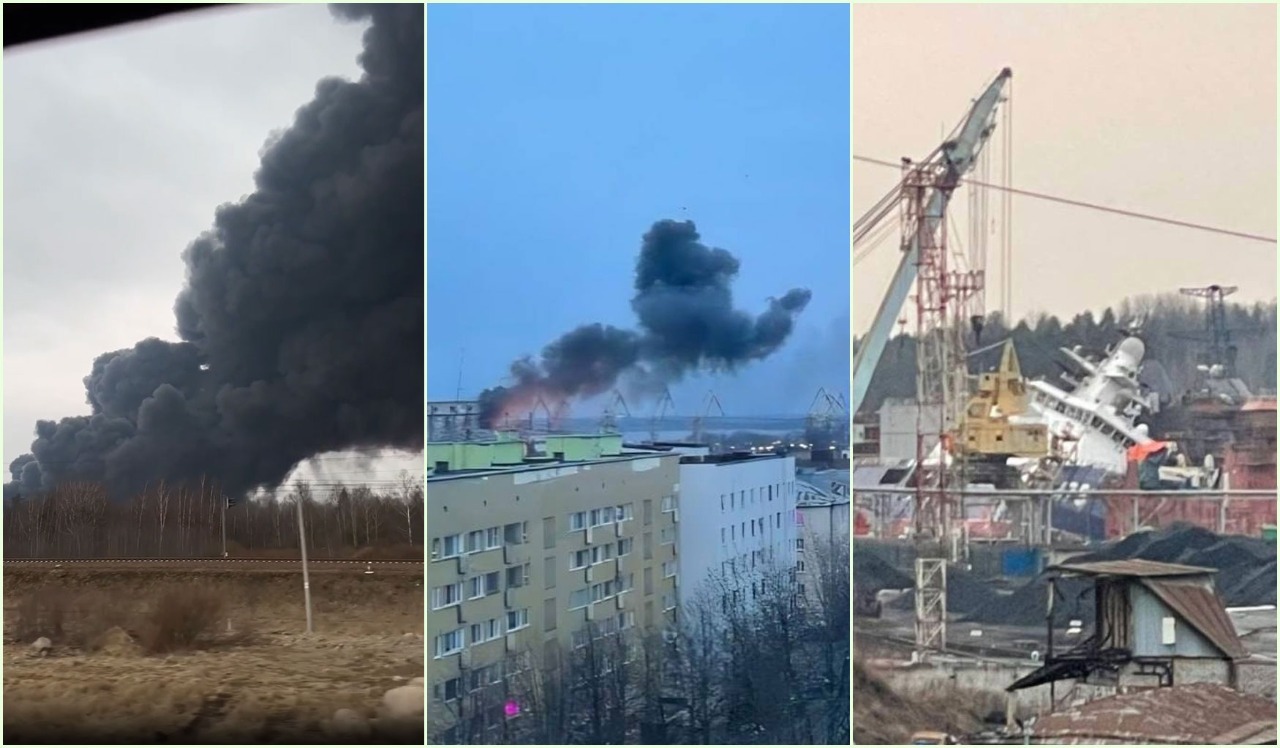
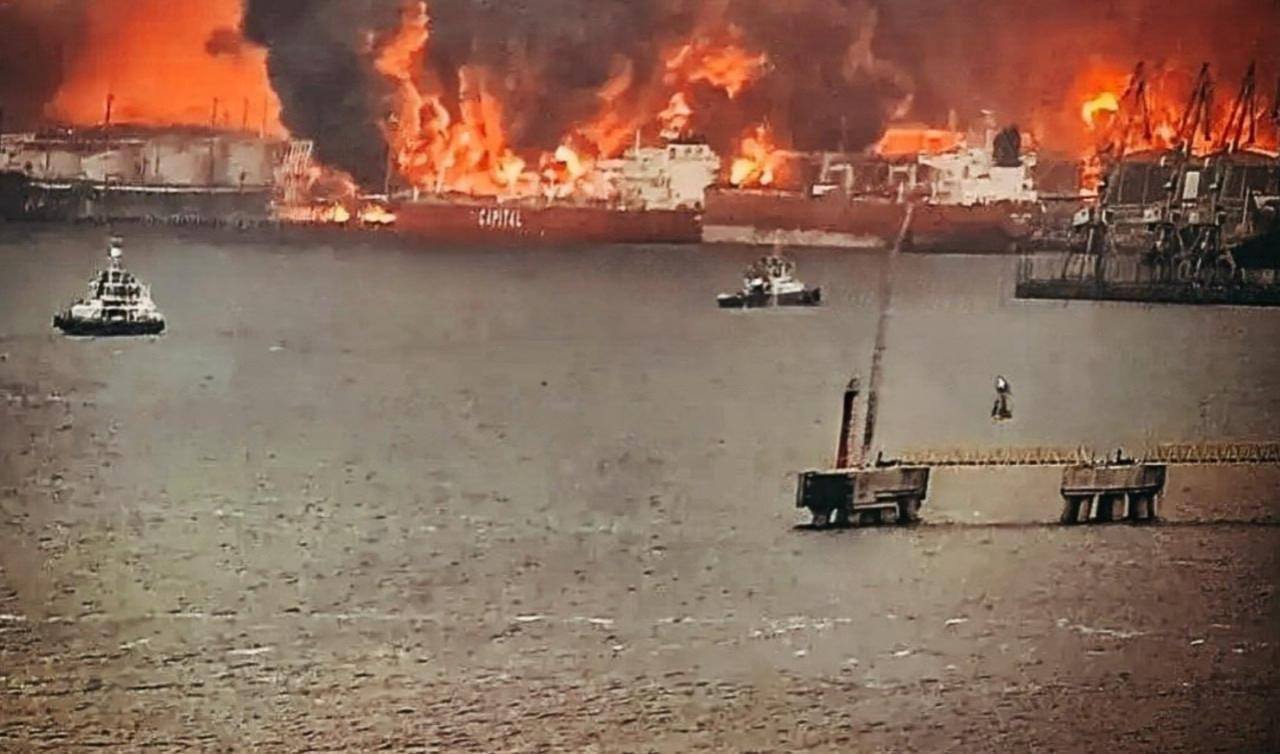
Ukrainian drones struck Russia's two largest Baltic oil export ports — Ust-Luga and Primorsk in Leningrad Oblast — for the third time in five days overnight on 26–27 March, Ukrainian Telegram channel Exilenova+ reported. Fires at the facilities were confirmed by NASA satellite data and OSINT analysis by Cyberboroshno and Astra.
On the same night, drones also hit the Cherepovets industrial zone in Vologda Oblast, with at least one drone likely striking the blast furnace of Severstal, Russia's second-largest steelmaker, and residents reporting an attack on the Apatit chemical complex — a major phosphate fertilizer producer.
Ukraine appears to be trying to destroy Ust-Luga and Primorsk beyond repair, rather than cause the kind of temporary disruptions seen in past attacks on energy facilities that were patched within weeks or months. The pace of return strikes is unlike anything previously seen against these two ports.
The Feodosia oil terminal in occupied Crimea offers the precedent for what permanent destruction looks like: ISW previously assessed that Russia may never repair it after two Ukrainian attacks in September and October 2025.
CREA analyst Isaac Levy told RFE/RL:
"Refineries have been re-hit during repairs or restarts, often in two-three week cycles, keeping key sites offline and turning routine maintenance into prolonged disruptions."
Third strike in five days: Ust-Luga and Primorsk burning again
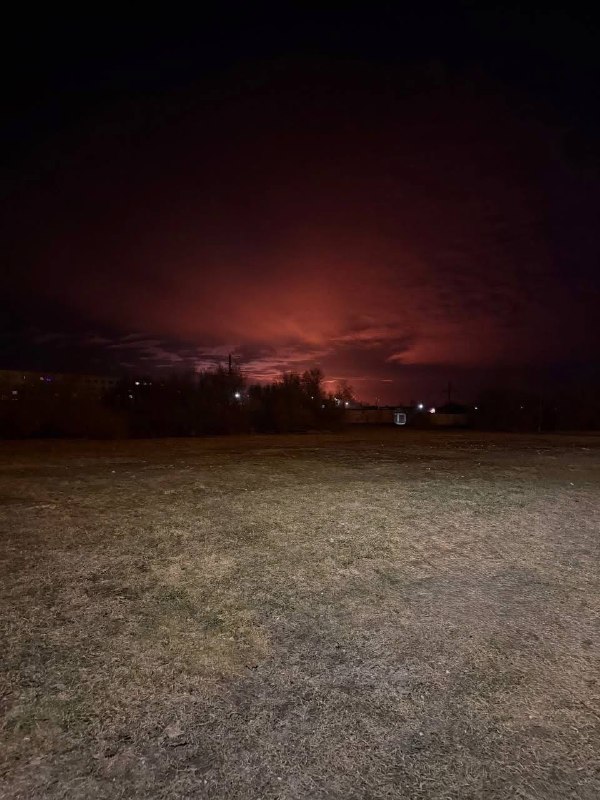
Last night, Exilenova+ published eyewitness videos of the strikes. Cyberboroshno geolocated and confirmed simultaneous strikes at both ports from available footage, noting glows visible from tens of kilometers away and reporting that multiple additional targets were still under attack as the operation continued.
NASA FIRMS satellite data showed increased fire signatures at both port facilities by morning.

Local residents reported drone flights, explosions, and filmed the glow from dozens of kilometers away.
Leningrad Oblast governor Aleksandr Drozdenko claimed 36 drones were downed over the region overnight with no casualties. Russia's Defense Ministry reported 85 Ukrainian drones shot down across eight regions, occupied Crimea, and the Black Sea.
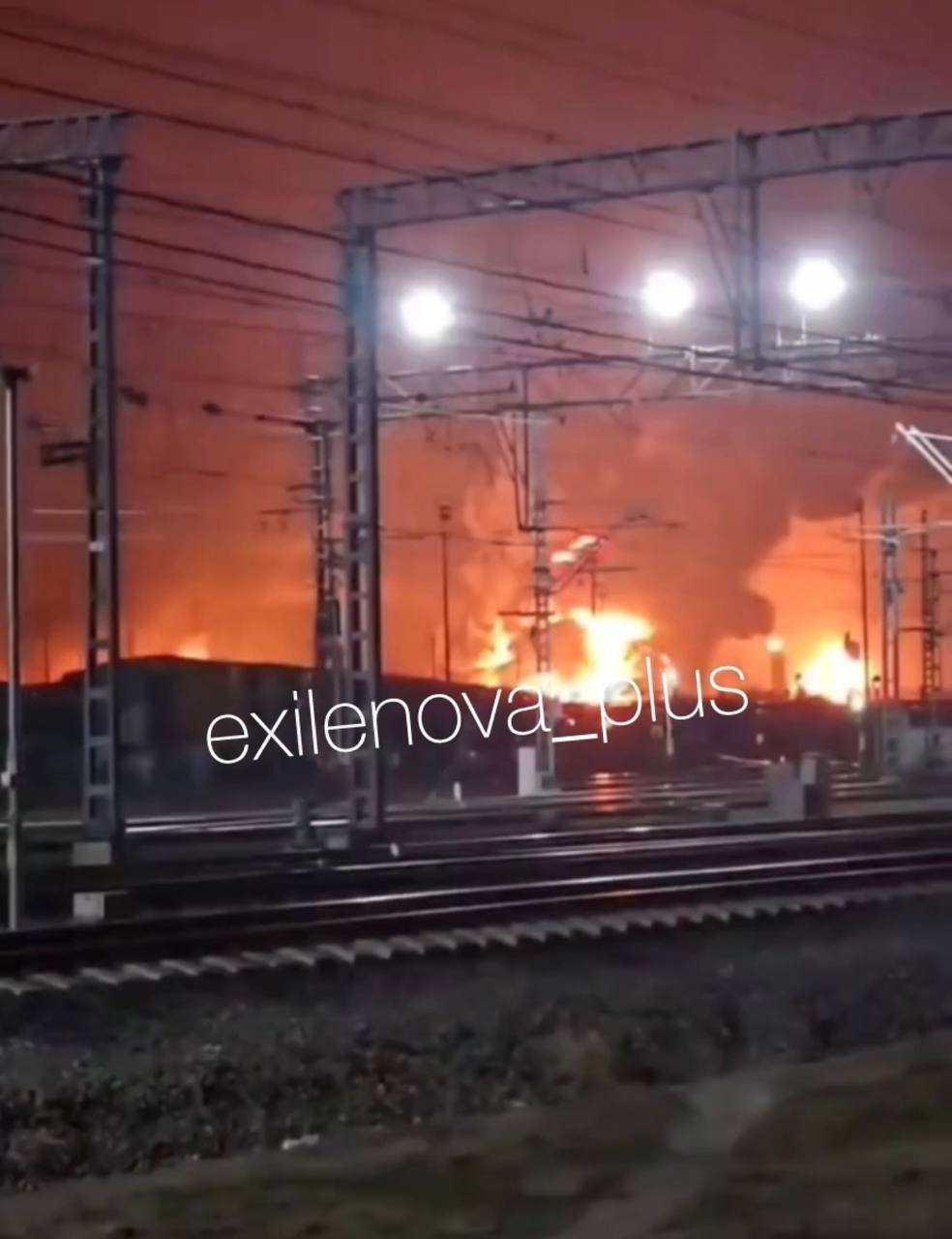
Astra geolocated an eyewitness video to a railway crossing near the Transneft-Baltika Ust-Luga fuel base.
Pulkovo Airport in St. Petersburg temporarily suspended operations due to the drone threat.
What's at stake: Russia's two biggest oil export arteries
Primorsk and Ust-Luga are Russia's largest oil export ports on the Baltic and together handle 2 million barrels of crude per day. Both sit 900-1,000 km from Ukraine's border.
Russia’s Baltic coast took three hits in one night: gas hub, oil terminal, military icebreaker — all confirmed by Ukraine (updated)
Ust-Luga exported 32.9 million tonnes of oil products in 2025, Primorsk 16.8 million tonnes. Primorsk's pipeline system has a capacity of up to 75 million tons per year and handles the bulk of Russia's Urals crude exports, including via the shadow fleet. Ust-Luga is Russia's second-largest port overall after Novorossiysk.
Reuters: 40% of Russia’s oil exports offline, mostly due to Ukrainian drone strikes — worst disruption in Russian history
Following the 25 March attack on Ust-Luga, Astra reported damage to three oil tankers, five fuel storage tanks, three berths, and NOVATEK installations.
Trending Now
Three strikes in five days — a deliberate pattern
This is the third attack on the two ports this week.
- Ukraine struck Primorsk overnight on 22–23 March, igniting a fuel depot, setting fire to most of the terminal's berths and two tankers. Ukraine's General Staff confirmed damage to both the tank farm and oil-loading infrastructure.
- On 24–25 March, the SBU and the General Staff confirmed a strike on Ust-Luga using Alpha Special Operations Center long-range drones that covered over 900 km.
- On 25–26 March, Ukraine struck the KINEF Kirishi refinery in the same oblast — one of Russia's largest refineries, processing around 350,000 barrels per day.
Earlier, Ukrainian President Volodymyr Zelenskyy told Reuters that the strikes are Ukraine's direct response to the weakening of international sanctions on Russia.
"The pressure on Russia in the world is decreasing. Therefore, unlike most countries in the world, Ukraine has its own sanctions: its long-range capabilities," he said.
Not only ports: Severstal blast furnace and Apatit hit in Vologda Oblast
In Vologda Oblast, drones struck the Cherepovets Metallurgical Plant overnight. Astra's OSINT analysis found that at least one drone likely struck the blast furnace shop, based on an eyewitness video recorded about 2 kilometers from the fire.
Cherepovets lies 800 km from Ukraine’s border. Vologda Oblast borders Leningrad Oblast, which has been the focus of Ukrainian attacks in recent days.
Vologda Oblast governor Georgy Filimonov confirmed a drone attack on the Cherepovets industrial zone, saying emergency services responded, with no critical infrastructure damage and no casualties.
Severstal — sanctioned by Ukraine, the US, the UK, Canada, Australia, and New Zealand — had its blast furnace No. 5, known as Severnyanka, forced into temporary shutdown for repairs after a previous Ukrainian strike in March 2024.
Local residents also reported a strike on Apatit, the Cherepovets chemical cluster of the PhosAgro group — Europe's largest phosphate fertilizer producer. Its products reach European, Asian, and Latin American markets, and feed into Russian ammunition and military equipment production, according to Astra.
Deep-strike campaign
Ukraine's years-long deep-strike campaign has significantly escalated over the recent months, with Russian oil facilities among its key targets.
In January 2026 alone, among other strikes, Ukrainian drones hit oil depots in Volgograd and Pskov oblasts and struck a refinery in Krasnodar Krai for the third time.
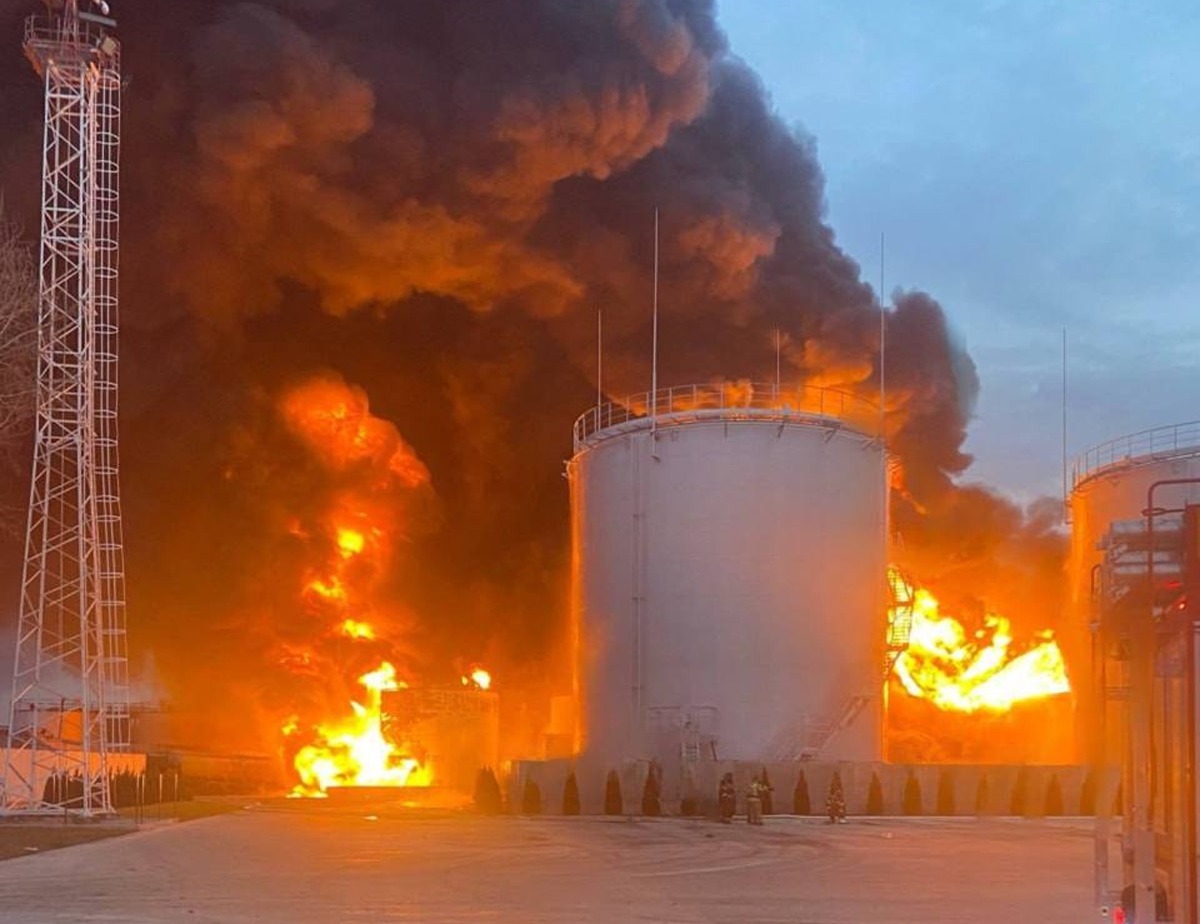
In February, drones reached a Lukoil refinery 1,700 km from Ukraine — the longest confirmed drone strike of the war — and hit an oil depot in Pskov Oblast that Russia had covered in protective netting after a previous hit.
In March, among Ukraine's targets were the Saratov refinery and a Transneft pipeline station in Krasnodar Krai.
A leaked Rosneft document published days before the latest strikes showed the company's own engineers admitting that physical defenses "do not guarantee the safety of protected objects" against Ukrainian drones.
Read also
-
Ukraine’s Baltic energy blitz: KINEF refinery struck as Kyiv targets Russia’s northwestern export corridor
-
Sanctioned Russian shadow fleet tanker struck by drone near Istanbul, 140,000 tons of oil on board
-
Russia built the world’s only missile-armed icebreaker. A Ukrainian sport plane just crippled it.


