

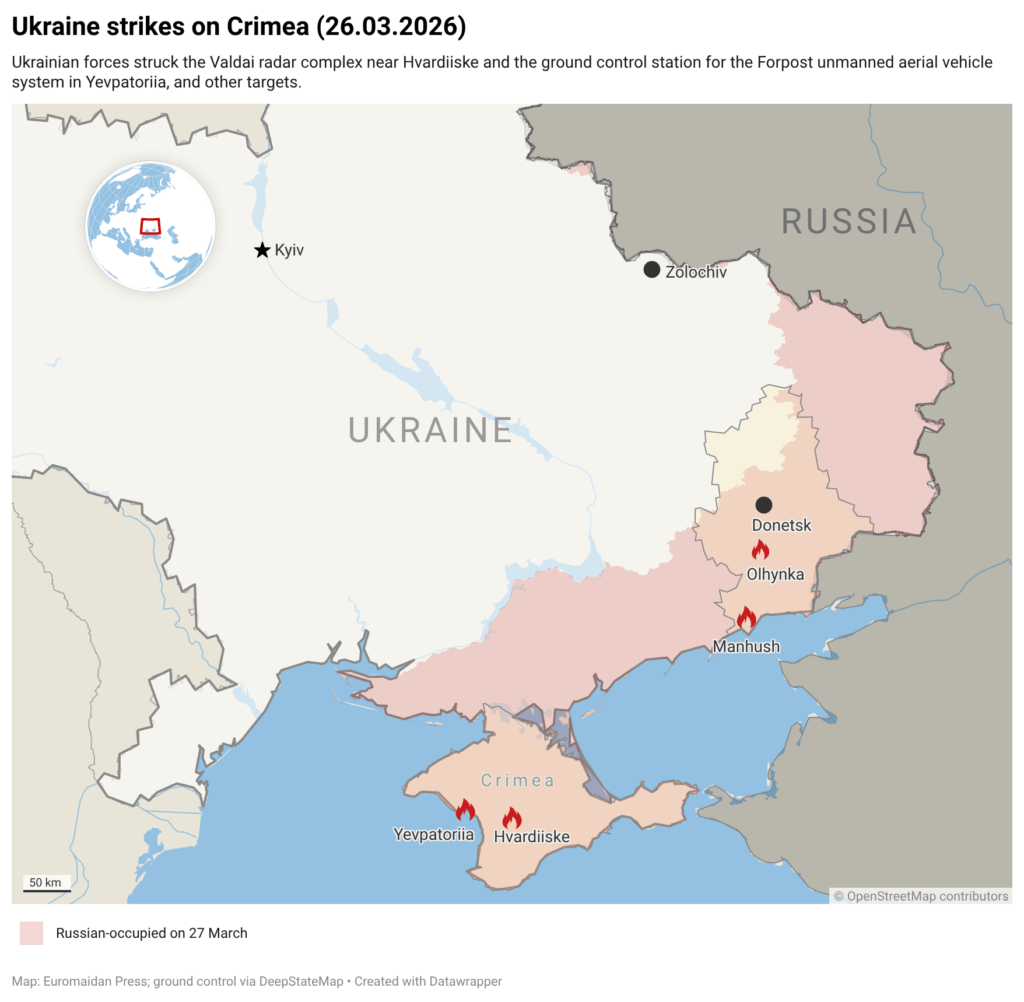
Ukraine's Defense Forces carried out a series of strikes overnight on 27 March targeting Russian radar systems, drone infrastructure, command posts, and logistics facilities across occupied Crimea and eastern Ukraine, according to the General Staff of the Armed Forces of Ukraine.
Kyiv continues to erode Russia’s air defenses, creating safer conditions for drone, missile, and aircraft operations.
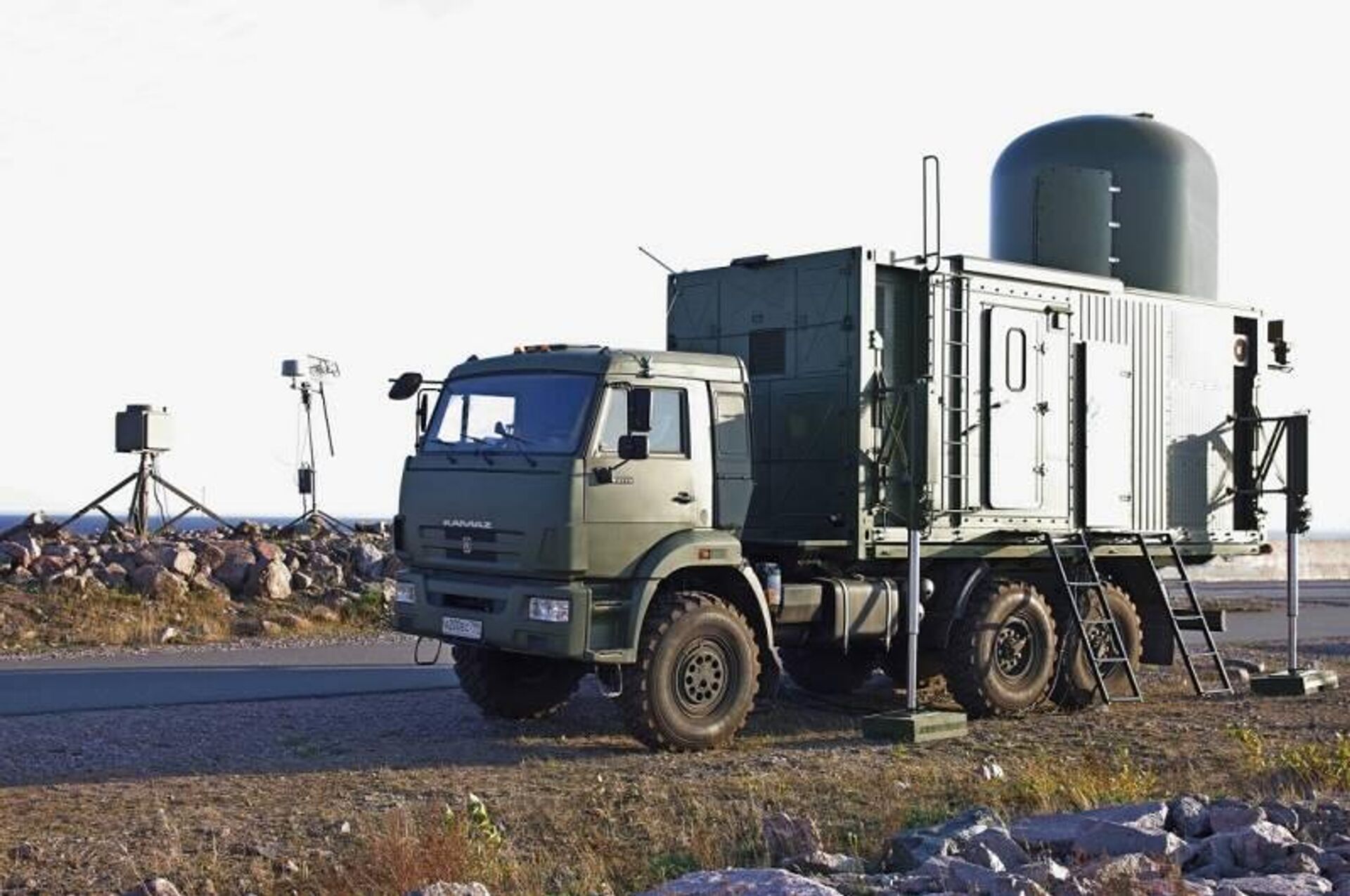
One of the key targets mentioned in the report was the Russian Valdai radar complex near Hvardiiske in temporarily occupied Crimea. The system is designed to detect and counter small unmanned aerial vehicles, making its reported damage particularly notable amid Ukraine’s expanding drone campaign. Crimea has two settlements named Hvardiiske. The General Staff did not specify which one was targeted. It is likely the one northeast of Simferopol, which has been targeted multiple times before.
In Yevpatoriia, western Crimea, Ukrainian forces reportedly struck a ground control station for the Forpost unmanned aerial vehicle system. The Forpost drone is widely used by Russian forces for reconnaissance and target acquisition. Damage to such infrastructure may complicate Russian intelligence gathering and fire coordination in southern Ukraine.
The Ukrainian General Staff also reported more strikes in the occupied part of Donetsk Oblast. Ukrainian forces targeted a Russian command post near Olhynka, as well as an ammunition depot in the Manhush area. Such attacks aim to degrade Russian command-and-control capabilities and disrupt supply lines supporting frontline operations.
Kirishi refinery: damage confirmed
Separately, the General Staff confirmed the full extent of damage from the March 26 strike on the Kirishi oil refinery (KINEF) in Russia’s Leningrad Oblast. Primary crude distillation units ELOU-AVT-2 and ELOU-AVT-6 were damaged, along with bitumen production facilities, hydrotreatment units, and gas fractionation equipment.
Reuters reported that the plant, owned by Surgutneftegas, halted all operations following the attack. KINEF processes roughly 20–21 million tonnes of crude annually, accounting for more than 6% of Russia’s total refining output. Its products include fuels used by the Russian armed forces.
The 26 March strike was the fifth on the Kirishi facility. It also marked the third attack on Baltic energy export infrastructure in four days, following drone strikes on the Ust-Luga port complex on 24–25 March and the Primorsk oil terminal on 22–23 March.
Read also
-
Ukraine hits Ust-Luga and Primorsk for the third time in five days — the pace suggests Kyiv is trying to destroy Russia’s Baltic oil export ports beyond repair
-
Sanctioned Russian shadow fleet tanker struck by drone near Istanbul, 140,000 tons of oil on board
-
Russia built the world’s only missile-armed icebreaker. A Ukrainian sport plane just crippled it.