

From 23 March to 24 March, Russian forces carried out the largest drone attack on Ukraine since the start of the full-scale war. It killed a newborn baby in Ivano-Frankivsk and damaged a historical monument in Lviv.
In total, Russia deployed 948 Shahed-136 / BM-35 “Italmas” drones, along with decoys such as “Gerbera”. Of these, 906 were shot down, which is approximately 95% of the total, according to military analyst Oleksandr Kovalenko.
A record broken, but driven by calculated intent
“At this point, it is known that up to 9:00 a.m., around 250 Shahed-136/BM-35 ‘Italmas’ drones were used in the combined strike,” Kovalenko noted.
The previous record was set on 7 September 2025, when 810 drones were launched.
Kovalenko expressed confidence that instead of a detailed and objective analysis of this attack, Ukraine’s information space may soon see a resurgence of panic-driven narratives about “a thousand Shaheds every night.”
Distraction from failures: the real purpose of the attack
“It is unlikely that many will take into account Russia's stockpiling of munitions. Since 14 March — the previous large-scale strike — Russian forces had time to accumulate at least 850 drones of various types,” he said.
He also pointed to the relatively low intensity of attacks in early March, when in some cases fewer than 100 drones were used per day.
Another key factor, according to Kovalenko, is the failed start of Russia’s spring-summer offensive, attempts to divert attention from some of the highest recent losses, and minimal territorial gains.
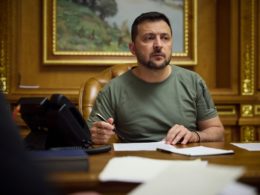
Meanwhile, Volodymyr Zelenskyy stated that, as of now, more than 40 people have been injured, including five children. He emphasized that energy infrastructure remains a primary target of Russian attacks, which continue in an effort to destroy Ukraine and its power grid.
The Ukrainian president highlighted that the scale of this attack clearly demonstrates that Russia has no intention of truly ending the war.