
Social media accounts are promoting the idea of a “Narva People’s Republic,” a separatist project seeking to detach parts of northeastern Estonia which border Russia, according to an investigation by Estonian anti-propaganda outlet Propastop.
The activity highlights ongoing information security challenges in the Baltic states, which share a long border with Russia. Narva is Estonia’s third-largest city, located on the border with Russia in Ida-Virumaa county. The region has a large Russian-speaking population, and Estonia has previously expressed concern about Russian influence operations targeting local communities.
Flags, anthems, and mock statehood
The online channels, active on Telegram, VKontakte, and TikTok, use memes, videos, and graphics to advance the idea of a separate state, Propastop says. Posts mix internet humor, images of cats, and cultural references with political messaging, creating the impression that Narva is a distinct political entity.
One channel, named “Нарвская Народная Республика” (“Narva People’s Republic”), appears to have been created in summer 2025, but activity increased in February 2026, according to Propastop.
The channels feature state-style symbols, including a green–black–white flag, a proposed coat of arms with a black eagle, and mock military insignia. A video presents the song “Fly Away on the Wings of the Wind” from the 19th-century Russian opera Prince Igor as the movement’s anthem.
Maps circulated in posts depict Narva as a separate area between Estonia and Russia. Some graphics show the so-called “Narva agenda,” combining military claims with cultural activities such as concerts and fireworks.
The Ukrainian template
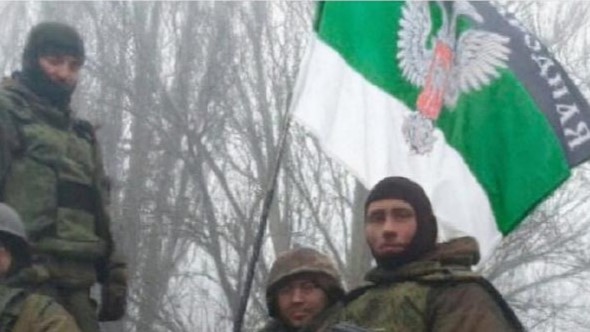
The term “People’s Republic” is closely associated with Russian-backed separatist movements in the post-Soviet space, including the Donetsk and Luhansk People’s Republics in eastern Ukraine.
By using this terminology alongside state-like symbols – flags, coats of arms, and military insignia – the channels frame the Narva movement as a quasi-state, echoing tactics Russia has used to justify territorial claims and military intervention in Ukraine.
Propastop notes that some posts present autonomy for Ida-Virumaa as a way to preserve Russian cultural identity, describing a governance model in which local residents would choose leaders rather than having a formal president.
These narratives are designed to make separatism appear legitimate and democratic while establishing a pretext for potential Russian influence or intervention, replicating the approach seen in Ukraine’s eastern regions.
How the network operates
Content from Telegram serves as the main distribution point, with the same posts shared across other platforms. Channels encourage followers to share materials and contact administrators anonymously through Telegram bots.
Analysts cited by Propastop say the use of memes, cultural references, and humor is designed to normalize separatist ideas and make them more engaging for younger audiences.
Small reach, but familiar pattern
While subscriber numbers remain small – around 60–70 on Telegram – the activity illustrates how online narratives can spread separatist ideas and reinforce foreign influence in Estonia’s information space, Propastop notes. The origin of the accounts is unknown, and there is no evidence that the movement has any formal organization beyond its online presence.
The case underscores broader concerns in the Baltic region about the spread of disinformation and the use of symbolic and cultural messaging to promote territorial claims. Estonia has previously warned that Russia has used propaganda and information operations to influence Russian-speaking populations in border regions.