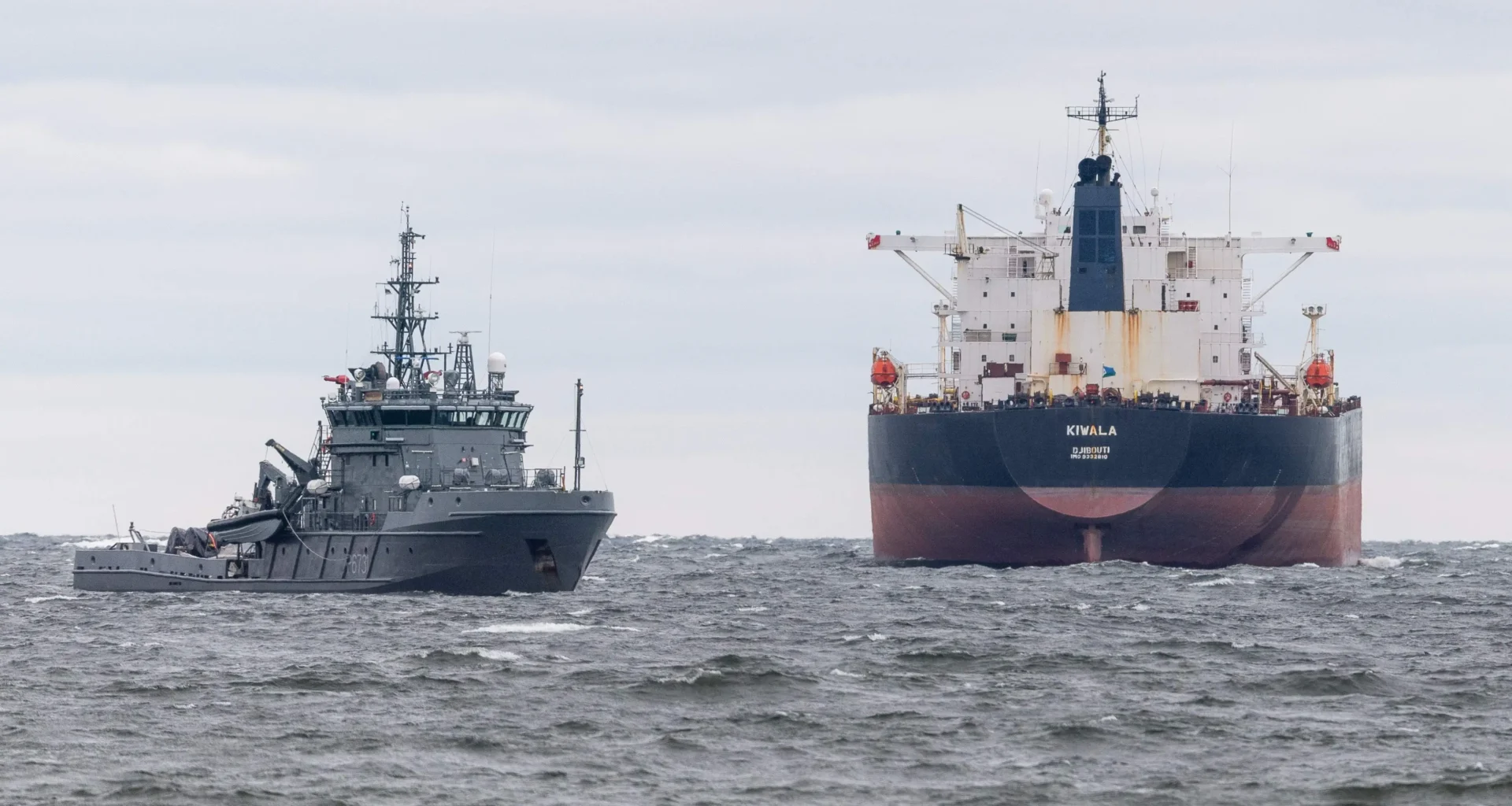

Wagner veterans and Russian intelligence operatives are riding Russia's shadow fleet oil tankers through the Baltic Sea. An investigation by the Organized Crime and Corruption Reporting Project (OCCRP) identified at least 17 individuals embedded on these vessels—men lacking formal maritime qualifications but possessing backgrounds in security and military structures, including ties to the Wagner mercenary group and Russian intelligence agencies.
According to Western intelligence officials, these operatives monitor crews, coordinate with Russian authorities, and serve as intermediaries between the shadow fleet and Russian military structures.
These are not commercial ships evading sanctions. They are hybrid warfare platforms – nodes in a state-directed system that blends sanctions evasion, intelligence activity, and sabotage of undersea infrastructure. Some have been used as launchpads for drones harassing European territory. And this fleet has tripled in size since 2022, now exceeding 1,100 vessels according to Ukrainian intelligence.
Europe has the legal basis and naval capacity to intercept these vessels and confiscate their cargo. It should do so.
The US already proved it works
The United States has already demonstrated that seizing shadow fleet tankers is operationally and legally feasible. In December 2025, US forces boarded and seized the tanker Skipper in the Caribbean—a vessel previously sanctioned for involvement in Iranian oil smuggling—that was carrying 1.8 million barrels of Venezuelan crude.
In January 2026, Washington seized the Russian oil tanker Marinera in the Atlantic near Iceland. The Justice Department has forfeited over 5.3 million barrels of petroleum and $294 million from similar operations since 2019.

Washington used a combination of Coast Guard boarding authority, terrorism financing statutes, and a critical legal lever: many shadow fleet tankers operate with falsified registrations or no valid flag at all, rendering them effectively stateless.
Under UNCLOS Article 110, any warship may board a vessel suspected of being without nationality. A stateless vessel has no flag state to protest its seizure – it exists in a legal void that enforcement can fill.
Europe has its own enforcement hooks.
- EU sanctions regulations already authorize asset freezes on listed vessels, and the EU has sanctioned over 600 shadow fleet ships.
- Within member states' territorial waters and exclusive economic zones, coastal states have full jurisdiction to enforce their laws—including sanctions compliance, maritime safety, and environmental regulations that these vessels routinely violate through transponder manipulation, falsified cargo documentation, and unsafe ship-to-ship transfers.
- The average shadow fleet vessel is 18 years old – past the 15-year threshold where technical failures increase sharply – and most lack proper insurance.
Each of these violations is an enforcement hook. EU member states can detain such ships fully complying with international maritime law, initiate criminal proceedings for sanctions evasion and confiscate cargo after court judgement. For ships listed under Council Regulation (EU) No 269/2014 as subject to targeted sanctions, the enforcement procedure is particularly straightforward.
When enforcement is aggressive, it works.
- The US Treasury's January 2025 sanctions targeting 158 tankers in a single action cut active shadow fleet capacity by 46% within weeks.
- Ukraine's "kinetic sanctions"—strikes on shadow fleet tankers in the Mediterranean and Black Sea—tripled war-risk insurance costs and drove at least one Turkish shipping company to cut ties with Russian partners overnight.
- Sweden has already boarded and detained a sanctioned shadow fleet vessel despite the known presence of Wagner-linked personnel on board—demonstrating that European navies are neither legally nor practically incapable of acting.
Why now—and what Europe gains
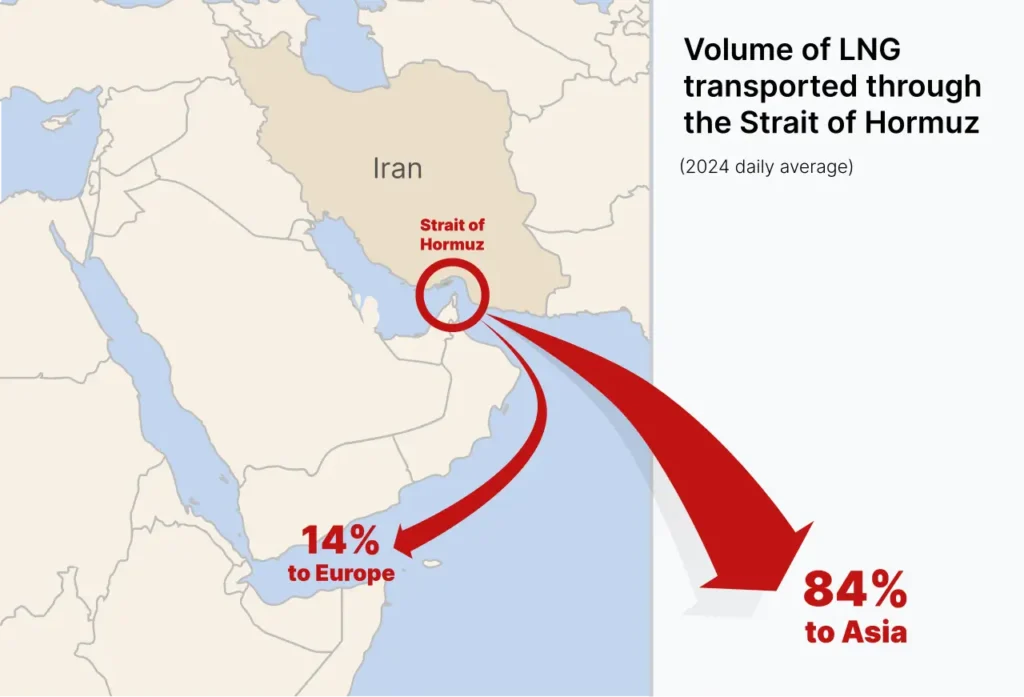
The Strait of Hormuz crisis has made the stakes impossible to ignore. Oil prices have surged past $100 a barrel. Washington has already issued a 30-day waiver allowing India to buy Russian crude stranded at sea, and Treasury Secretary Scott Bessent has openly floated lifting Russian oil sanctions to plug the supply gap.
The Trump administration is now considering broader sanctions relief on Russian energy – undoing years of pressure to cool prices that Moscow's invasion helped spike in the first place.
This is 2022 in reverse. Then, Russia weaponized energy markets to fill its war chest with close to €1 billion per day in fossil fuel exports during the first months of the full-scale invasion. The Centre for Research on Energy and Clean Air estimates Russia earned about €193 billion from fossil fuel exports in the twelve months leading to February 2026.
Now the Hormuz disruption threatens to hand Moscow another windfall—this time courtesy of a supply crisis it did nothing to cause.
Easing sanctions is the wrong response. Europe has an alternative that weakens Russia and strengthens European energy security simultaneously: intercept shadow fleet tankers violating maritime law and redirect the confiscated cargo into European strategic petroleum reserves.
More than 90 million barrels of Russian crude transit EU-adjacent waters every month via the Danish Straits. Shadow fleet tankers carry roughly 80% of it. Confiscating even a fraction of that cargo would ease the Hormuz supply shock while cutting the revenue stream that funds Russia's war.
Germany’s official stockholding body EBV says it is currently holding about 24 million tonnes of crude oil and petroleum products in strategic reserves, which is roughly 176–177 million barrels. Confiscating a monthly stock of Russian oil transported by the shadow fleet would be equivalent to delivering roughly 40% of Germany’s full strategic stockpile.
The economics run in one direction. Europe gets oil it needs at a moment of supply crisis. Russia loses revenue that funds the war. And the global signal is that sanctions carry hard-hitting physical consequences—not just paperwork.
The objection that doesn't hold
The predictable counterargument is escalation. But what exactly would Russia do? Its massive shadow fleet operates precisely because it avoids confrontation—relying on obscurity, flag-of-convenience registrations, and the assumption that Europe will look the other way.
Every tanker that docks at Moscow-assigned destination unchallenged reinforces conviction that Western sanctions are, as the Kremlin has effectively concluded, optional.
Seizing cargo from vessels already violating international law is not provocation. It is enforcement. And as the OCCRP investigation makes clear, these are not innocent merchant ships—they are manned by military personnel serving a state at war with Europe's neighbor.
Russia chose to militarize its merchant fleet. Europe should respond accordingly.
Russia has not enough naval capacity to continiously escort its shadow fleet outside the Baltic Sea. Once the vessels pass the Danish Straits they can be intercepted at any point and Russia can do little about it. Even more so in the Mediterranian.
What would Russia do? Its massive shadow fleet operates precisely because it avoids confrontation
But Russia’s Baltic Sea fleet is also very limited. There are only about 20 operational combat-capable surface vessels, and only half of them carry Kalibr or other modern anti-ship missiles. It’s clearly not enough to provide continious escorts for hundreds of shadow fleet tankers and also no match for European naval forces in the region.
The combined naval forces of Germany, Poland, Sweden, Denmark and Finland outnumber the Russian fleet 3:1 and are far more thechnologically advanced. This makes shadow-fleet enforcement operations even in the Danish Straits militarily feasible if EU member states act collectively.
Russia’s most likely response to interceptions would be attempts of political escalation and limited intimidation rather than direct use of naval force, which in the case of Mediterranian is not available at all, as Black Sea fleet was reduced by Ukraine’s drone and missile strikes to pitiful remains and even those would be blocked by Türkiye as a NATO member.
Past cases show Moscow typically denounces seizures as “piracy,” files diplomatic protests, and conducts symbolic military signaling such as aircraft overflights near NATO vessels. But Russia has avoided direct confrontation with European navies, making systematic interdiction feasible if conducted collectively and framed as sanctions enforcement.
The UK has designated nearly 300 targets including Russia's largest oil pipeline company. The EU has listed for targeted sanctions over 600 vessels. New Zealand, Australia, and Ukraine have all expanded their own designations.
The tools exist. What remains is the political decision to use them not as a bureaucratic exercise, but as a strategic instrument.
Every shadow fleet tanker that passes through European waters unchallenged carries two cargoes: Russian oil and the message that sanctions are voluntary. Europe can no longer afford to deliver both.
Editor's note. The opinions expressed in our Opinion section belong to their authors. Euromaidan Press' editorial team may or may not share them.
Submit an opinion to Euromaidan Press