


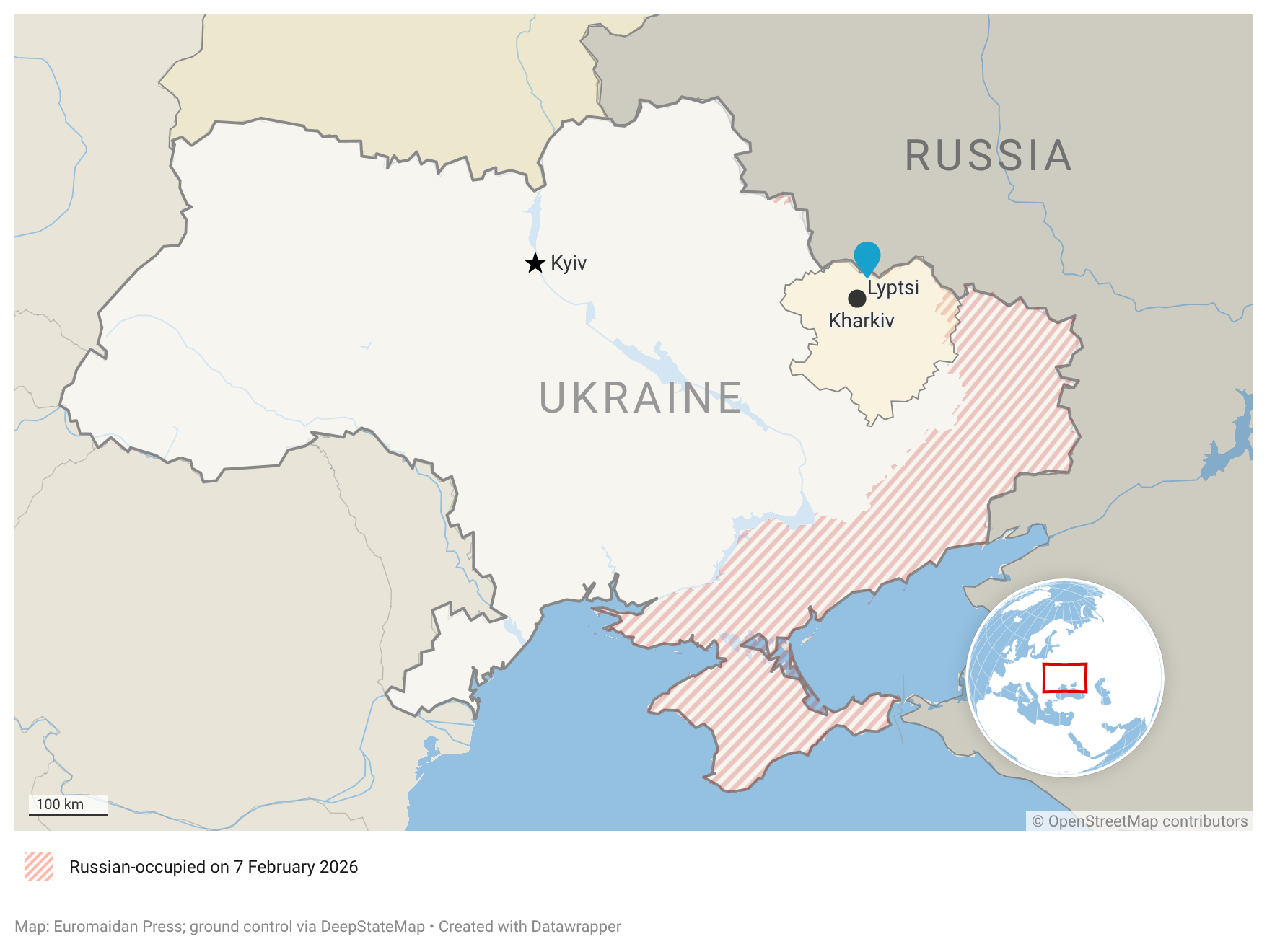
Russian armor has disappeared from the contact line north of Kharkiv as drones of every type take its place, an officer from the Ukrainian National Guard's 13th Khartia Brigade told Army TV on 2 March, Army Inform reported. Ukrainian forces now strike Russian tank and artillery positions deep in the enemy rear, while Russia compensates with a surge in drone use across the sector.
Russian armor pushed across the border
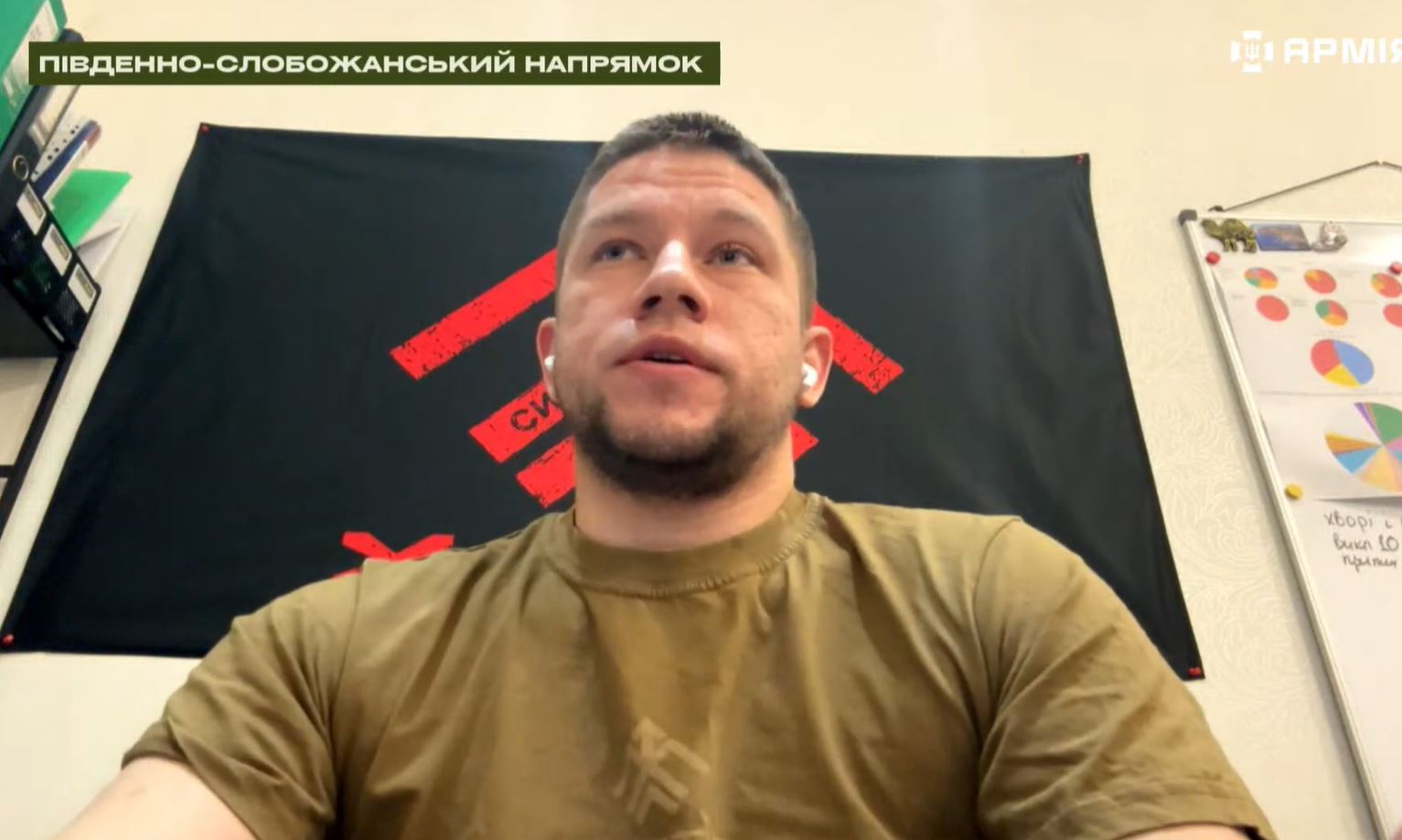
A deputy company commander from an operational battalion of the 13th National Guard Brigade Khartia, callsign Porokh, said his unit hasn't seen heavy or armored equipment near the front line on the South Slobozhanskyi direction in a long time, Army Inform reported.
"We haven't observed heavy equipment on our direction for a long time, armored even less so," he said. "Strikes on such equipment mostly happen in the enemy's rear — that's already across the border."
When intelligence provides targeting data, Ukrainian forces manage to strike artillery and tank positions far from the border itself, he added. Porokh described the situation as "more or less stable," adding: "I won't say it's easy — it's hard, of course, the enemy tries to conduct assault actions."
Drones filling the gap
The officer said that from early summer 2025, Russia stopped using heavy armor in assaults and switched to small infantry groups — a pattern that continues to this day.
"Nothing remained of those groups that tried to reach our positions," Porokh said, adding that his unit doesn't observe any logistics support reaching them either.
He described the attackers as poorly trained regular soldiers, not special forces.
"Their preparation for such actions is hasty, insignificant, and doesn't pose a real threat to us," he said.
Russia is compensating for the loss and withdrawal of armor with an increase in drone use on this sector. Porokh said the full range of unmanned systems seen along the rest of the front line is now present north of Kharkiv — airstrikes, Shahed drones, and a large number of fiber-optic systems.
"Air superiority on our direction is still ours, of course, but the enemy isn't reducing the level of its aggression," he said.
Russia has also increased spool sizes for its FPV drones, extending their range. Fiber-optic FPV drones have already been spotted on the outskirts of Kharkiv, Porokh said.
The 13th Khartia Brigade is known to operate in the Lyptsi sector in Kharkiv Oblast. In December 2024, the brigade conducted what it described as the first fully robotic ground combat operation in history, using unmanned ground and air systems to attack Russian positions without risking soldiers.


