

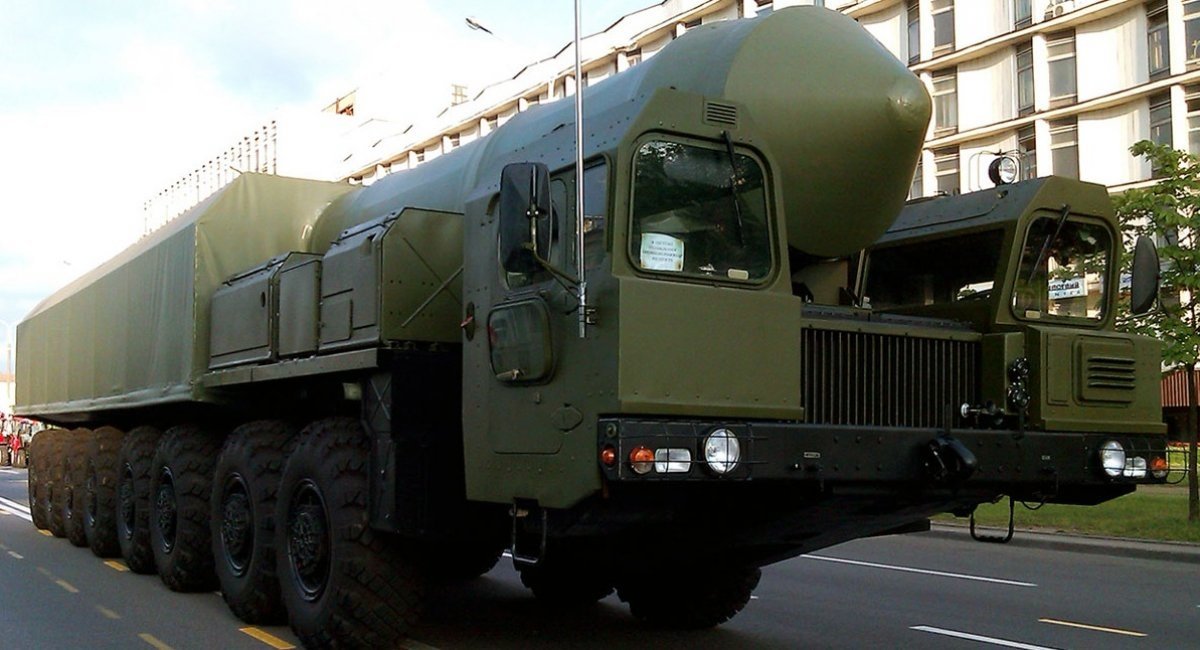
Deploying Russia's Oreshnik intermediate-range ballistic missile in Belarus does not significantly alter the tactical or operational balance but serves as a nuclear threat aimed at intimidating Europe, former head of Finnish military intelligence and retired Major General Pekka Toveri told LIGA.net.
"The deployment of Oreshnik is not a game changer on tactical or operational levels. Yes, it gives the missile the ability to hit targets in Western Europe 300 km further. On the other hand, it brings the Oreshnik launchers closer to NATO air forces and other long-range assets, making them easier to detect and destroy," Toveri said.
Russia possesses numerous other long-range missile systems, the MEP noted, and has only a handful of Oreshnik missiles in service — meaning the weapon does little to shift the overall balance of forces.
"Actually, usually you try to have long-range missiles precisely in order to launch them from a safe distance," the former military official pointed out.
Strategically, however, the move sends an unmistakable signal, according to Toveri. He described the deployment as a deliberate attempt by Russia to intimidate Europe with nuclear weapons — and a clear gesture of violating the Intermediate-Range Nuclear Forces Treaty (INF). While Washington withdrew from the treaty in 2019 over Moscow's repeated violations, the United States has taken no steps to deploy new intermediate-range missiles in Europe, LIGA.net reports.
"Russia's actions are a direct threat to Europe and a demonstration that they no longer follow any rules of de-escalation. NATO must clearly show through exercises and the deployment of necessary assets that it is ready to destroy these launchers. The Alliance must also begin negotiations on creating and improving its own intermediate-range nuclear capability," Toveri said.
He acknowledged such efforts would take years but argued the process would "send a clear signal: NATO is not afraid and will respond to Russia's threats with powerful deterrence."
The Oreshnik missile is capable of carrying both conventional and nuclear warheads. Russia used the missile without a nuclear payload in strikes on the city of Dnipro and Lviv Oblast.
The Belarusian security forces veterans' association ByPol told LIGA.net that there is currently no confirmed information that an Oreshnik launcher has been placed on Belarusian territory. Exiled Belarusian opposition leader Sviatlana Tsikhanouskaya told the outlet, in the context of possible preemptive Ukrainian strikes on Oreshnik logistics, that the blame for "everything that may happen" lies with dictator Lukashenka's regime.