
For the first time since the full-scale invasion, the number of Russian occupation troops in Ukraine has stopped growing. Over the past six months, the figure has held at roughly 711,000-712,000 personnel, including operational reserves, according to the Ukrainian command-despite the Russian Ministry of Defense fully meeting its recruitment targets.
The arithmetic is blunt. Russian losses in January 2026 reached 31,700 killed and wounded-close to the monthly replenishment rate. In December 2025, then head of Ukraine's Defence Intelligence Kyrylo Budanov reported that Moscow had been recruiting an average of 34,083 people per month in 2025. Moscow is feeding soldiers into the front at roughly the same pace Ukraine is destroying them.
What makes the plateau significant is that it persists despite Russia's tactical adaptation. As Norwegian defense analyst Hans Petter Midttun documented in his analysis of four years of equipment trends, Russia shifted from costly mass assaults to smaller infiltration groups, gaining 31-34% more territory in 2025 while actually reducing total casualties.
The army adapted, lost fewer troops, captured more ground-and still stopped growing. Russia's recruitment pipeline has hit its ceiling.
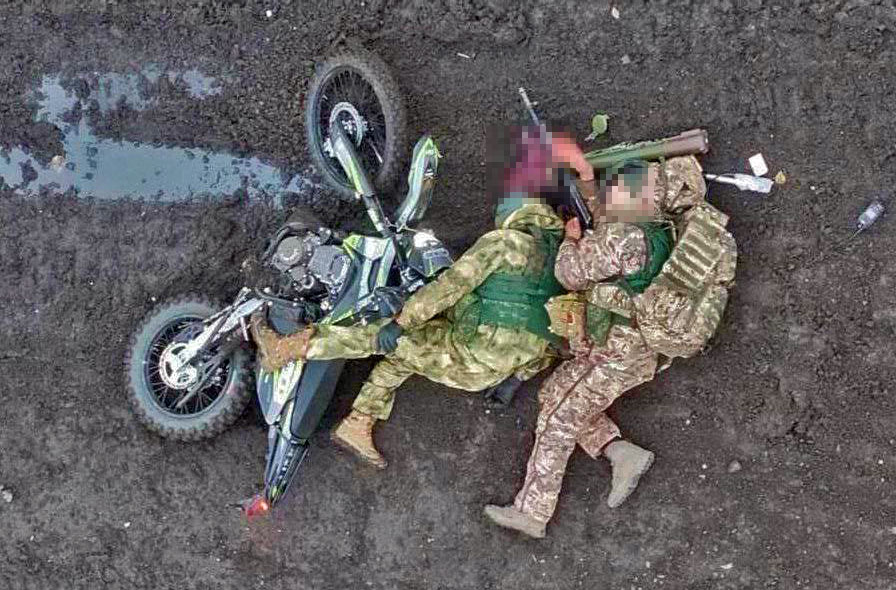
The losses that do occur are becoming more lethal. Midttun's data shows the wounded-to-killed ratio collapsing from roughly 3:1 early in the war to just 1.3:1—largely because FPV drone kill zones prevent medevac teams from reaching the wounded. Declining total casualties now mask a rising share of irreversible deaths. Recruitment can rehabilitate the wounded. It cannot replace the dead.
The Institute for the Study of War assessed on 6 February that Russia lacks sufficient reserves for a major summer 2026 offensive-a conclusion that tracks directly with the six-month plateau.
Against this backdrop—and with another round of peace talks in Geneva—Moscow is pushing for territorial gains to convert into a negotiating position.
Ukraine's task is the opposite: demonstrate that the front cannot be redrawn by force.
The drone factor: from 4% to 33%
The main engine behind Russia's unsustainable losses is Ukraine's rapidly maturing drone force. Since the summer of 2025, the Unmanned Systems Forces' share of verified combat results-target destruction, fire damage, and confirmed hits-has climbed from 4% to 33%, according to Commander-in-Chief Oleksandr Syrskyi. An eightfold improvement in under a year.
Drones now account for roughly 60% of all firepower used along the front line.
The scale is staggering on both sides. Ukrainian and Russian forces together deploy an estimated 7,000 FPV drones per day-a figure that has tripled since January 2025. The expansion of Ukraine's separate Unmanned Systems Forces branch continues alongside the second stage of the corps reform, which is placing brigades directly under corps headquarters.
Once complete, each corps will command its own units across a designated stretch of front—reducing the load on higher command, speeding up planning, and tightening coordination between defense and attack.
Starlink shutdown compounds the crisis
Russia's structural problems deepened in early February when Ukraine's Ministry of Defense and SpaceX engineers implemented a whitelist system blocking unauthorized Starlink terminals on Ukrainian territory. Simultaneously, the Kremlin blocked military access to Telegram, which many Russian troops used for frontline communication.
Starlink had become central to Russian frontline operations-unit communications, fire correction, and strike drone control all depended on it. The twin disruptions cast Russian surveillance, aerial attack, and command and control into disarray along the 1,200-km front.
The Russian command is scrambling to restore access. The Coordination Headquarters for the Treatment of Prisoners reports that Russia is pressuring relatives of Ukrainian prisoners of war to register Starlink terminals with Ukrainian service providers. The Security Service of Ukraine warned that Moscow is also recruiting Ukrainian citizens to register Russian terminals in the whitelist system for cash.
The episode exposed the depth of Russia's dependence on foreign technology that, despite sanctions, still reaches the front. Tighter control over dual-use goods would further weaken the Russian army and shrink the Kremlin's ability to sustain the war.
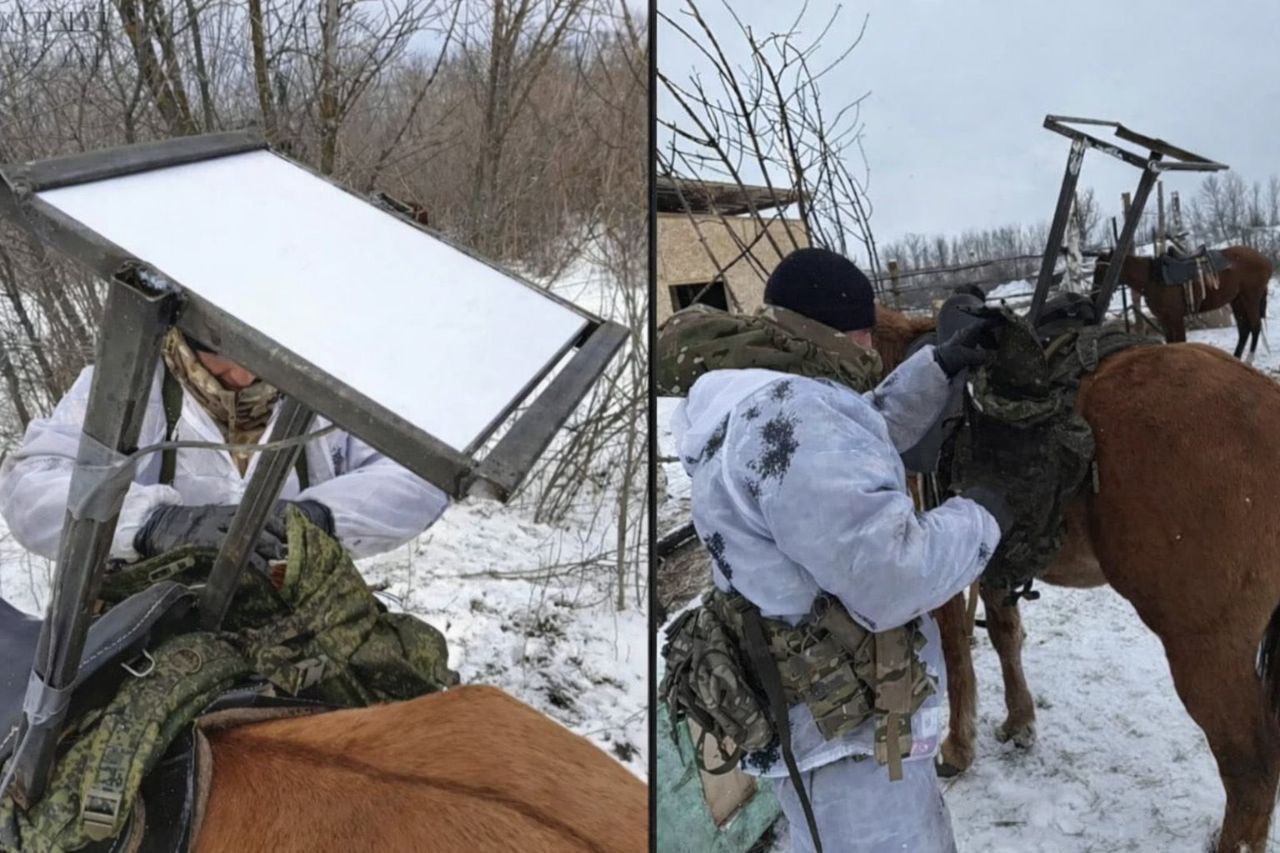
Ukrainian brigades detail Starlink crackdown: Russian terminals “became just bricks,” assaults disrupted
Kupiansk: the lie that keeps lying
Nowhere is the gap between Russian claims and reality more visible than in Kupiansk. Ukrainian units have nearly finished clearing the city center, where the remnants of the Russian garrison—40 to 50 soldiers—remain entrenched.
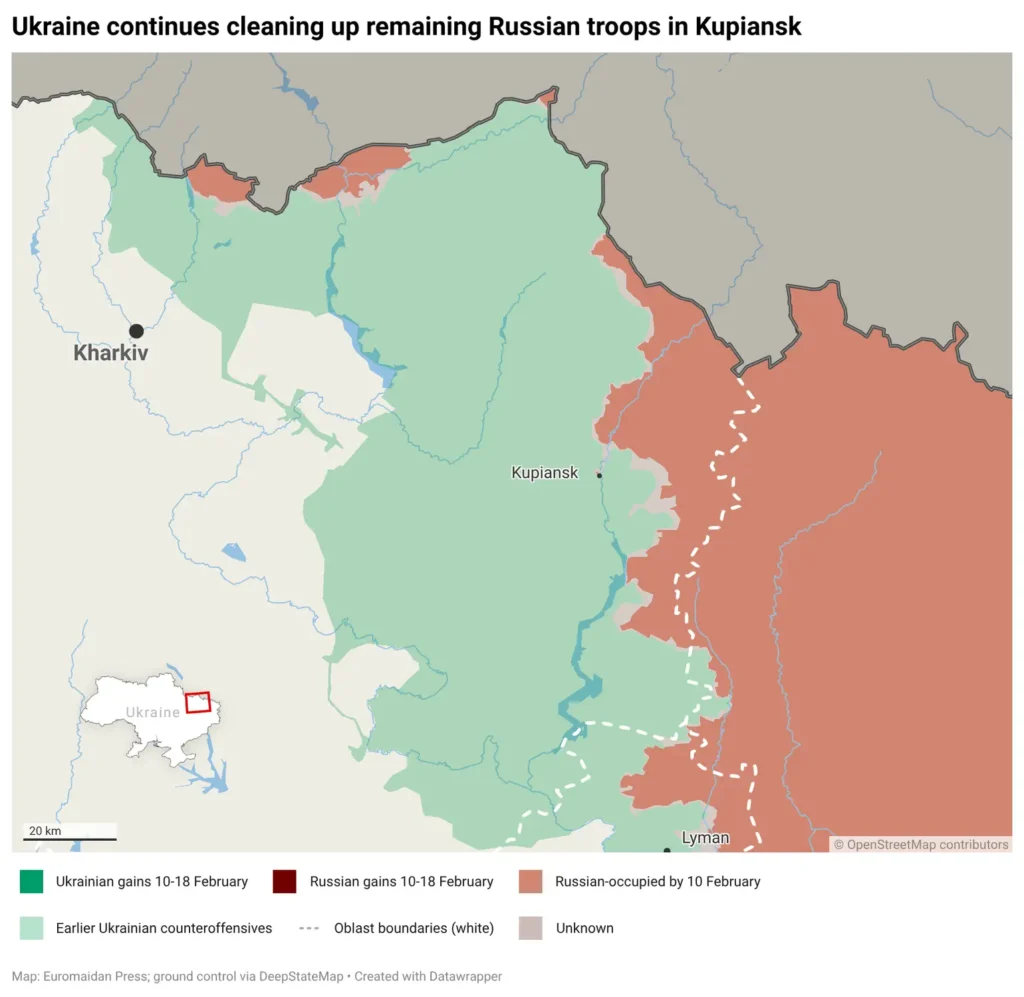
This is the same city that Chief of the General Staff Valery Gerasimov reported as captured to Putin himself. What followed was a cascading credibility collapse within Russia's own command.
According to Russian military blogger Romanov, a commission was dispatched to the "West" military group—the formation responsible for the Kupiansk assault—to assess the real situation. The commission, Romanov later wrote, found no discrepancies between the front line and the command's reports. "This is not surprising," he added, "since the initiator of the reports that do not correspond to reality is specifically Gerasimov, and not the leadership of the group."
In other words: the inspectors confirmed the lies because the lies came from the top.
Calls are now spreading in Russian military channels to hold accountable the generals who commanded the assault and received decorations for Kupiansk's "liberation." The channel Insider ZOV put it bluntly: "We will do everything possible to ensure that no one can hide the truth! Those responsible for the failure in Kupiansk, namely Kuzovlev and Ksenofontov, must be punished!"
For an army that has stopped growing, the cost of garrisoning a city it falsely claimed to have captured—while draining troops from sectors where they're actually needed—compounds the manpower crisis.
Huliaipole and the Zaporizhzhia front: Ukraine pushes back
Against the backdrop of the Kupiansk debacle, Russian media began actively spreading news about a Ukrainian offensive at the junction of Donetsk, Dnipropetrovsk, and Zaporizhzhia oblasts, particularly around Huliaipole-possibly to distract Russian society from failures elsewhere.
Trending Now
But it's not just propaganda. According to the Ukrainian military, a military operation is indeed underway in the Huliaipole area. OSINT analysts report that settlements have been liberated or cleared of Russian troops, and analysts note the redeployment of Ukrainian assault units along the Huliaipole-Velykomykhailivka axis.
The heaviest counterattacks span a 35-km sector from Huliaipole south to Pokrovske in the north-until recently one of Ukraine's most vulnerable stretches. The Russian Dnipro Group of Forces held a five-to-one manpower advantage here and kept exploiting gaps in Ukrainian defenses caused by poor coordination between territorial troops (who defend) and assault troops (who attack).
The Russians had been making steady progress toward Zaporizhzhia City. Though farther from the front line than Kramatorsk, Zaporizhzhia was at greater risk late last year-the path toward it was largely open, unlike the heavily fortified routes to Kramatorsk.
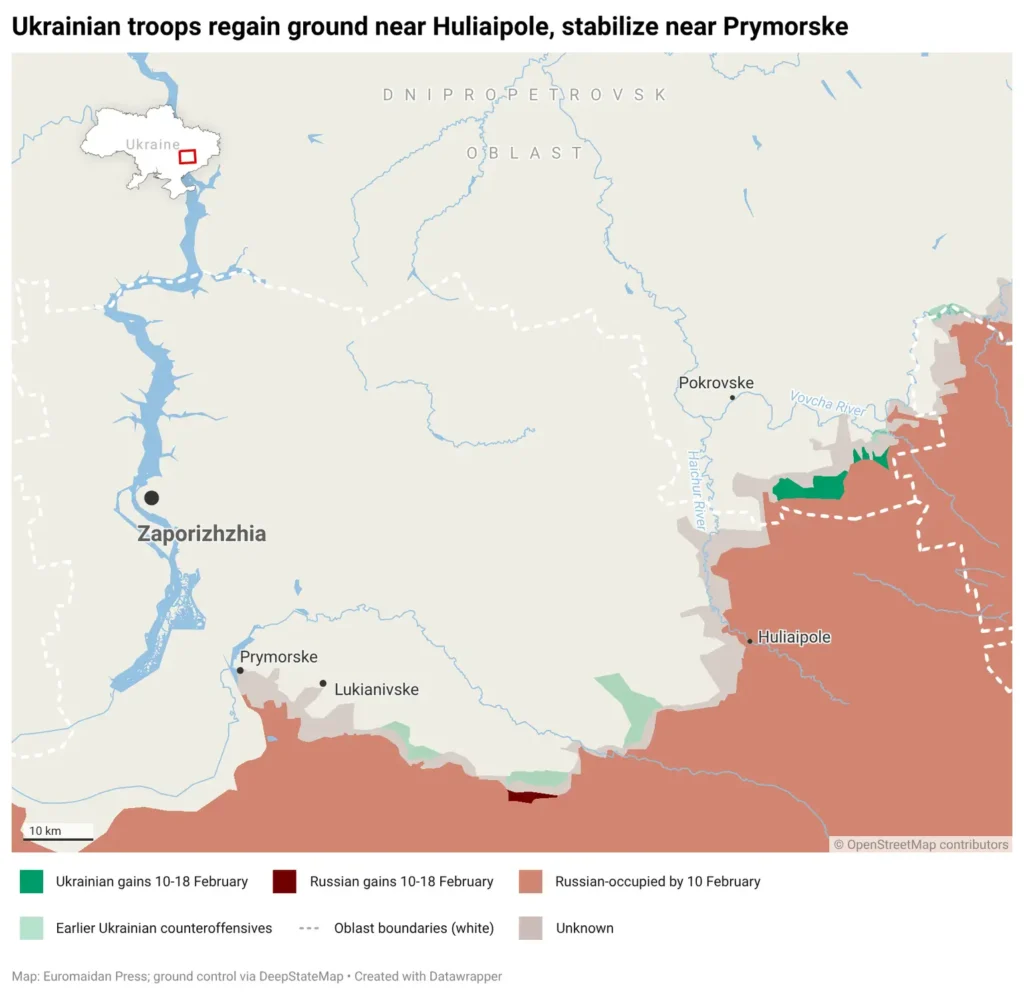
That has changed. Rushing forces south, Ukrainian airborne and assault brigades attacked from the west and north, aiming to recapture Huliaipole while squeezing the Russian 36th Combined Arms Army east of Pokrovske.
A knocked-out ex-Australian M-1 Abrams, visible in the video feed of one of the few drones Russia could sortie against the attackers, revealed the caliber of forces Kyiv sent south. The only known user of the 49 M-1s Australia donated to Ukraine last year is the 425th Assault Regiment, which had been fighting north of Pokrovsk. Kyiv robbed the Pokrovsk sector to reinforce the Huliaipole one.
Ukrainian forces have crossed the Haichur and Vovcha rivers and are pushing armored vehicles into the wide gray zone between clear areas of Ukrainian and Russian control. The Russians are off-balance and losing whatever hold they recently had over hundreds of square kilometers of the southeast.
Further south, below Zaporizhzhia City, Ukrainian troops are conducting stabilization measures around Prymorske and Lukianivske to limit Russian infiltration. Russian positions here put Zaporizhzhia's southern outskirts within FPV drone range-in early February, a Russian FPV was recorded falling inside the city itself. Stabilizing this front also protects Orikhiv, which the Russians likely plan to encircle from the flanks.
Pokrovsk, Lyman, Kostiantynivka: holding on multiple axes
The cost of Kyiv's gamble is visible in Donetsk Oblast. The Pokrovsk direction remains the most intense sector-fighting continues around Pokrovsk and Rodynske, with the enemy expanding its presence in the north while pushing assaults around Hryshyne. The Russian command wants Rodynske to get behind Ukrainian forces and cut off units still operating in Myrnohrad.
But the tradeoff makes strategic sense. Russia's gains around Pokrovsk and Myrnohrad merely consolidate control over those cities-they don't open a path toward the ultimate Donetsk objectives of Kramatorsk and Sloviansk, 50 km to the northeast, both heavily fortified. Zaporizhzhia City, by contrast, was exposed.

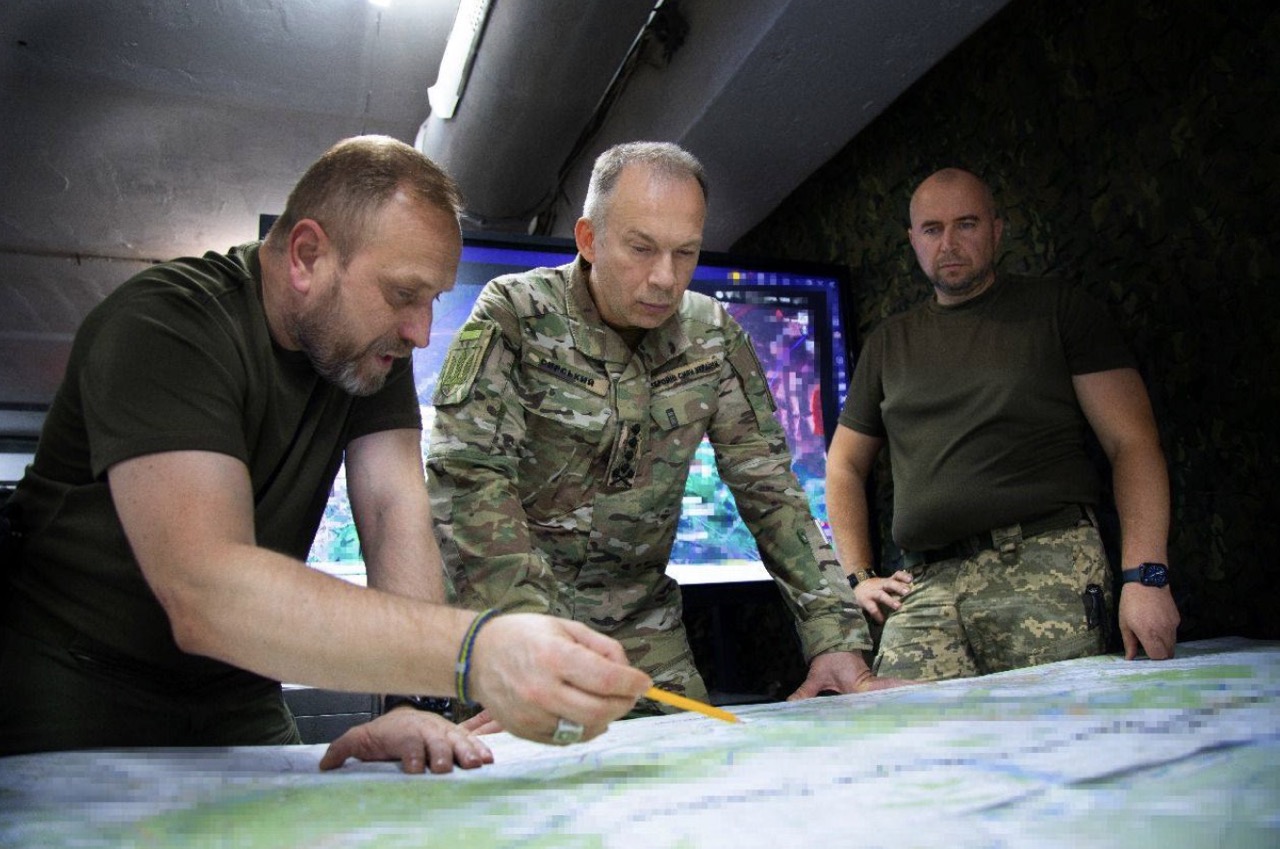
After meetings with corps and brigade commanders along the Pokrovsk-Dobropillia-Kostiantynivka line, Deputy Head of the President's Office Colonel Pavlo Palisa announced direct replenishment of these units per a General Staff decision.
In the Kostiantynivka area, Russian troops exploited fog and cloud cover to infiltrate the southern outskirts and push toward Illinivka. Ukrainian defenders destroyed most of the assault force and stopped the advance.
In the Lyman direction, the enemy is using infiltration tactics to enter Lyman itself in small groups while pushing on the flanks to encircle the city and force Ukrainian units across the Siverskyi Donets River.
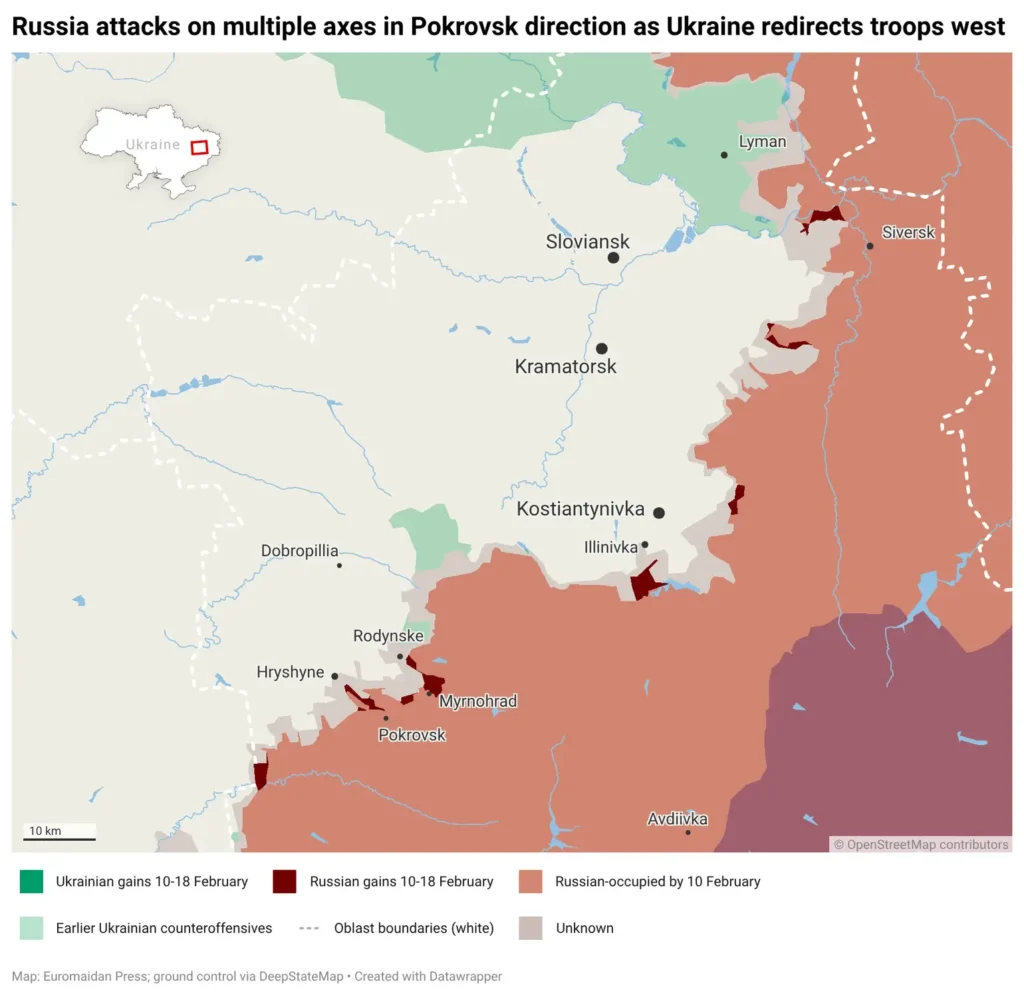
West of Siversk, which Ukraine recently lost, the command has stabilized the situation. Commanders who provided false information about conditions in the area—contributing to the settlement's fall—have been replaced.
The 10th Mountain Assault Brigade "Edelweiss," defending the Sloviansk direction, will now be led by 33-year-old Colonel Oleksiy Chuzhikov, call sign "Bravo," formerly chief of staff of the 93rd Mechanized Brigade "Kholodny Yar," according to Ukrainska Pravda.
The Soviet disease plaguing both armies—and the Ukrainian brigades trying to cure it
Moscow's options are narrowing
The Russian command is looking for new ways to fill the gap. Reports have emerged of covert mobilization targeting retired military and police personnel—a sign the volunteer pool is shrinking. The daughter of a deceased Russian soldier, citing a relative who serves in the police, said former law enforcement officers are being forcibly summoned to military registration offices after leaving the service. Separately, there are centralized orders to force Russian conscripts to sign contracts.
The six-month plateau is not yet a collapse. Russia's army is not shrinking—it is holding steady at a force level that allows continued pressure along multiple axes. But an army that cannot grow cannot replace what it loses in one sector without weakening another. The Huliaipole counteroffensive showed what happens when Ukraine identifies and exploits those gaps.
Commander-in-Chief Syrskyi hinted on 6 February that the situation in the Huliaipole direction could "change radically." Two weeks later, it has.