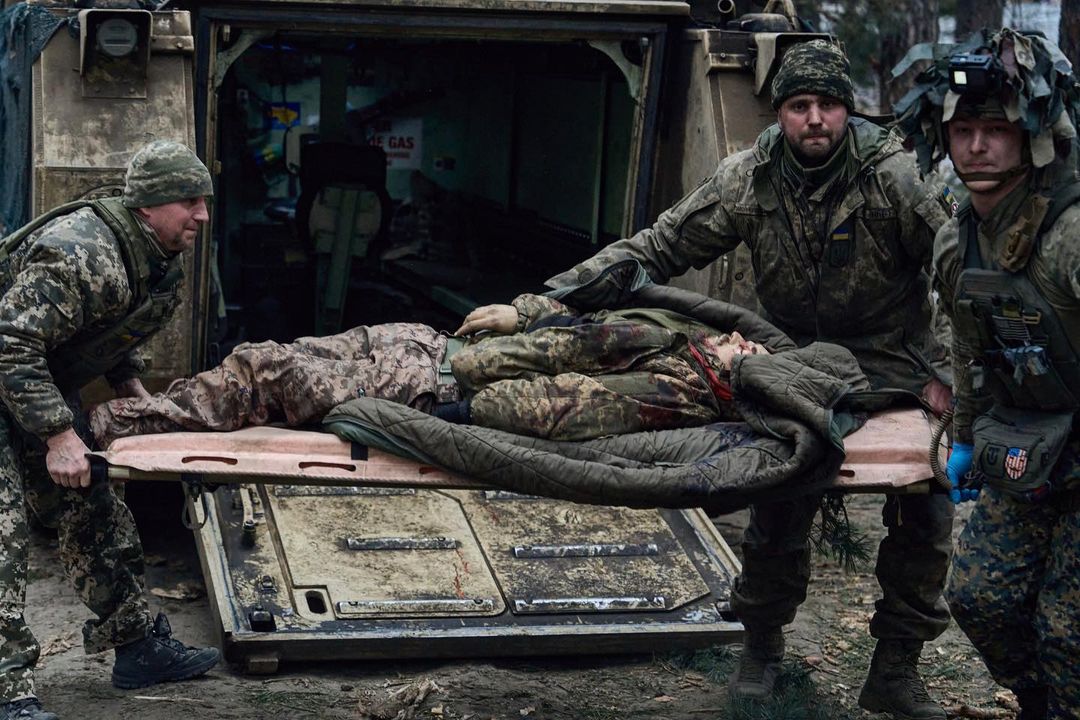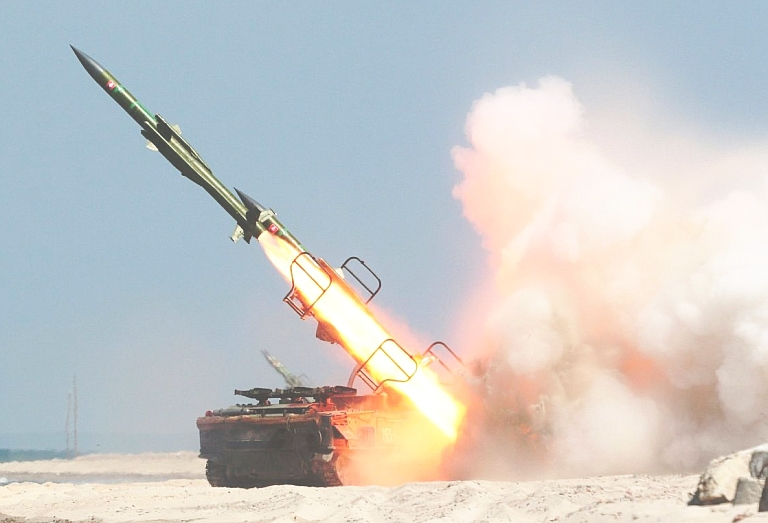


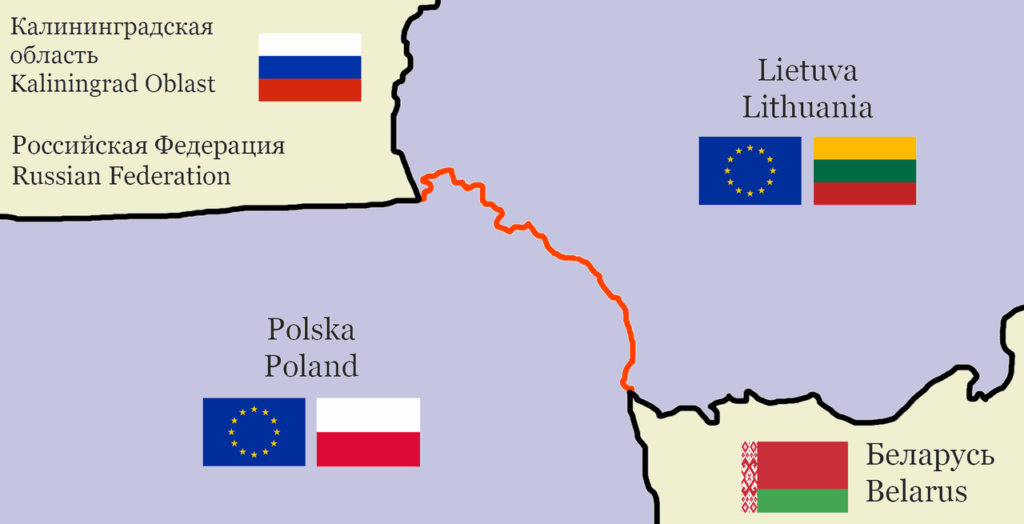
In late January 2026, Die Welt and the Bundeswehr's Wargaming Center ran Germany's first public wargame simulating a Russian attack on NATO's eastern flank. Sixteen former NATO officials, lawmakers, and defense experts played out a Russian seizure of the Suwalki Gap—the narrow corridor connecting Poland to the Baltic states. Berlin froze under consensus-seeking. Russian forces took the corridor in days.
The scenario began after a ceasefire in Ukraine left Russia holding occupied territory. Moscow kept troops in Belarus, staged security incidents along the Lithuanian border, then declared a "humanitarian crisis" in Kaliningrad when Lithuania closed the crossing. A convoy entered the Suwalki Gap—followed by soldiers. Drones mined the roads around the German brigade's base, cutting it off. Russian forces seized Marijampolė, the junction connecting Poland to the Baltics, within days.
The backlash was swift. Baltic officials called it insulting; analysts dismissed it as fantasy. The wargame not only downplayed the Baltics’ significant investment into defensive infrastructure but also ignored another potentially decisive variable: Russia’s gray-zone war. Moscow’s campaign extends far beyond the battlefield, encompassing the sabotage of shipyards, rail lines, and undersea cables already unfolding across Europe, among other activities.
This is the war Russia is already fighting—designed to ensure that when a real crisis hits, NATO's response is frozen.
Retired Lt. Gen. Ben Hodges, former commander of US Army Europe, told Euromaidan Press in a separate interview that this omission matters more than the wargame's headline findings. Europe's real deficit, he argued, isn't military capability. It's political confidence.
"Add together the economies, technology, wealth, and populations of [Europe and its allies], and it dwarfs Russia," Hodges stated.
"Frankly insulting": why the Baltics pushed back
As ERR reported, Baltic officials widely dismissed the game. LRT noted that Russia captured a major city with just 12,000 troops. Lithuania's armed forces alone are several times larger, even before counting reserves or volunteers.
Estonia's ambassador to the UK, Sven Sakkov, called the exercise "frankly insulting" to frontline states. They are "too often shown as passive objects rather than as subjects with their own agency," he said.
"[The Baltic countries are] too often shown as passive objects rather than as subjects with their own agency." — Sven Sakkov, Estonia's ambassador to the UK
Lithuania's armed forces issued their own response: "Neither Article Five nor choices in other countries affects the start of actions by the Lithuanian armed forces."
Colonel Gintaras Bagdonas, a former EU Military Staff spy chief, was blunter. "What is written there is nonsense," he told LRT. The game was "perhaps overly political, intended to show a threat or to teach their own public."
Shashank Joshi, the Economist's defense editor, wrote on X that he was "deeply sceptical." Such games "seem to imagine NATO has no early warning, is asleep at the wheel as Russia masses forces at the border," he said. Similarly, Dr. Eoin McNamara of the Finnish Institute of International Affairs told ERR that "Russian invaders will be met with a hostile reaction with Estonian reserves mobilized, a resistant population and NATO airpower overhead."
Die Welt's own reporter, Carolina Drüten, said the game was built to test German choices during a crisis—not to judge whether the Baltics would fight. Fair enough. But even on its own terms, the game had a deeper problem than the absence of Baltic forces.
The war the wargame didn't model
The game's design explains its blind spot. It was built to test how far Russia could push without triggering Article 5. As a result, the scenario stayed entirely kinetic—and skipped the non-kinetic space where Russia is already operating.
NATO's deterrence depends on rapid reinforcement. Russia knows this—and is systematically probing how to disrupt it.
The US intelligence community defines gray zone operations as acts designed to advance a state's objectives and damage a target's security without triggering a military response. RAND's research calls it "a space between peace and war." The concept isn't new—US diplomat George Kennan warned of "political warfare" in 1948. However, the scale of Russia's current campaign is unprecedented.
A Chatham House study warned that Western framing of these operations as vague "grey-zone" or "hybrid" activity can itself breed paralysis. It treats deliberate hostile acts as ambiguous rather than planned.
A CSIS database found that sabotage attacks in Europe nearly tripled between 2023 and 2024—from 12 to 34—after quadrupling the year before.
In July 2024, firebombs in packages detonated at DHL hubs in Leipzig and Birmingham. Polish prosecutors said it was a Russian-linked test run for attacks on cargo flights to North America. Lithuania later charged 15 people, including Russian citizens with ties to military intelligence.
Meanwhile, police in Hamburg arrested two port employees for sabotaging a German navy ship under construction. Five Dutch rail lines were hit simultaneously during the NATO summit in The Hague. Shadow fleet tankers carry Russian oil through the Baltic under false flags, damaging undersea cables along the way. Drones have also shut down airports across the Nordic countries.

The campaign serves two purposes. The first is military: "they're probing, practicing, doing reconnaissance to find out how we respond when they disrupt our transportation network," Hodges told Euromaidan Press. In other words, Russia is mapping how to block the rapid reinforcement that the Suwalki Gap wargame assumed would happen.
The second is political: "Part of the reason for the gray zone acts is to create fear so that people pressure their leaders to stop backing Ukraine."

As CSIS noted, gray zone operations let Russia "conduct coercive acts against a state below a level that is likely to trigger a costly war." Seth Jones, CSIS's president, put it plainly: "Just defensive measures are not enough to send a strong deterrent message. There has to be a cost."
"Just defensive measures are not enough to send a strong deterrent message. There has to be a cost." — Seth Jones, CSIS
Trending Now
That cost has been notably absent. Europe still treats each incident individually, investigating sabotage as a criminal matter that requires courtroom-standard proof. Hodges argues that demanding such proof is exactly what deniable operations are designed to exploit—and that Europe needs to start imposing consequences without it.
The missing variable: societal resilience
Two countries whose experience with Russian pressure could have informed the wargame offer lessons Europe has been slow to absorb.
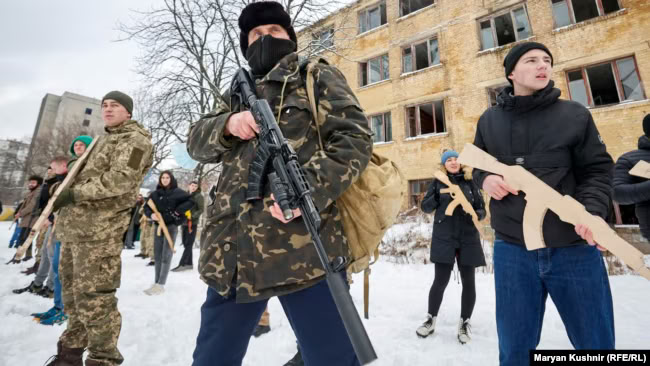
Ukraine's societal resilience under three years of full-scale war shows how a population can sustain trust in its institutions even under relentless attack. RUSI assessed that Ukraine's Territorial Defense Forces "proved key in foiling the initial Russian plan." Over 100,000 people signed up in the first month alone. Estonia's ICDS found evidence of TDF units "single-handedly countering invasion."
A Chatham House study concluded that "Russia badly misjudged Ukrainian resilience," failing to grasp its "whole-of-society approach" to resistance. That trust—forged through years of Russian information warfare—didn't happen by accident.
"Russia badly misjudged Ukrainian resilience," failing to grasp its "whole-of-society approach" to resistance. — Chatham House
Finland operates on a different principle: confidence through readiness. It has ranked first on the European Media Literacy Index every year since 2017. Media literacy has been part of the school curriculum since 2016—Finnish children learn to spot disinformation before they learn algebra. Finnish society can mobilize quickly because the population trusts that the government has anticipated threats and prepared accordingly.
The gray zone campaign isn't just harassment—it's preparation for something larger. In a worst case, ground reinforcements might not reach the Baltic states for weeks. During that window, society itself needs to function under stress. That means hardened power grids, protected banking and fuel systems, and defended ports.
The vulnerability is real and demonstrated. In 2017, Russian military intelligence launched the NotPetya cyberattack at a Ukrainian tax software firm. It was never aimed at Maersk. But it hit the shipping giant anyway, costing between $250 million and $300 million in a single quarter. The attack crippled one of the world's biggest logistics companies for weeks.
Europe's ports are far more digitalized than most people realize, leaving them vulnerable to further Russian cyberattacks. If Russia hit NATO seaports with the same intensity it uses against Ukrainian cities every night, the disruption would be immediate.
Hodges argues that deterrence works both ways. The US and UK already have offensive cyber capabilities significant enough to give Moscow pause—which is likely why Russia hasn't launched a NotPetya-scale attack against a NATO ally. But that shield depends on Washington. European allies, he says, need to "build their own capabilities too, in case the US isn't there."
How Europe's frontline states are responding
Conventional deterrence alone won't counter a campaign designed to stay below the threshold of armed conflict. As a result, the states closest to Russia are building something different—societal resilience as a defense posture.
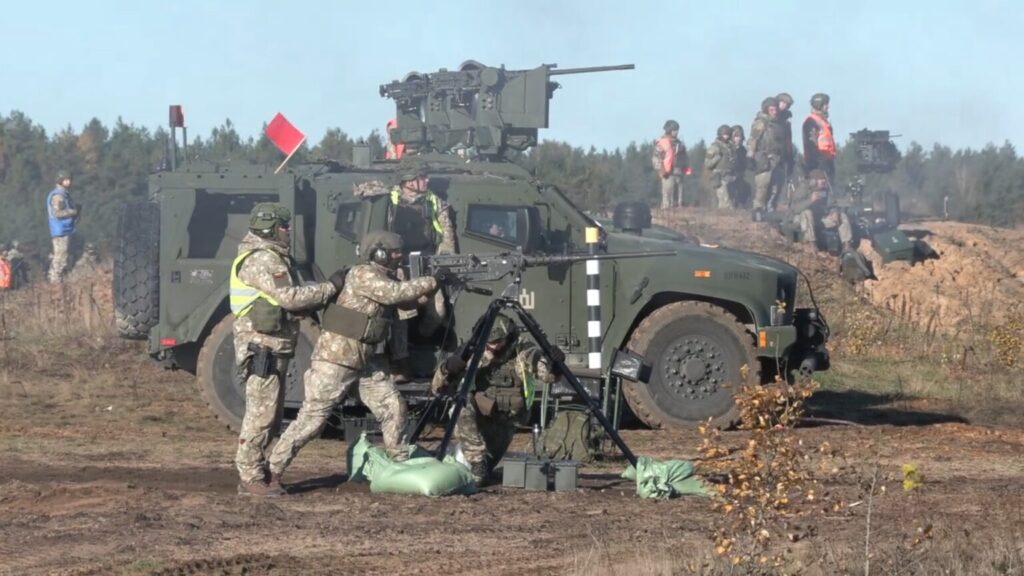
In October 2025, Lithuania ran "Vyčio Skliautas 2025"—its largest crisis readiness drill since independence. It spanned all 60 municipalities, with 115 agencies and 2,000 participants. "Even the best plans must be tested in practice," Prime Minister Inga Ruginienė said.
An ECFR study found that Lithuanian hospitals were building shelters, installing generators, and conducting mass-casualty drills. The three Baltic states are also drawing up joint evacuation plans for hundreds of thousands of civilians. After shadow fleet tankers damaged Baltic cables, Finland's President Stubb hosted a summit in Helsinki that launched NATO's Baltic Sentry mission within days. Sweden, too, sent its updated If Crisis or War Comes pamphlet to 5.2 million households in late 2024—the first revision since the Cold War.

Poland is taking the logic furthest by fusing military and civilian readiness into a single system. Its East Shield program covers 700km of the border with Belarus and Kaliningrad. It pairs anti-tank barriers and sensor networks with civilian preparedness, including training hospital staff in combat medicine. In September 2025, Poland ran Iron Defender-25 with 30,000 troops—its largest exercise of the year.
"Building infrastructure is less of a problem than building resilience. We cannot wait two weeks for American troops to defend us," Professor Aleksandra Skrabacz of Poland's Military University of Technology told the Karpacz Economic Forum.
"Building infrastructure is less of a problem than building resilience. We cannot wait two weeks for American troops to defend us." — Professor Aleksandra Skrabacz, Poland's Military University of Technology
Russia's spy chief has already warned that Poland and the Baltic states would "suffer first" in any war with NATO. Similarly, former CIA director David Petraeus has warned that Lithuania could be Russia's next target after Ukraine. The states taking those warnings most seriously are the ones building resilience across all dimensions—information, civil defense, and total defense. Western Europe—whose ports, rails, and cables are already being probed—has been slower to follow.
The Suwalki Gap wargame showed Europe what a Russian invasion might look like. It didn't show what the groundwork for that invasion looks like—because that groundwork is already underway.
Read also
-
Ben Hodges: stop treating Russian sabotage like a crime scene
-
Gromyko’s ghost at Abu Dhabi: The Soviet playbook Russia still uses to sabotage peace talks
-
“Not if, but when”: NATO prepares for Russian attack on Finland, Baltics and Norway
-
One of Baltic states may become next testing ground for NATO’s Article 5 — and Russia’s ruthless ambition
-
Lithuania at risk: Ex-CIA chief warns Russia to target Baltic State after Ukraine