
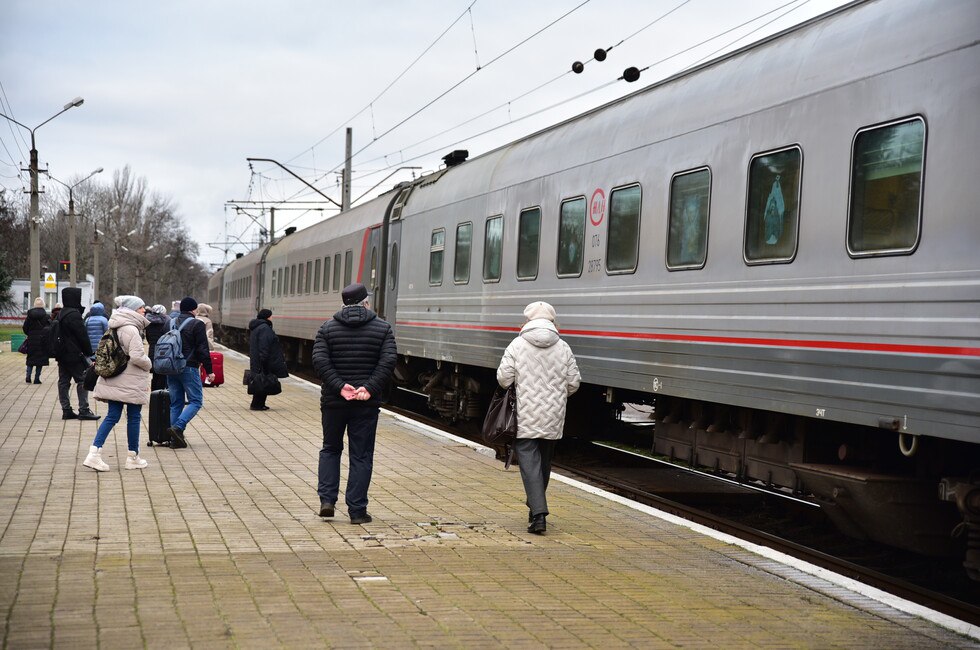
Russia's occupation authorities plan to connect Mariupol and Donetsk by rail before the summer "resort season," the so-called "DNR" Transport Minister Oleksandr Bondarenko announced in February 2026. The first leg—a Donetsk-Volnovakha section—is already under construction, with full service to Mariupol to follow.
The official pitch is tourism. The actual purpose is control. The legitimate Mariupol City Council, operating in exile, warned that the railway will almost certainly be used to transfer military equipment and to export grain and metal looted from the Azovstal and Ilyich steel plants—both devastated by Russian forces during the 2022 siege. Meanwhile, Russia is simultaneously planning a separate 200-kilometer rail line from Mariupol to Melitopol for direct military logistics to the Zaporizhzhia front, according to the Center for the Study of Occupation—a project currently blocked by the threat of Ukrainian artillery and drone strikes.
"It is likely that the railway will be used to transfer military equipment and export grain and metal from the Mariupol steel plants destroyed by the Russians."—Mariupol City Council
Steel tracks, not tourist tracks: the military logic
The Donetsk-Mariupol line is one piece of a broader Russian infrastructure projects across occupied Ukrainian territory. The occupation regime's own documents reveal the scope: a 31.2-kilometer bypass highway for Mariupol, scheduled for completion by 2028. A four-lane "Azov Ring Road" connecting occupied territories by 2030. A rebuilt Mariupol railway station. An expanded commercial seaport aiming for 4.8 mn tons of annual capacity.
Each project serves dual purposes. The roads move troops. The railways carry ammunition. The port integrates stolen Ukrainian infrastructure into Russia's logistics system. Ukraine's Foreign Intelligence Service has called the port expansion what it is: not "restoration" but "illegal appropriation of Ukrainian infrastructure."
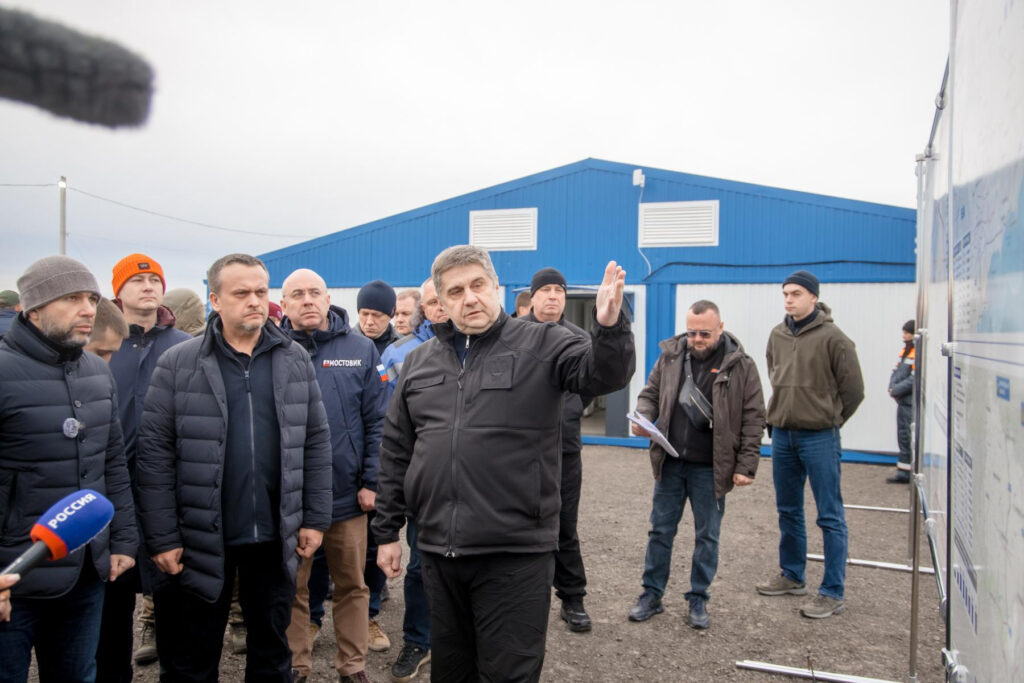
DNR puppet leader Denis Pushilin inadvertently revealed the military calculus. "The number of tasks is increasing as Russian units push back the enemy and return Russian cities to their historical homeland," he said while touring construction sites in December 2025. The roads, he added, would extend to "liberated Kurakhovo"—a town Russia captured in late 2024.
"The number of tasks is increasing as Russian units push back the enemy and return Russian cities to their historical homeland."—Denis Pushilin, Russian-installed leader of occupied Donetsk Oblast
Building on bones: Russification disguised as reconstruction
The infrastructure push is inseparable from Russia's campaign to culturally erase Ukrainian Mariupol and replace it with a Russian colonial settlement. A Bellingcat investigation identified at least 23 new housing complexes—over 6,000 apartments—built on the ashes of bombed-out Ukrainian homes and advertised for sale to Russian citizens with subsidized mortgage rates. Original Ukrainian owners cannot reclaim their property without accepting Russian passports.
Russia promised to rebuild Mariupol in three years. A Bumaga Media investigation found that at the current pace, full reconstruction won't happen until 2043—18 years from now. Only 79 out of at least 527 condemned buildings have been rebuilt.
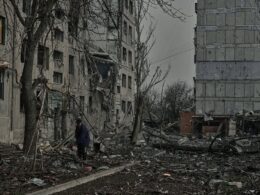
Behind the facades, Mariupol's residents live in squalor. A BBC investigation found people still occupying half-destroyed apartments with barely standing walls, drinking yellow water unfit for consumption, and unable to access basic medicines, while Russian influencers film glossy videos for social media on the one repaired central square.
Signs of Russification are abundant. Streets have been renamed, Ukrainian monuments removed, and murals painted over in Russian tricolors. Russia reportedly plans to resettle over 5 million people from the Russian Federation into occupied Ukrainian territories by 2030, according to plans discussed at a Kremlin "Integration-2025" forum.
Meanwhile, the Mariupol City Council noted what occupation officials won't discuss: an ecological collapse. The Sea of Azov is filling with sewage and industrial waste. Fish stocks—particularly the Black Sea goby—are collapsing. In March 2025, elevated levels of phosphates and mercury were recorded in Mariupol's rivers.
Partisans strike back: sabotaging Russia's iron grip
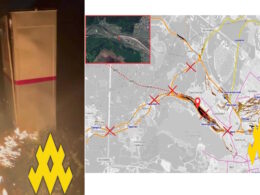
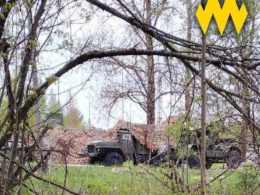
Ukrainian partisans operating in Russian-occupied Donetsk Oblast have made these rail lines a primary target. In June 2025, operatives from the Atesh resistance movement destroyed a relay cabinet on the newly built Volnovakha-Mariupol railway itself—the very line Russia is now racing to complete. The sabotage disrupted signaling and traffic control on what Atesh called a critical segment of the Taganrog-Mariupol corridor, which transports Russian fuel, equipment, and ammunition while bypassing Crimea.

That attack was no isolated event. In November 2025, Atesh partisans sabotaged a railway near Novobohdanivka in Zaporizhzhia Oblast, halting Russian military trains just 50 km from the front line—allowing Ukrainian forces to strike the stalled convoys with precision missiles. In December, they hit the Bataysk railway hub near Rostov-on-Don, disrupting the main logistics artery feeding all of Russia's southern occupation forces.
"Damage to infrastructure in this area will disorganize supplies and increase the vulnerability of the occupying forces."—Atesh partisan movement
Russia can lay track. But holding it—against a population that refuses to be absorbed, against partisans who fight in the dark, and against the rest of Ukraine which has yet to bow—is another matter.
Read also
-
Russia appropriates Ukrainian history on occupied lands: 178 artifacts tracked stolen in cultural identity erasure
-
Russia destroying Ukraine’s cultural heritage is not a bug—it’s a feature of Putin’s war
-
Kostiantynivka: How a city dies without surrendering
-
Yes, Ukraine can join EU while occupied – if it does the work