
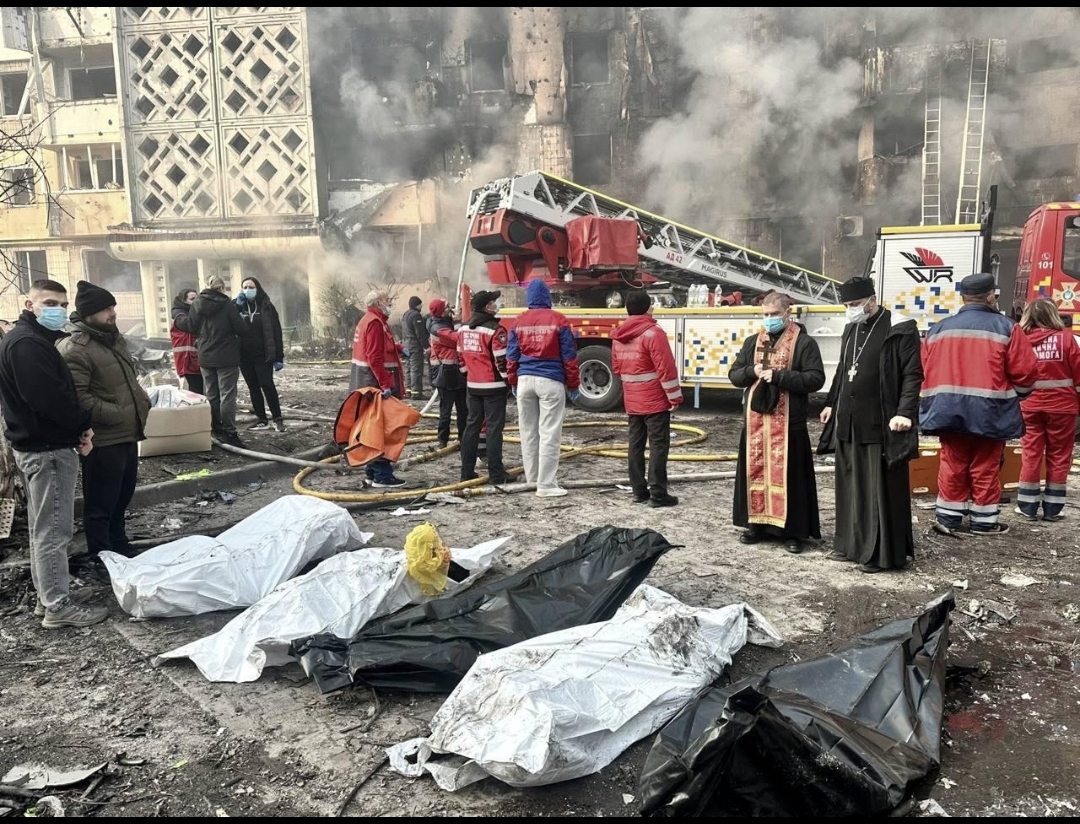

The UN Human Rights Monitoring Mission in Ukraine reported in early January that 2025 was the deadliest year for Ukrainian civilians since 2022. Civilian casualties were 31% higher than in 2024 and 70% higher than in 2023. Russian attacks killed 2,514 verified civilians and injured 12,142—and the real numbers are almost certainly higher.
The scale of Russian firepower behind these numbers is staggering.
In 2025, Russia launched 53,732 combat drones against Ukraine—a fivefold increase over 2024. That averages to 147 drones every night, over a thousand per week. Russia nearly doubled its use of ballistic and aeroballistic missiles to 568, on top of 1,330 cruise and other missiles. In October 2025, Russia fired a record 89 ballistic missiles at Ukraine. January 2026 broke that record again with 91—plus 6,000 drones, 5,500 guided aerial bombs, and 158 additional missiles.
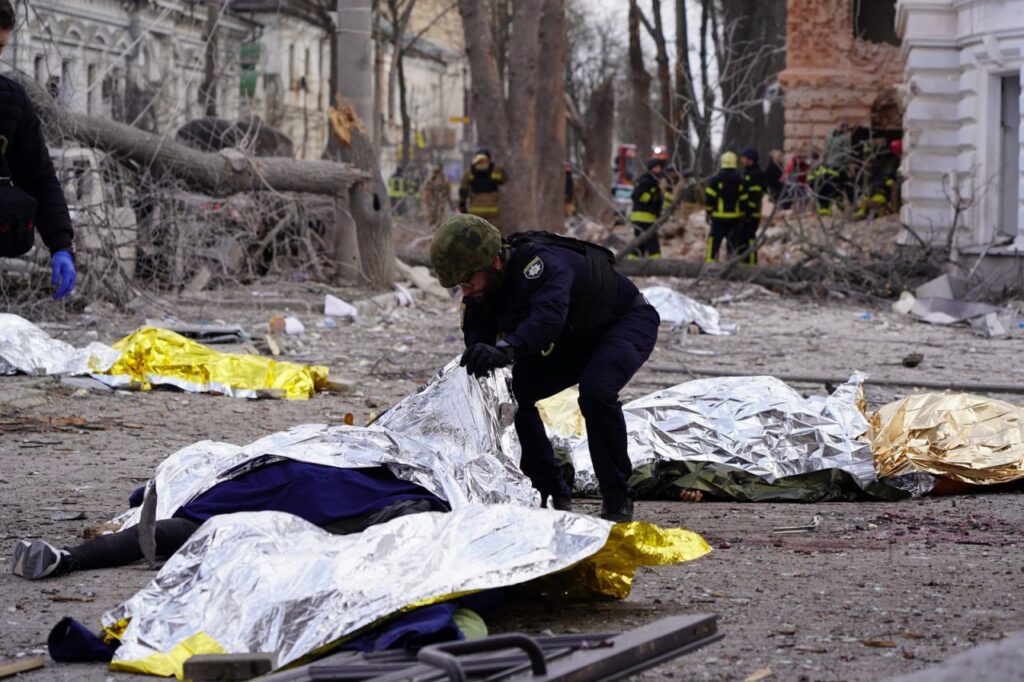
The human cost is not abstract. On 19 November, Russia struck the western city of Ternopil, killing 38 civilians, including eight children. Ten families lost at least two members. On 31 July, Kyiv suffered its deadliest attack since 2022—32 killed, including five children, 170 wounded.
Along the front, the majority of casualties came from a 120% increase in short-range drone use—the tactic known as "human safari," where Russian operators deliberately chase and kill individual civilians, many of them elderly people unable to evacuate.
Terror by cold
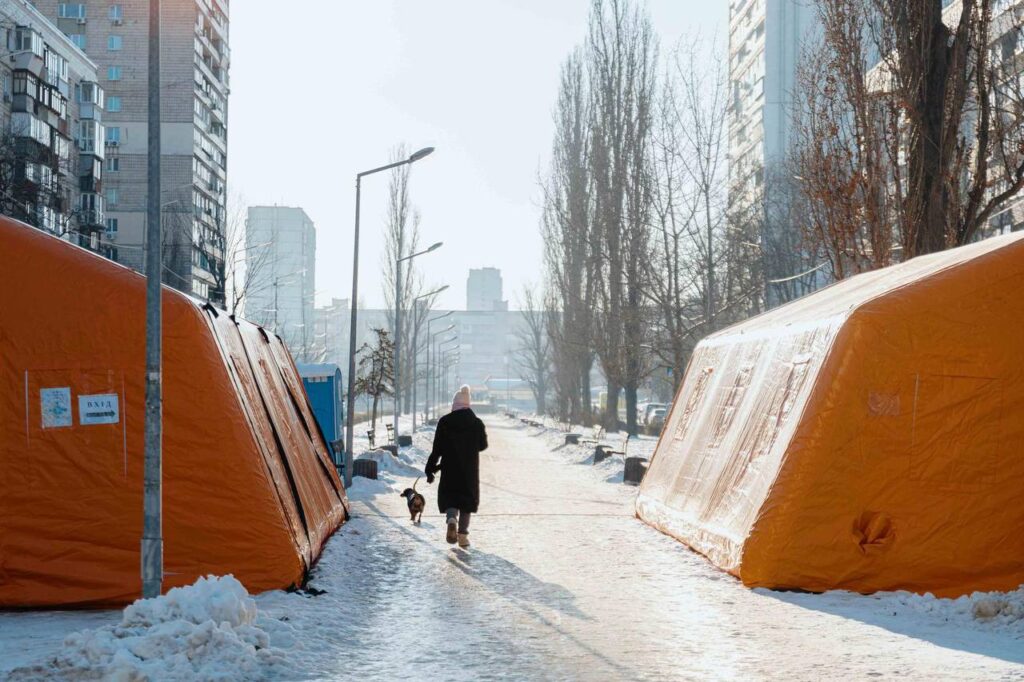
In October 2025, Russia resumed large-scale strikes on energy infrastructure, causing emergency blackouts and rolling outages nationwide. As temperatures dropped to minus 20–25°C in January and February 2026, the attacks intensified. Repeated strikes ensured some households went weeks without heating. Indoor temperatures in many apartments dropped to 7–10°C—normal winter weather outside, but inside people's homes.
Russia also routinely strikes the same location twice—first to destroy, then to kill the rescue workers who respond.
With freezing temperatures, no electricity, no water, and no heat, Ukraine stands on the edge of a humanitarian crisis. Russia's intent is plain: kill Ukrainians not just with missiles and drones, but with cold.
The negotiation cover
All of this happened under the banner of peace. Throughout 2025, the US Administration actively facilitated negotiations, and reports of "progress" flowed steadily. By early 2026, talks had moved to a trilateral format—itself hailed as an achievement. But beyond the fact of talks happening, there is no visible progress. Russia's demands remain maximalist. There is no agreed framework for a ceasefire, only vague discussions about monitoring one.
The pattern is consistent: both rounds of negotiations in Abu Dhabi were accompanied by major Russian strikes on Ukraine's civilian energy infrastructure. The so-called energy "ceasefire" in early February was a masterclass in Russian deception—no one knew its exact scope, duration, or even start date. This gave Russia the appearance of goodwill for Washington's benefit without committing to anything. When Putin violated the agreement on 3 February, Trump said Putin "kept his word."

She spent 15 years decoding Russian talks. Her verdict: the battlefield will decide.
The prisoner release on 5 February, while welcome, is not a breakthrough of the trilateral track. Such exchanges have long been achieved through non-public military intelligence channels.
As Ukrainian Nobel laureate Oleksandra Matviichuk asked: why has Trump's year of negotiations been the deadliest for civilians? Why did Putin not allow himself such brutal strikes under Biden—whom Trump calls "weak"—but totally destroys peaceful cities under the supposedly "strong" Trump?
The answer is that negotiations give Russia exactly what it needs: diplomatic cover to escalate while paralyzing Western response. Europe hesitates to arm Ukraine because "talks are ongoing." Washington points to "progress" while missiles hit apartment blocks. Russia exploits the gap.
The uncomfortable truth is that Trump is not an honest broker in these negotiations. A president who accepted Putin's word on an energy ceasefire that never existed, who threatened to seize the territory of NATO allies using the same logic Putin uses to justify his invasion, and whose Greenland crisis actively undermined the air defense pipeline Ukraine depends on to survive—this is not a mediator. This is a participant in the pressure on Ukraine.
The Greenland effect
This pressure deepened when Trump created a transatlantic crisis in January by threatening to seize Greenland—rhetoric worryingly close to Putin's own logic of might-makes-right. The crisis diverted attention from Ukraine at the World Economic Forum and, critically, undermined the NATO PURL initiative.
PURL—launched by NATO Secretary General Mark Rutte in summer 2025—channels European and Canadian contributions to purchase American-made Patriot missiles and other weapons for Ukraine. By December 2025, 22 NATO allies and two partners had pledged over $4 billion. According to Rutte, PURL has delivered 75% of missiles for the front and 90% for air defense.
But when the US president threatens Denmark with annexation and calls Canada the 51st state, those same countries—among PURL's most active contributors alongside Germany, the Netherlands, and Norway—face domestic pressure to step back from buying American weapons. Ukraine's air defense became a hostage of Trump's imperial fantasies.
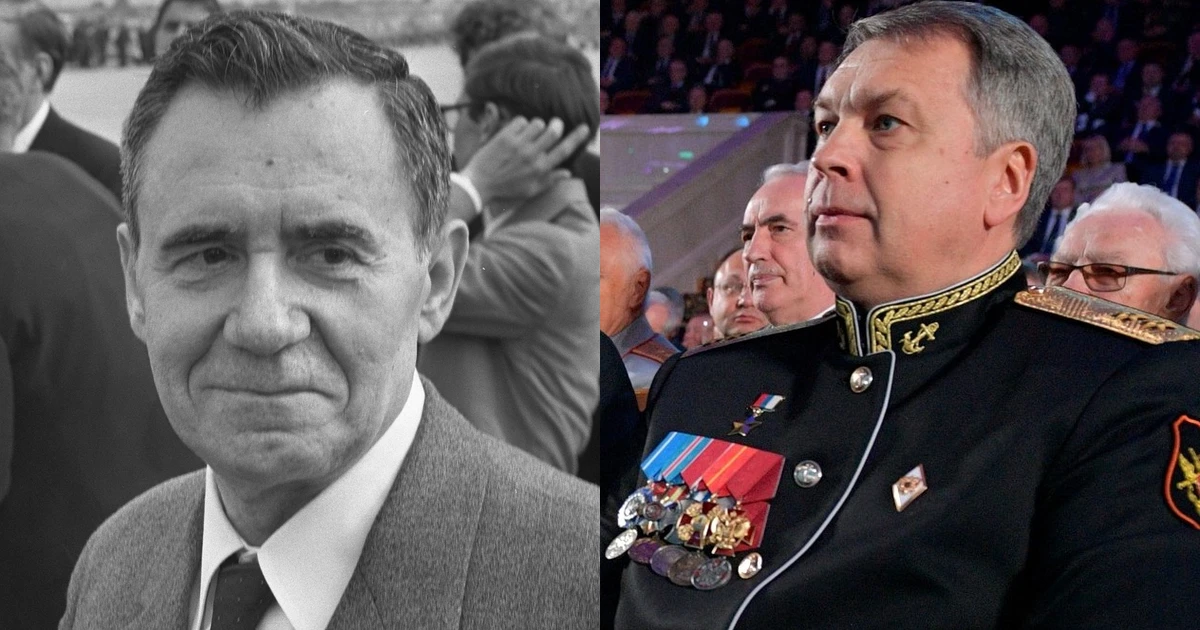
Gromyko’s ghost at Abu Dhabi: The Soviet playbook Russia still uses to sabotage peace talks
What must follow
If this is what a "year of negotiations" produces—record civilian deaths, frozen cities, and diplomatic cover for Russian escalation—then the answer is not better negotiations. It is acting as though they don't exist.
Ukraine needs air defense missiles now, through PURL and any other available stocks. European defense industries and joint production with Ukraine must scale up. Sanctions must target Russia's expanding drone and missile production—output that increased precisely because existing restrictions haven't gone far enough. Ukraine needs long-range weapons to strike production and storage facilities inside Russia; intercepting 147 drones a night is not sustainable without reducing the supply.
And Europe must find the political will to deploy SkyShield for Ukraine—not after some mythical ceasefire, but now, while Russian missiles are killing civilians in their homes.
The hopes that Trump would exercise systemic pressure on Russia have not materialized. Europe cannot outsource Ukraine's survival to a diplomatic process that Russia is actively weaponizing—and to a mediator who is not one. The time to act was a year ago. The next best time is today.
Editor's note. The opinions expressed in our Opinion section belong to their authors. Euromaidan Press' editorial team may or may not share them.
Submit an opinion to Euromaidan Press


