

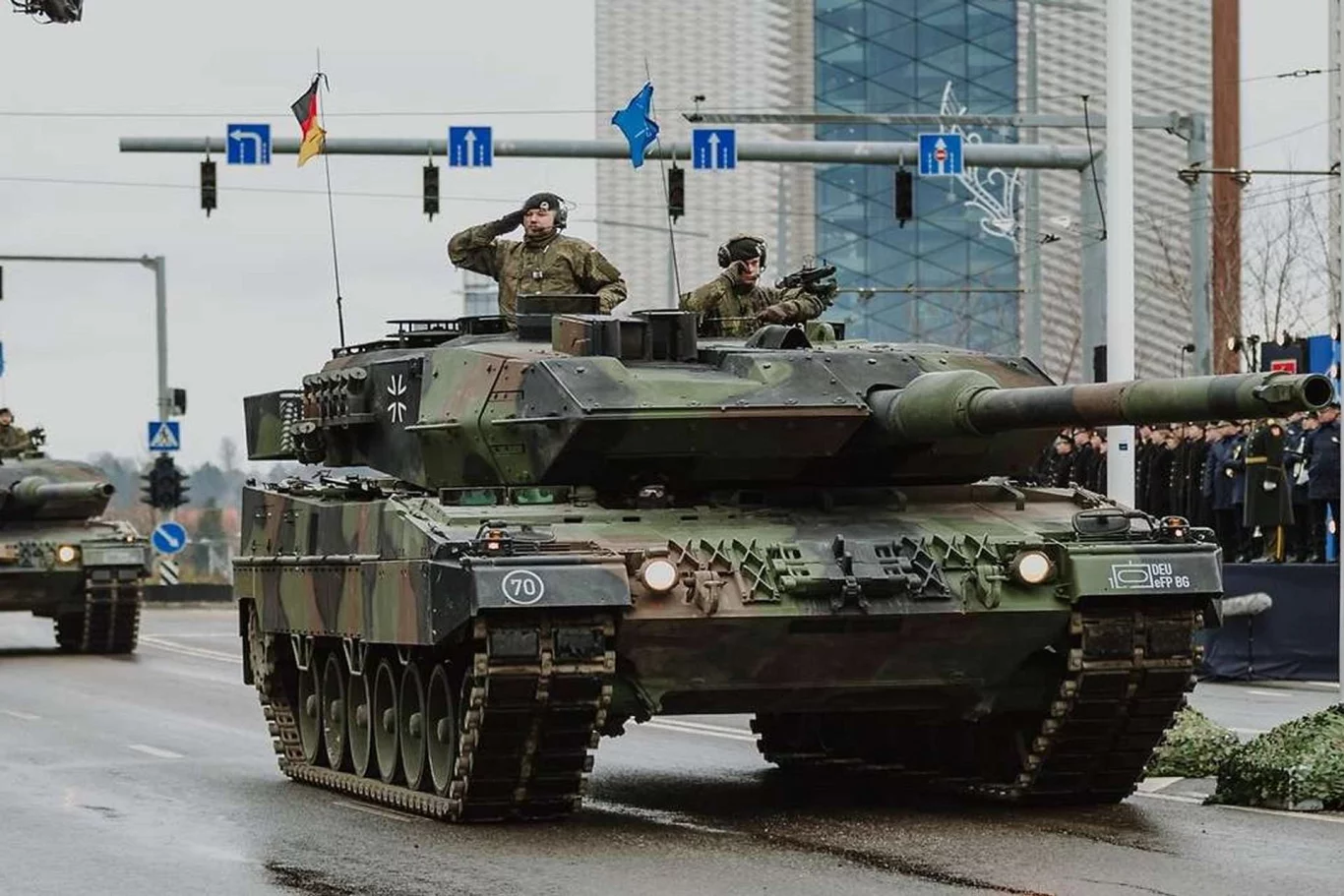
In a high-level wargame organized by German newspaper Die Welt and the Wargaming Center at Helmut Schmidt University, simulated Russian forces captured the Lithuanian city of Marijampole and seized the Suwalki Gap—NATO's only land corridor to the Baltic states—in three days. Germany's simulated government initially responded with sanctions and crisis preparations, not direct military force.
The exercise, whose result was reported by Die Welt, involved 16 former senior officials and security experts. It is the first public wargame of its kind in Germany. For Kyiv, the implications cut deep: if Berlin hesitates to fight for a NATO member with a binding Article 5 guarantee, what does that say about security pledges to Ukraine—a country with no such treaty protection?
"We discovered that their reaction would not be adequate to defend NATO."—Alexander Gabuev, Director of the Carnegie Russia Eurasia Center who played Putin in the wargame, in an interview with Meduza
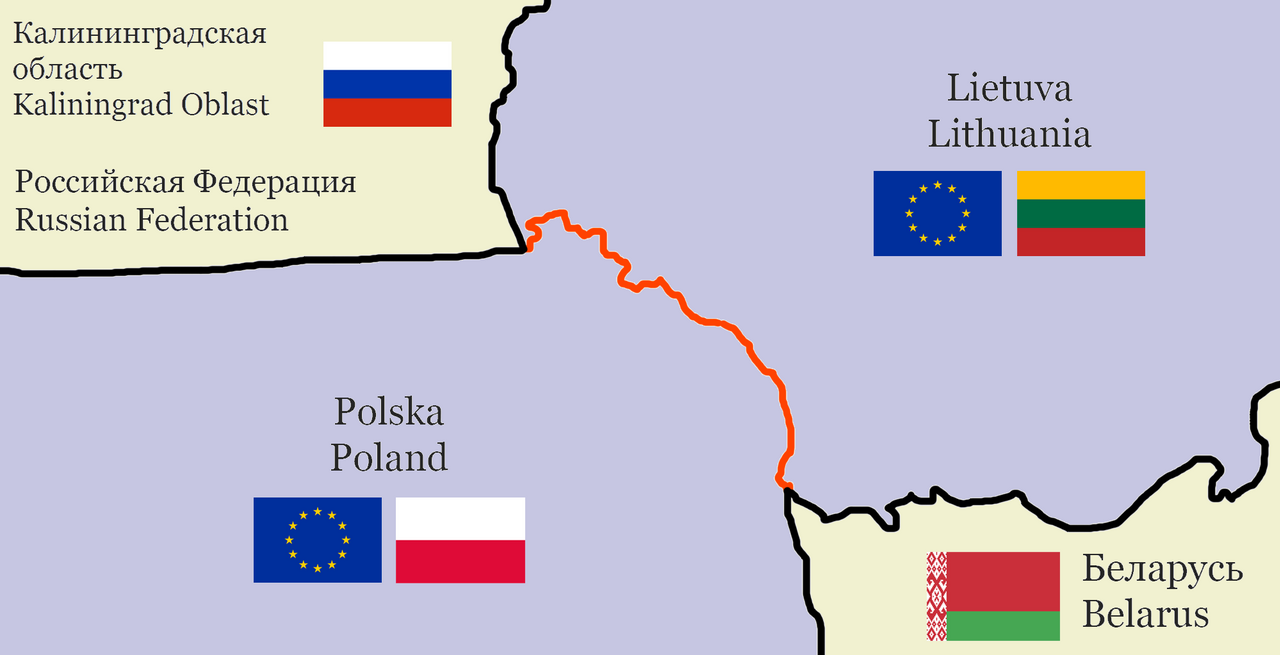
How Russia "won" the simulation
The scenario was set in October 2026, after a fictional ceasefire in Ukraine. With 12,000 Russian troops in western Belarus, Moscow fabricated a "humanitarian crisis" in Kaliningrad, claiming Lithuania was blocking supplies to the exclave. After Lithuania closed its border following incidents attributed to Russian Spetsnaz, the Russian team seized the initiative. Led by Alexander Gabuev, director of the Carnegie Russia Eurasia Center, they used drones to establish fire control, mined the Polish-Lithuanian border, and sent troops in alongside civilians as human shields.
The German "Blue Team," including former Inspector General of the Bundeswehr Eberhard Zorn and parliamentarian Roderich Kiesewetter, responded with consensus-building and escalation concerns. Warsaw mobilized but did not cross into mined Lithuanian territory. The simulated US declined to invoke Article 5.
"They hadn't even prepared for such a scenario," Gabuev told Meduza, an independent Russian-language media outlet based in Latvia. The Russian team aimed to "split NATO"—and succeeded by creating military facts faster than the alliance could respond politically.
A pattern, not an anomaly
This is not the first such result. In 2016, the RAND Corporation found Russian forces could reach Tallinn and Riga within 36 to 60 hours—a study that shaped NATO's Enhanced Forward Presence deployments. Nearly a decade later, the core vulnerability persists: once Russia establishes facts on the ground, reversing them becomes extraordinarily costly.
Former NATO spokesperson Oana Lungescu, who played the NATO Secretary General in the wargame, called the result "very realistic, unfortunately," warning that "Russia could become even more dangerous to NATO after some sort of peace in Ukraine, especially if it's a bad peace."
What this means for NATO
Trending Now
Germany's BND chief Martin Jäger warned that Russia "will not shy away from a direct military confrontation with NATO if necessary." NATO chief Mark Rutte said: "We are Russia's next target." Former CIA director David Petraeus has identified Lithuania as the most likely target if Russia succeeds in Ukraine.
Berlin has pledged to make the Bundeswehr "war-ready" by 2029. To this end, Rheinmetall is building over a dozen new factories across Europe and has an order backlog exceeding €70bn, which is projected to grow rapidly. Moreover, Germany has deployed a brigade to Lithuania. But hardware means little if the political will collapses under consensus-seeking and fears of escalation.
On the adversary's side, Russia's Foreign Intelligence Service (SVR) head Sergey Naryshkin warned in April 2025 that Poland and the Baltics would 'suffer first' in the event of a NATO-Russia confrontation. Russia continues to build up military capabilities near the Nordic-Baltic region, even while invading Ukraine. In this increasingly dangerous context, the Suwalki Gap—the corridor Russia seized in the simulation—remains NATO's Achilles' heel.
Beyond NATO: Ukraine's security guarantees at risk
The implications of Die Welt and the Bundeswehr's simulation extend beyond NATO. The 35-nation Coalition of the Willing has pledged "binding guarantees" to defend Ukraine if Russia attacks again after a ceasefire—including a multinational force on Ukrainian soil.
However, Germany, which anchors both the Coalition and NATO's Lithuania brigade, said its forces would monitor any ceasefire from a neighboring country, not Ukraine itself. If, according to the simulation, Berlin froze when a treaty ally's territory was at stake, what happens when the commitment is to a non-NATO partner? Zelenskyy has repeatedly pressed military partners on whether their commitments would hold under real pressure.
"This is a very difficult question, one to which I especially want a very simple answer: yes, if there is another act of aggression, all partners will give a strong response to the Russians," [...]"And this is the very question I ask all our partners. So far, I have not received a clear, direct answer." — Zelenskyy in Paris on security guarantees from Ukraine's partners
The wargame is diagnostic, not predictive. But the diagnosis is troubling: Europe's strongest economy chose hesitation over action while an ally's territory was taken. If that pattern holds, security guarantees for Ukraine—and every NATO member on the eastern flank—rest on a foundation that might buckle under Russian pressure.
Read also
-
“Not if, but when”: NATO prepares for Russian attack on Finland, Baltics and Norway
-
One of Baltic states may become next testing ground for NATO’s Article 5 — and Russia’s ruthless ambition
-
Russia spy chief warns NATO: Poland and Baltic States to “suffer first” in event of war
-
Lithuania at risk: Ex-CIA chief warns Russia to target Baltic State after Ukraine
-
“You will not avoid war.” Kyiv furious as Germany suggests Ukraine should fight Russia until 2030 to shield Europe


