

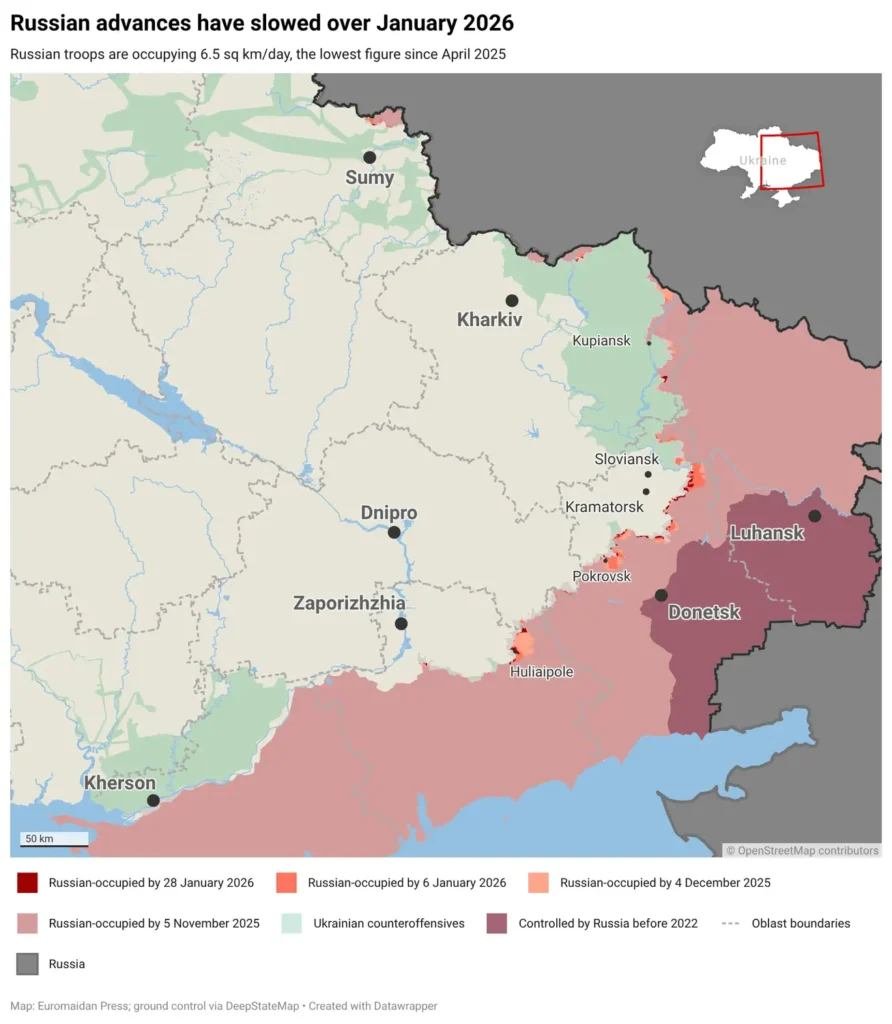
Despite constant Russian pressure along virtually the entire front line, the situation changed at the beginning of 2026: the offensive is slowing down. Ukrainian forces are holding critically important positions and inflicting significant losses—so significant that the Russian army now has more dead than wounded and is forced to reduce its pace to minimise casualties.
As of late January, Russian troops are occupying an average of 6.5 square kilometres per day. This is the lowest figure since April 2025, according to open-source data. The Commander of Ukraine's Unmanned Systems Forces, Robert Brovdi, confirms this trend: enemy losses have decreased because every advance is now more carefully weighed, which significantly slows the tempo.
The ratio of "more dead than wounded" is telling. This is the result of precise strikes by video-guided drones and the professional training of Ukrainian operators. When you see a target, you don't miss.
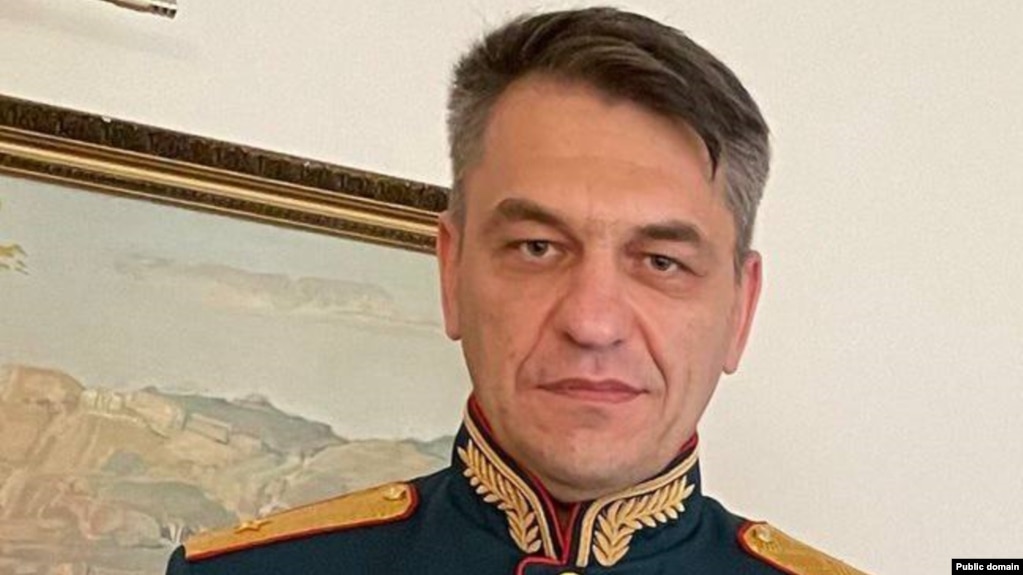
The Russian command is also drawing conclusions. The dismissal in January of Lieutenant General Sukhrab Akhmedov, Commander of the Russian Navy's Coastal and Ground Forces, speaks volumes.
Akhmedov became known for sending mechanised columns into frontal attacks on fortified positions—with predictable results.
This is his second dismissal in two years—he was removed as commander of the 20th Combined Arms Army in May 2024 for the same reason: catastrophic losses during attritional assaults near Vuhledar.
Despite that record, he was awarded Hero of Russia in July 2025 and sent back to command the Pokrovsk offensive in October. His last operation, at the end of December 2025, saw a Russian column destroyed in the Dobropillia salient: 25 vehicles lost in a single engagement. Within weeks, he was sacked again.
A fourth major city nears the drone strike zone
In recent weeks, Russian forces have intensified pressure in Zaporizhzhia Oblast, advancing along the shore of the Kakhovka Reservoir towards the settlements of Prymorske and Stepnohirsk.
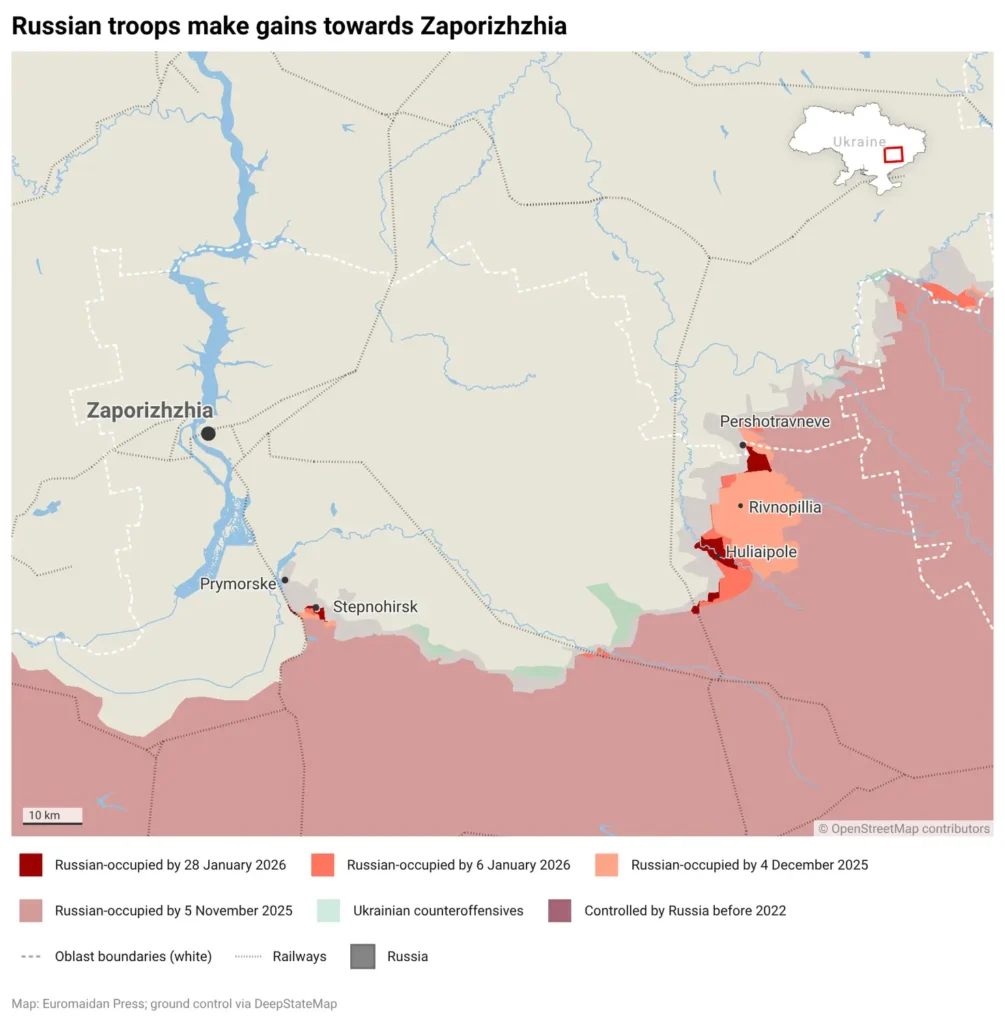
As of 26 January, the Russians likely control part of the private sector and the 3rd Microdistrict of high-rise buildings, which has effectively become a fortified area for them in the south of Stepnohirsk, though most of the high-rise buildings are already destroyed.
OSINT researchers also record attempts by the enemy to infiltrate areas around villages to the north-east of the city. The Russians appear to be probing for weak spots in Ukrainian defences, preparing for a further operation to envelop the Orikhiv defence node from the direction of Stepnohirsk and Huliaipole.
The strategic threat: Stepnohirsk sits roughly 20 kilometers from Zaporizhzhia's southern outskirts. That's FPV drone range.
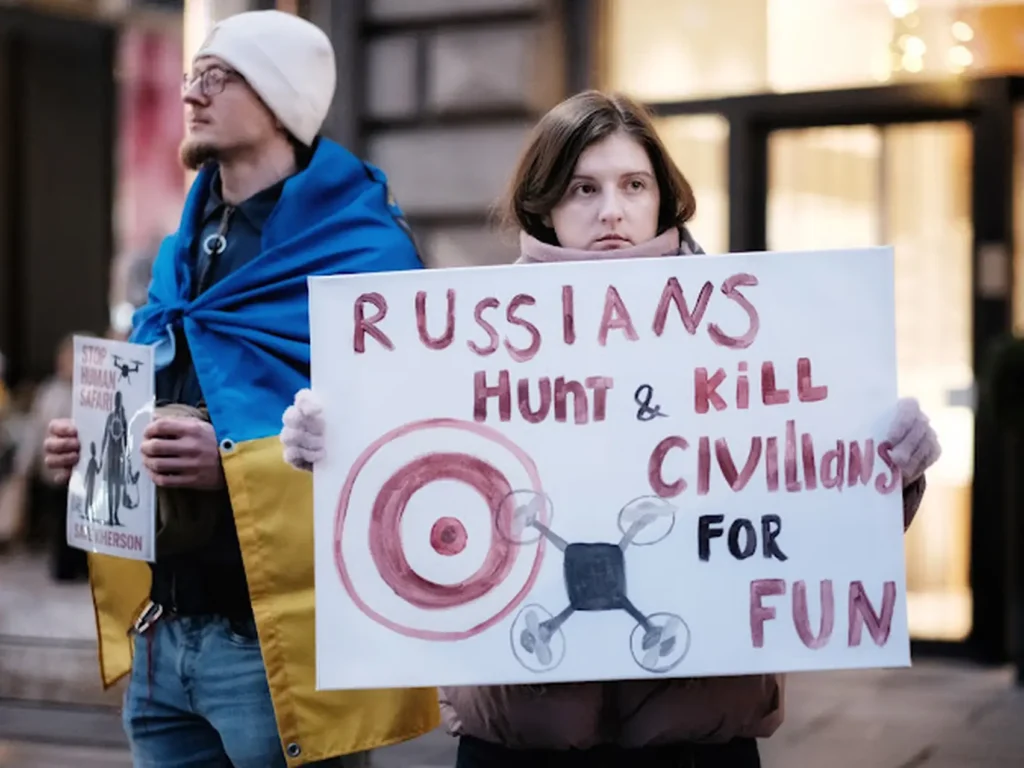
Zaporizhzhia could become the fourth major Ukrainian city—after Kharkiv, Sumy, and Kherson—under constant drone threat. What that means is already visible in Kherson, where Russian forces have turned civilian life into what residents call a "human safari."
Since mid-2024, Russian operators have used small FPV drones to track individual pedestrians, cyclists, and drivers, then drop explosives directly on them. The UN confirmed in October 2025 that these attacks constitute crimes against humanity—Russian pilots can see their targets on camera and deliberately choose civilians.
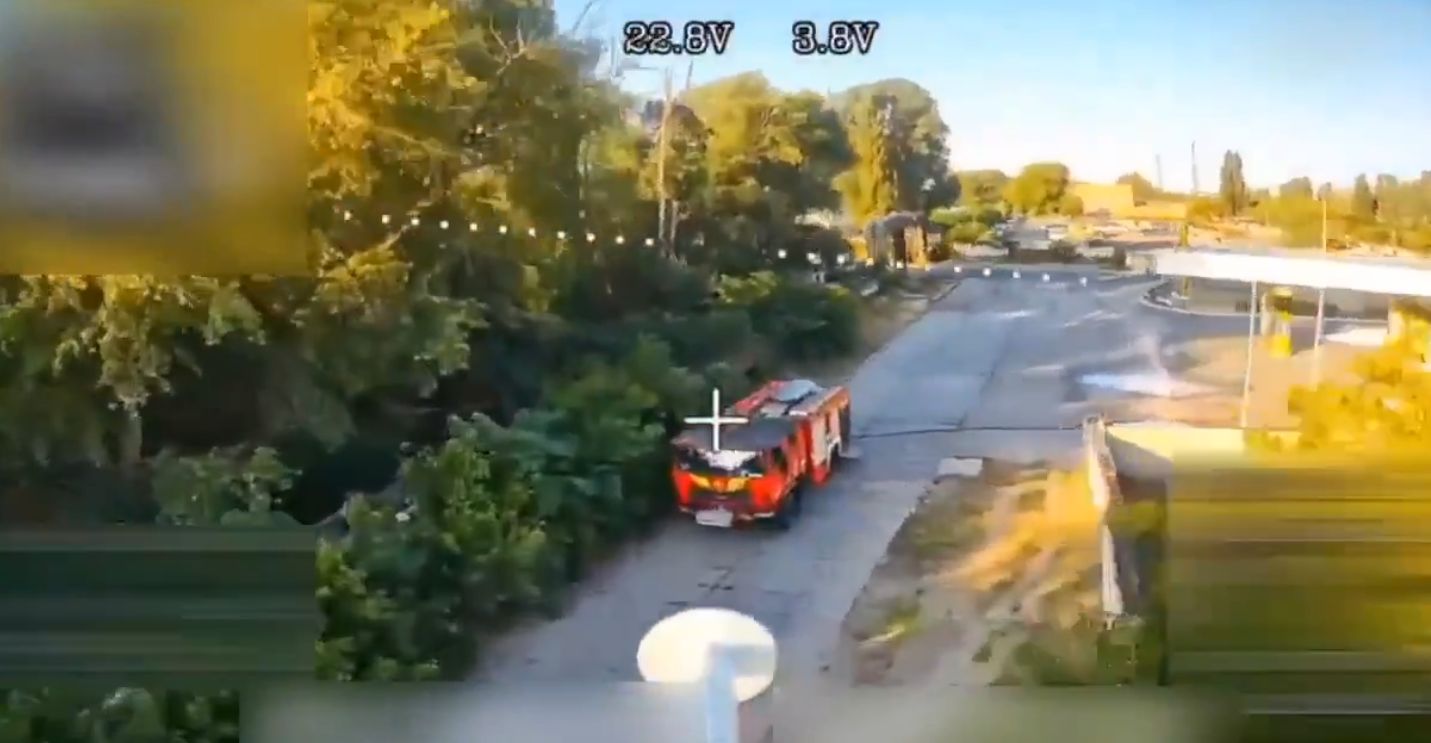
The attacks follow a pattern: one drone strikes a house, piercing the roof; a second drops incendiaries to start a fire; when rescue workers arrive, they're targeted too.
The scale is staggering. In March 2025, Kherson faced 100 drone attacks per day. Between January and April 2025, drones injured 472 civilians and killed 51. The city's pre-war population of 360,000 has collapsed to below 60,000—and continues dropping.
With new fiber-optic and AI-assisted drones, FPV range now extends nearly 30 kilometers inland. If Russian forces consolidate positions around Stepnohirsk, Zaporizhzhia—a city of roughly 700,000 before the war—enters that kill zone.
Trending Now
Holding the line: from Pokrovsk to Kupiansk
The fiercest fighting continues around Pokrovsk and its surrounding towns, which have been Russia's main objective for several months. Over a few weeks in January, Russian units entrenched themselves in the western part of Pokrovsk—the industrial zone beyond the railway tracks—and advanced onto the northern outskirts through private housing and surrounding tree belts.
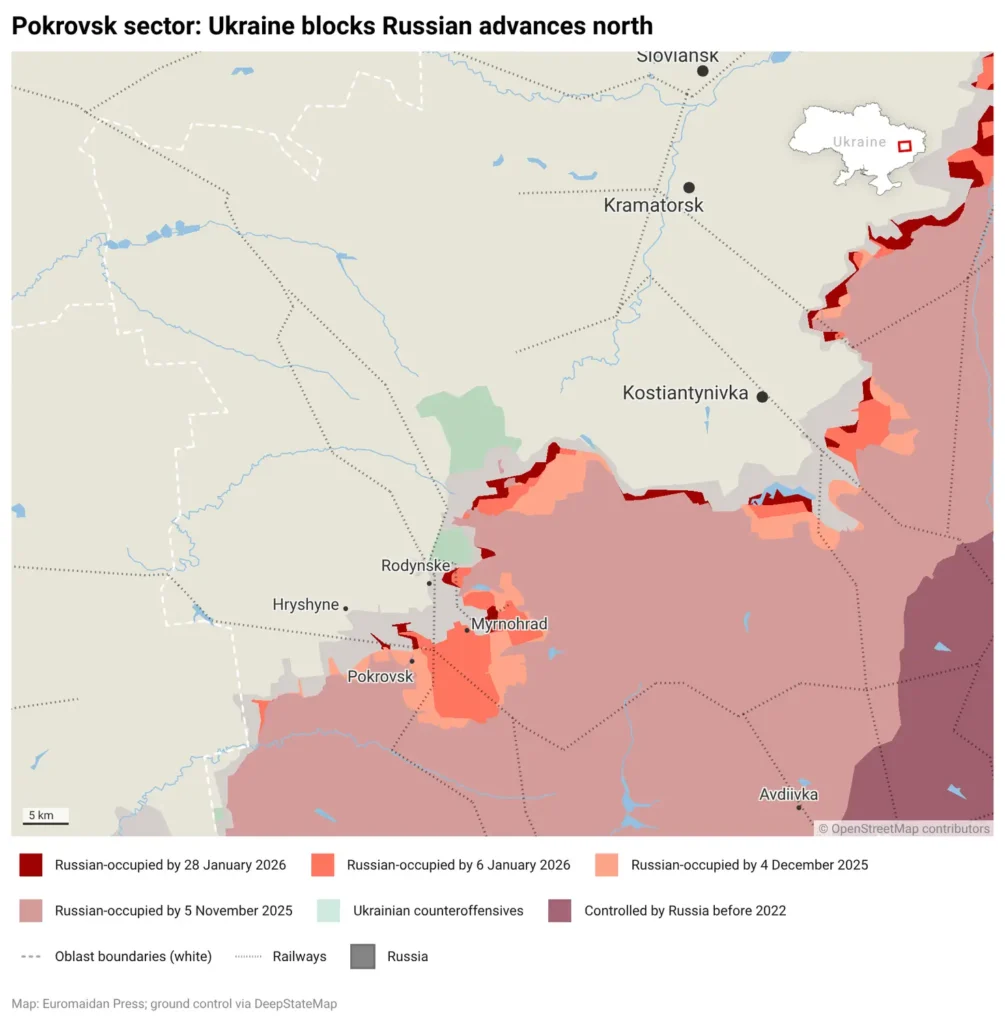
Ukrainian units continue to defend the northern approaches to Pokrovsk and Myrnohrad, blocking Russian attempts to advance towards Hryshyne and Rodynske. This prevents Russia from forming a new encirclement around the cities.
The Russians are attempting to advance along railway lines, as they did during and after the offensive on Avdiivka.
In neighbouring Kostiantynivka, Russian forces continue to send waves of one- or two-soldier groups towards the dacha area south-east of the city and towards the Santurynivka district within the city itself. Ukrainian defenders, using drones to monitor Russian routes, are destroying enemy troops before they reach the outskirts.
Near Huliaipole, now almost entirely in the grey zone, the enemy is trying to maintain constant assault pressure with small groups around the city. The front line here is porous—Russian troops are seeping into the rear of Ukrainian positions west of the city. On 24 January, Ukrainian forces captured a Russian assault group of seven soldiers in the Huliaipole area.
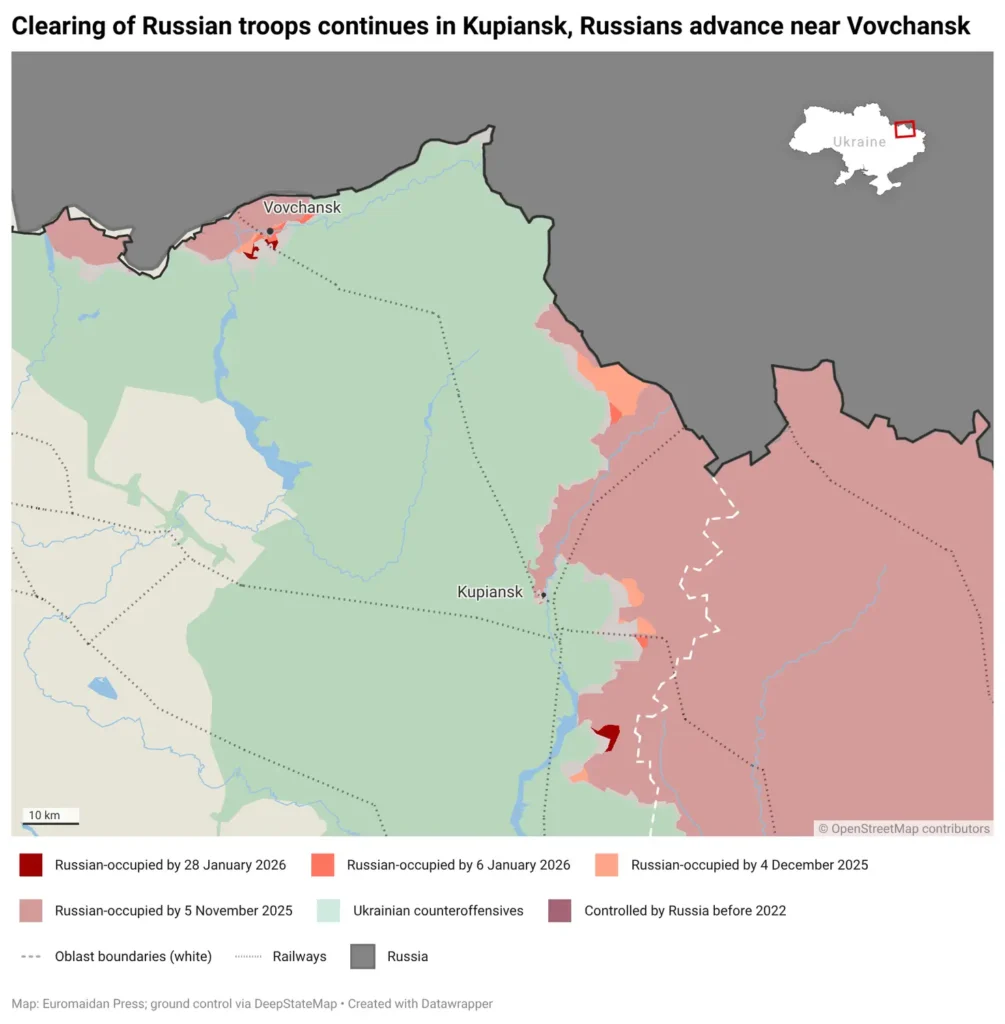
In the Kupiansk sector, Russian units are trying to break through to their encircled troops in the city center. Daily attacks along the right bank of the Oskil River have failed. Ukrainian forces report that clearing of Russian pockets in central neighbourhoods is nearing completion.
North of Kupiansk, on the Vovchansk section, the Russians have increased assault operations and made territorial gains. The enemy advanced in villages south of Vovchansk, a city which effectively no longer exists. Both Vovchansk and its surroundings are essentially a kill zone where the enemy is forced to incur massive losses for any ground gained.
What is exhausting the Russian offensive
The slowdown appears to reflect weakening after intense autumn offensives. The rate of recruitment of new contract soldiers into the Russian army is declining. Meanwhile, personnel losses from Ukrainian strikes, particularly from drones, are increasing. Russia is struggling to compensate.
As of early 2026, the Russian army is showing signs of exhaustion in both equipment and manpower—a real crisis.
Despite the challenges facing Ukraine, including an increasingly stretched front line, Ukrainian defence is holding. Ukrainian units remain capable of counter-offensive operations, as demonstrated in Kupiansk. Based on statements by Commander-in-Chief Oleksandr Syrskyi, there will be more such operations in 2026.


