A massive overnight Russian air attack struck Ukraine’s energy infrastructure, causing blackouts, heating outages, and disruptions to water supply in several oblasts, according to Ukrainian President Volodymyr Zelenskyy. The Ukrainian Air Force reported intercepting hundreds of aerial targets but acknowledged that some drones and missiles reached their objectives.
Russia continues its daily terror attacks on Ukraine’s power grid amid -15°C frosts, seeking to deprive civilians of electricity, heating, and water to break their resistance to its full-scale invasion—a campaign ongoing for years, during which Russian forces have consistently targeted residential areas and civilian infrastructure. In recent months, such strikes have increasingly focused on energy facilities, triggering both blackouts and scheduled outages across the country.
Zelenskyy: Critical infrastructure targeted, Kyiv hit hardest
President Zelenskyy said the Russian attack involved a significant number of ballistic and cruise missiles, along with more than 300 combat drones. He noted that Ukrainian air defense forces engaged a large number of targets and were aided by the recent arrival of air defense missiles. Zelenskyy stressed that each military aid package makes a real difference, especially those providing missiles for Patriot, NASAMS, and other systems. He urged Ukraine’s international partners not to delay these supplies, calling them “real protection of human lives.”
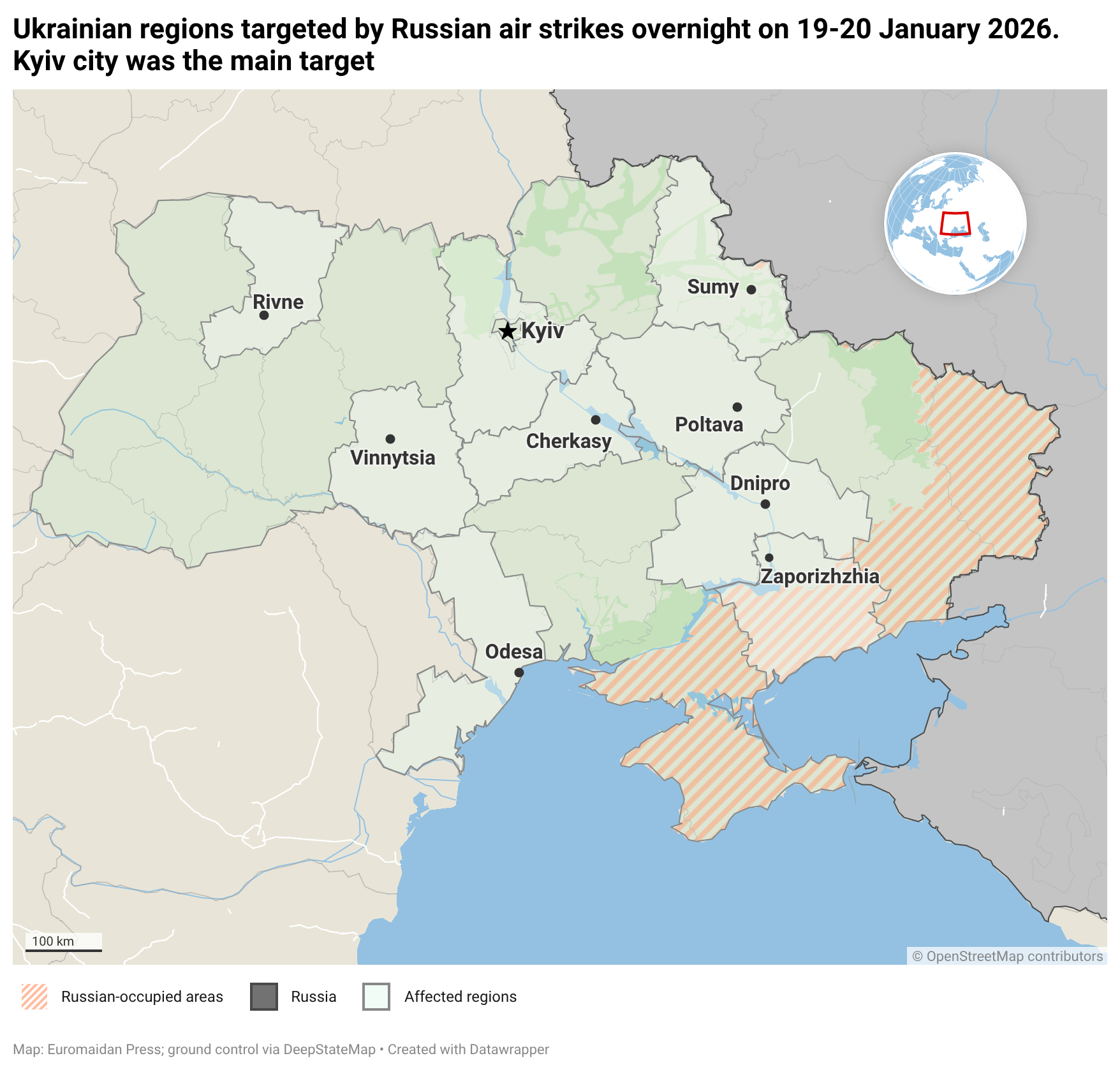
According to the President, the worst-hit area was Ukraine's capital, Kyiv city, where a large number of residential buildings were left without heating. Among other affected regions, he named the oblasts of Kyiv, Vinnytsia, Dnipto, Odesa, Zaporizhzhia, Poltava, and Sumy, along with other unnamed regions.
"According to available information, at least some of the missiles used in this strike were produced by Russia this year, underscoring once again how vital it is for global sanctions and restrictions on critical component supplies to actually work," the President said.

Russia aims to strike Ukraine with up to 1000 long-range drones per day in 2026, says Syrskyi
Ukraine's national energy company Ukrenergo reported that emergency power outages had been introduced in several oblasts due to the consequences of the strikes and the difficult condition of the power grid. The company emphasized that earlier scheduled blackout plans no longer applied in these regions as energy workers were now focused on stabilization and restoration efforts.
Kyiv: Widespread outages, heating down in thousands of buildings
Ukraine's Air Force also confirmed that Kyiv was the main target of the Russian air assault. According to Kyiv Mayor Vitalii Klitschko, over 5,600 high-rise residential buildings were left without heating, nearly 80% of which had only recently regained heat after the 9 January attack. As of the evening before the latest strike, only 16 buildings were without heating. Following the current attack, the entire left bank of Kyiv lost water supply due to damage to infrastructure.
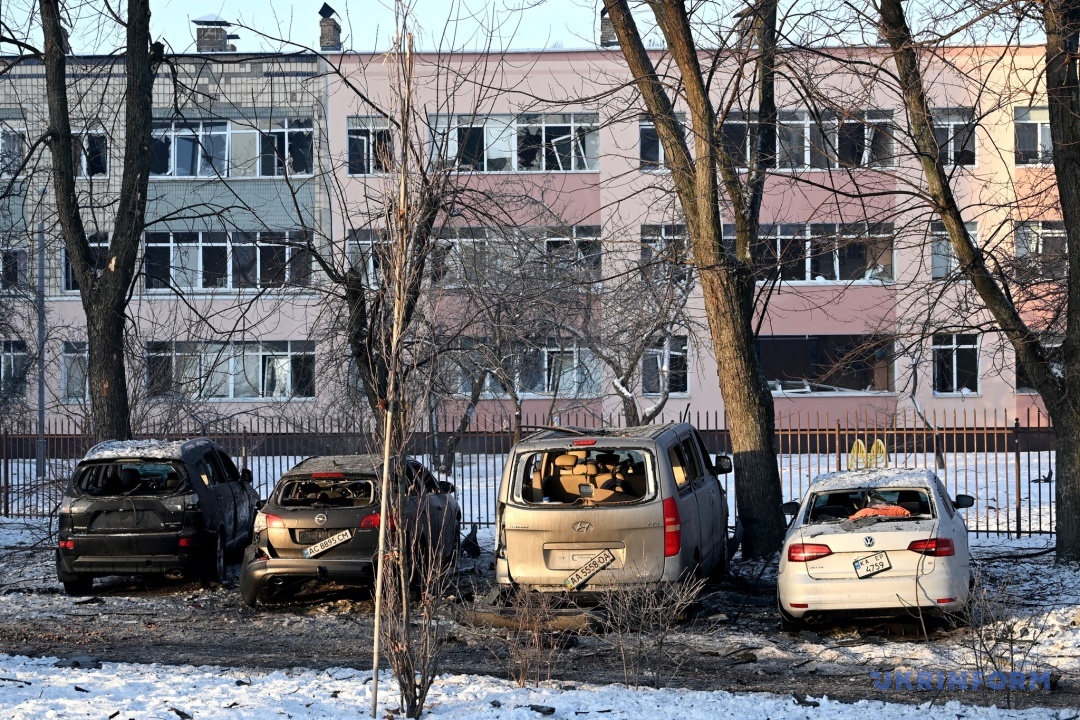
In Dniprovskyi district, several buildings were damaged, including a primary school and windows in residential buildings. Burning car debris from drone fragments was also reported, and one injured person remains hospitalized.
Kyivvodokanal utility company confirmed that water infrastructure was de-energized and nearly all of the capital’s left-bank area had no running water. The city’s metro system changed operating schedules for some lines due to electricity issues.
As of 10:00, DTEK reported that electricity had been restored to 162,000 homes, while 173,000 families were still without power. Emergency shutdowns remained in place across the city.

300 Kyiv buildings still without heat six days after Russian strike as temperatures hit -15°C
Kyiv Oblast was also struck overnight. The head of the Kyiv Oblast Military Administration, Mykola Kalashnyk, reported that a 50-year-old man was killed in Bucha district. Medics tried to save him but he died on site. Additionally, two gas stations were damaged in the oblast during the attack.
Dnipropetrovsk Oblast: Two women injured, major damage
According to local authorities, Russian forces hit the city of Dnipro and the surrounding area, including Nikopol district. The Dnipro strikes injured two women, aged 76 and 67. One of them was rescued from a damaged building by emergency workers. The attack caused a fire and destroyed part of an industrial facility, broke windows in nearby buildings, and damaged residential housing, infrastructure, and five vehicles. Dnipro’s mayor Borys Filatov said a major boiler facility was damaged, leaving hundreds of buildings without heating.
In the Novooleksandrivska community in Dnipro district, a drone strike damaged a single-family home. Russian artillery also targeted the Pokrovska community in Nikopol district. Air defenses reportedly downed 40 drones over the oblast during the night.
Rivne Oblast: Over 10,000 families without power
In Rivne Oblast, air alerts were reported in the morning. The head of the oblast military administration, Oleksandr Koval, said over 10,000 households were left without electricity after Russian strikes damaged critical infrastructure. Several residential buildings had shattered windows, and nearby parked vehicles were hit. No injuries were reported.
Other regions also affected
- In Cherkasy Oblast, four Russian missiles and one drone were intercepted. No injuries or damage from debris were reported, according to oblast head Ihor Taburets.
- In Vinnytsia Oblast, a critical infrastructure facility was struck by a Russian drone during the night. Regional chief Natalia Zabolotna said there were no injuries.
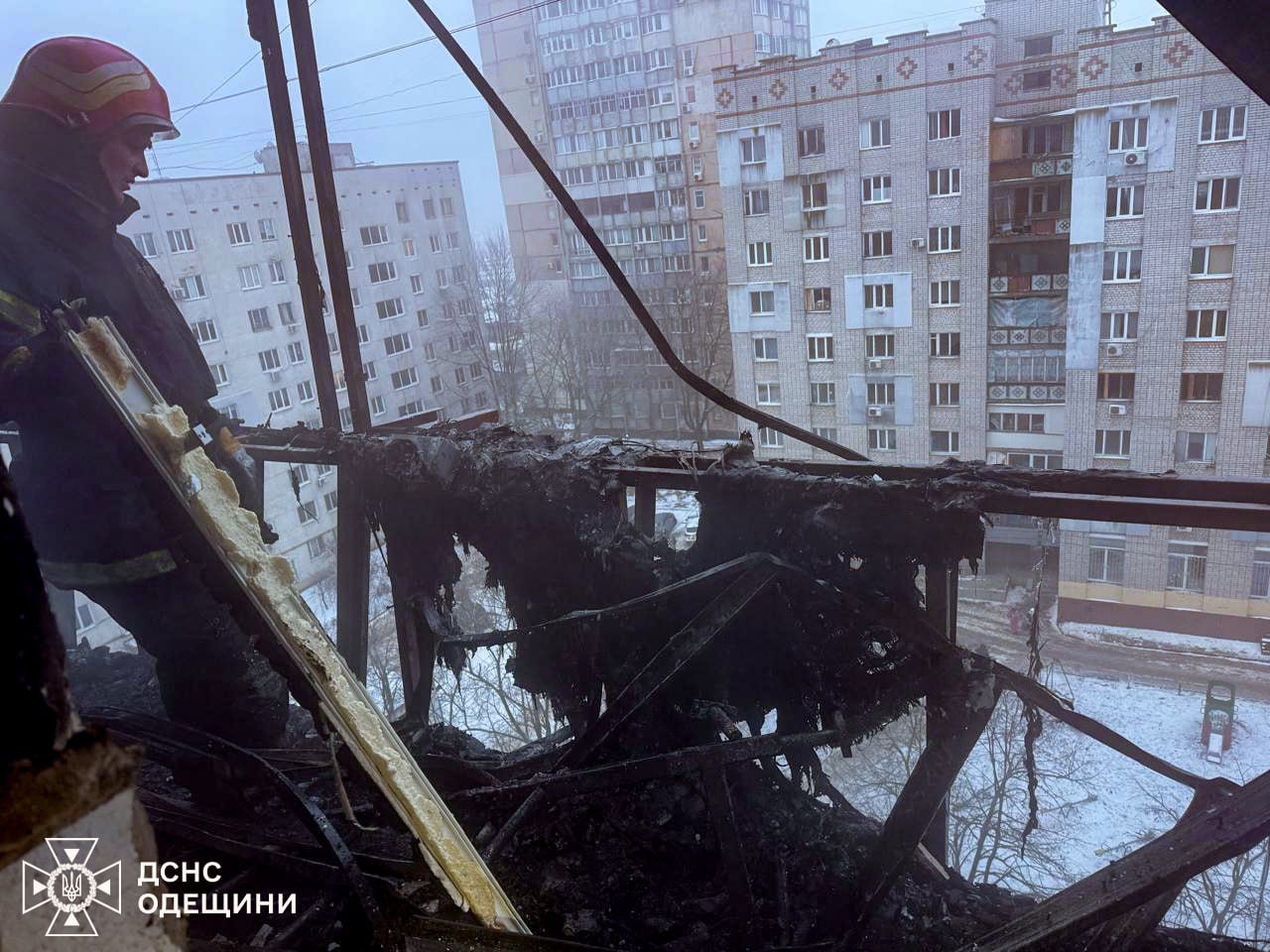
- In Odesa Oblast, drones targeted residential areas and energy facilities, according to local authorities. In Chornomorsk, a high-rise building was struck, damaging the facade and windows. No casualties have been confirmed so far. An energy facility in Odesa district was also damaged, with no injuries reported.
- In Poltava Oblast, Russian forces hit an industrial site, sparking fires at multiple locations. Emergency services said the fires were quickly extinguished. Information on casualties and the extent of damage is still being clarified.
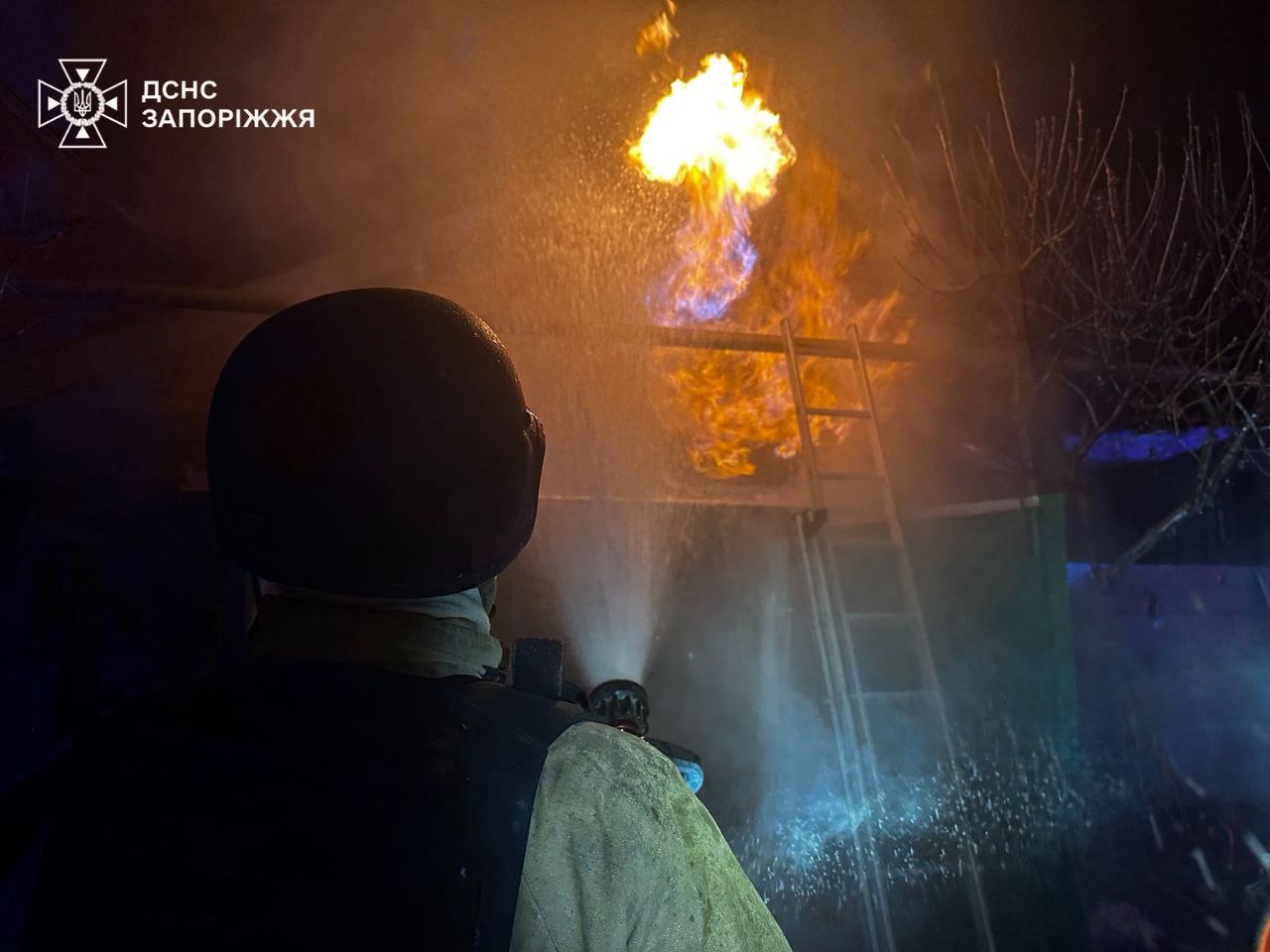
- In Zaporizhzhia, the Russian attack overnight caused a fire at a household outbuilding, according to DSNS emergency service.
Ukrainian Air Force: Over 340 aerial targets neutralized
The Air Force released further details on the scale of Russia’s attack. The strikes began at 19:00 on 19 January and involved one Zircon anti-ship missile launched from occupied Crimea, 18 Iskander-M and S-300 ballistic missiles from Russia’s Bryansk and Rostov oblasts, 15 Kh-101 cruise missiles from Vologda Oblast, and 339 strike drones—mainly Shahed types—launched from multiple directions.
Air defenses, aircraft, anti-aircraft missile forces, electronic warfare units, and mobile fire groups were deployed. As of 10:00 on 20 January, Ukrainian forces had intercepted or suppressed 342 targets: 14 ballistic missiles, 13 cruise missiles, and 315 drones. However, five missiles and 24 drones struck 11 locations, with drone debris falling on 12 more. Data on two missiles was still being verified.
The Air Force said the attack was still ongoing at the time of reporting (10:00) and urged citizens to follow safety guidelines.