“US security guarantees became awkward”: Greenland dispute is eroding international law’s deterrent function for Ukraine

Territorial claims normalized. Reparations uncertain.

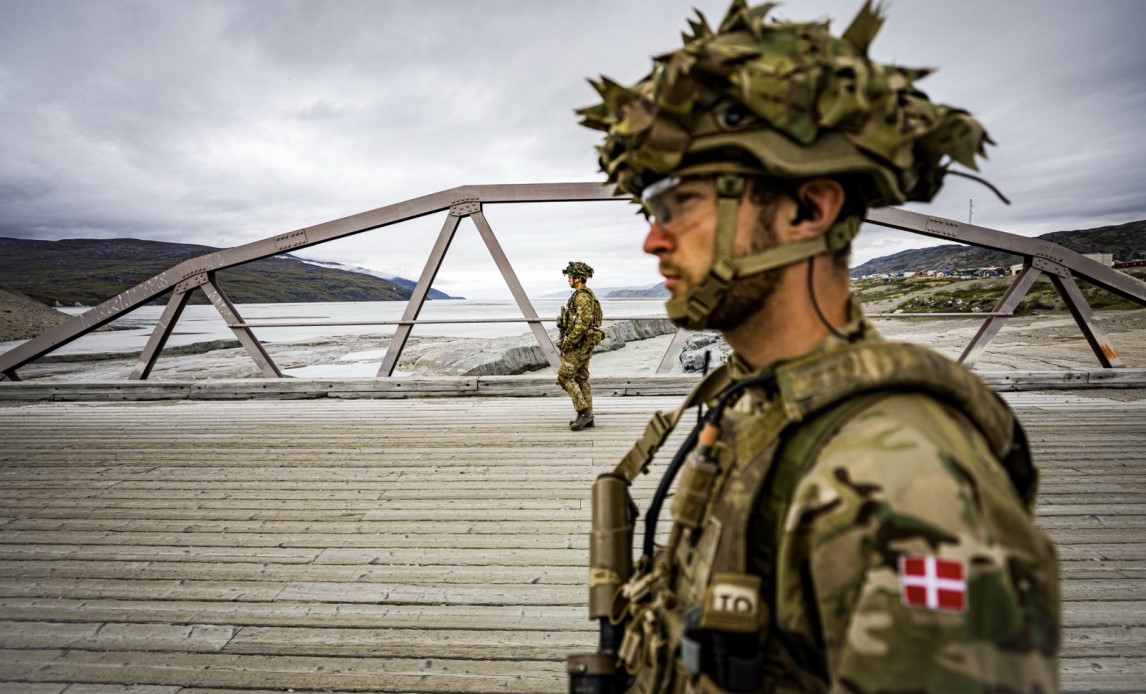
Danish soldiers
Danish soldiers in Kangerlussuaq in Greenland. Illustrative photo. Credit: Rebekka Gimm / Forsvaret
“US security guarantees became awkward”: Greenland dispute is eroding international law’s deterrent function for Ukraine

The "Greenland case" casts doubt on the very framework of a future peace settlement between Ukraine and Russia. Tensions between the US and the EU are already diverting Western attention from deterring Moscow's aggression, says political scientist Maksym Yali, according to Focus. 

Recently, US President Donald Trump claimed that Greenland is “unprotected” against a Russia–China threat and effectively demanded that the island be placed under US control. After Europe refused to support this position, Washington imposed tariffs on imports from Denmark, Norway, Sweden, France, Germany, the UK, the Netherlands, and Finland.

As a result, instead of consolidating the West around deterring Russia, a new center of tension is emerging, this time among allies.

When allies' sovereignty becomes a bargaining chip

Europe believed that Russia was the main threat to its security and that, by financially supporting Ukraine, it would gain two to three years to ... prepare for possible aggression against EU countries,” Yali notes.

However, the "new geopolitical reality named Trump" chose a different course. In essence, this involves a demand that Denmark transfer part of its sovereign territory under the guise of an economic deal, he says. 

Moreover, the US president has publicly stated that if diplomacy fails, he is prepared to resort to “tougher” methods.

According to the analyst, this precedent is dangerous not only for Europe but for the entire system of international relations. If territorial claims by major powers become normalized, international law will effectively lose its deterrent function.

Implications for Ukraine: erosion of international law

For Ukraine, this situation carries several negative consequences.

  • First, it becomes increasingly difficult to appeal to Russia’s violations of international law, as faith in its effectiveness has nearly evaporated. Accordingly, prospects for reparations are becoming increasingly uncertain.
  • Second, EU attention and financial resources will increasingly be directed toward managing a new trade confrontation with the US. In this context, Ukraine, particularly the issue of possible backchannel talks between Washington and Moscow, risks being pushed to the sidelines.

“Let us hope everything ends peacefully and quickly. But it is becoming obvious that Trump has developed a taste for swift and decisive ‘special operations,’” the expert notes.

This suggests that the “Greenland story” may be only the beginning. Much will depend on the outcome of negotiations between the US and the EU.

“Mentioning US security guarantees to NATO countries has somehow become awkward,” Yali concludes.

If the US itself questions an ally’s sovereignty, trust in American security guarantees in Europe will inevitably weaken. Under such conditions, security will depend less on treaties and more on the capacity for self-defense.

To suggest a correction or clarification, write to us here

You can also highlight the text and press Ctrl + Enter

Please leave your suggestions or corrections here


    Euromaidan Press

    We are an independent media outlet that relies solely on advertising revenue to sustain itself. We do not endorse or promote any products or services for financial gain. Therefore, we kindly ask for your support by disabling your ad blocker. Your assistance helps us continue providing quality content. Thank you!

    Related Posts

    Ads are disabled for Euromaidan patrons.

    Support us on Patreon for an ad-free experience.

    Already with us on Patreon?

    Enter the code you received on Patreon or by email to disable ads for 6 months

    Invalid code. Please try again

    Code successfully activated

    Ads will be hidden for 6 months.