


Ukraine has received an undisclosed number of military-grade off-road vehicles from Japan, similar to the American HMMWV. A batch of trucks, including Toyota High Mobility Vehicles (HMVs), arrived in Poland on 12 January 2026 as part of Tokyo’s ongoing non-lethal defense support for Kyiv.
Tokyo's approach to Ukraine aid reflects Japan’s constitutional limits on military engagement, while still aligning with broader G7 goals and underlining Ukraine’s role in global security. Tokyo’s defense-related aid is confined to equipment such as trucks, bulletproof vests, and logistical support assets, reinforcing Ukraine’s capacity without breaching Japan’s pacifist commitments.
Japan sends vehicles and medical aid to Ukraine
The Embassy of Japan in Ukraine reported on 14 January that its Ministry of Defense and Self-Defense Forces decided to supply an additional 30 vehicles in October 2025. The last batch, consisting of 14 unnamed vehicles, was delivered to Poland on 12 January, finalizing the transfer. The embassy also confirmed that two containers of medical supplies were included in the shipment.
The Toyota HMV is a 4×4 high-mobility vehicle with applications ranging from personnel and equipment transport to mounting weaponry or communications systems. It has been widely used in training, logistics, and peacekeeping missions. Some demilitarized units were previously sold on civilian markets or transferred to other nations.
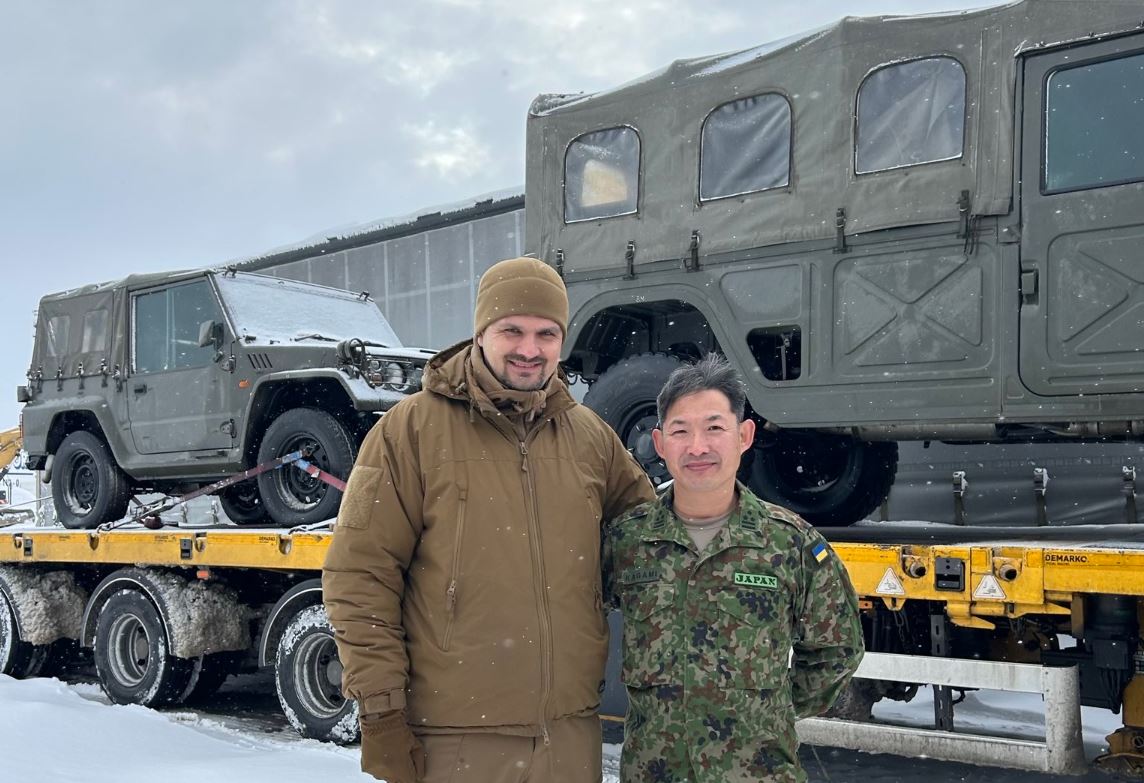
While the base version of the HMV has minimal armor, certain variants come with reinforced panels and bulletproof glass. The platform allows for the installation of machine gun turrets, anti-tank missile systems, or light anti-air systems, though Japan’s contribution to Ukraine remains non-lethal in line with its defense policies.
Read also
-
62 of the 140 foreign parts in this Russian missile were American. Ukraine wants that gap closed
-
This Ukrainian 344-kg armored capsule keeps wounded soldier in constant contact with operator, with emergency exit he controls himself
-
Ukrainian drones destroyed nearly 15.4% of Russian retail giant’s storage space in July


