
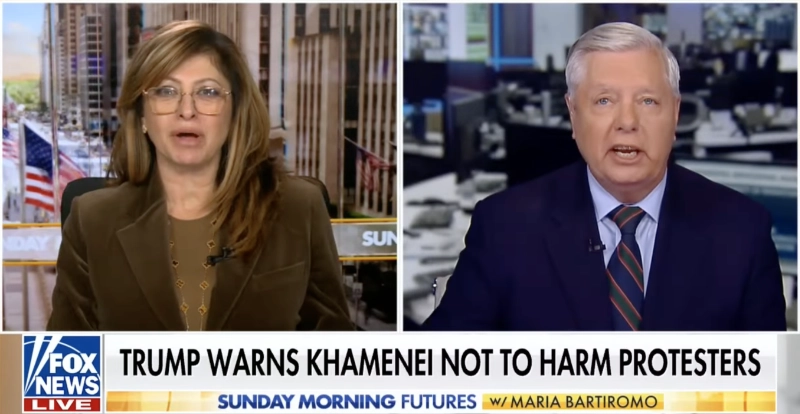
Senator Lindsey Graham called on President Donald Trump to assassinate Iran's leadership as anti-regime protests entered their third week, leaving more than 500 dead and prompting Tehran to warn it would strike US bases if attacked.
"I would kill the leadership that are killing the people. You've got to end this," Graham said on Fox News Sunday. He described Supreme Leader Ali Khamenei as "the modern-day Hitler" and "a religious Nazi." Graham urged Trump to take action that would "embolden the protesters and scare the hell out of the regime."
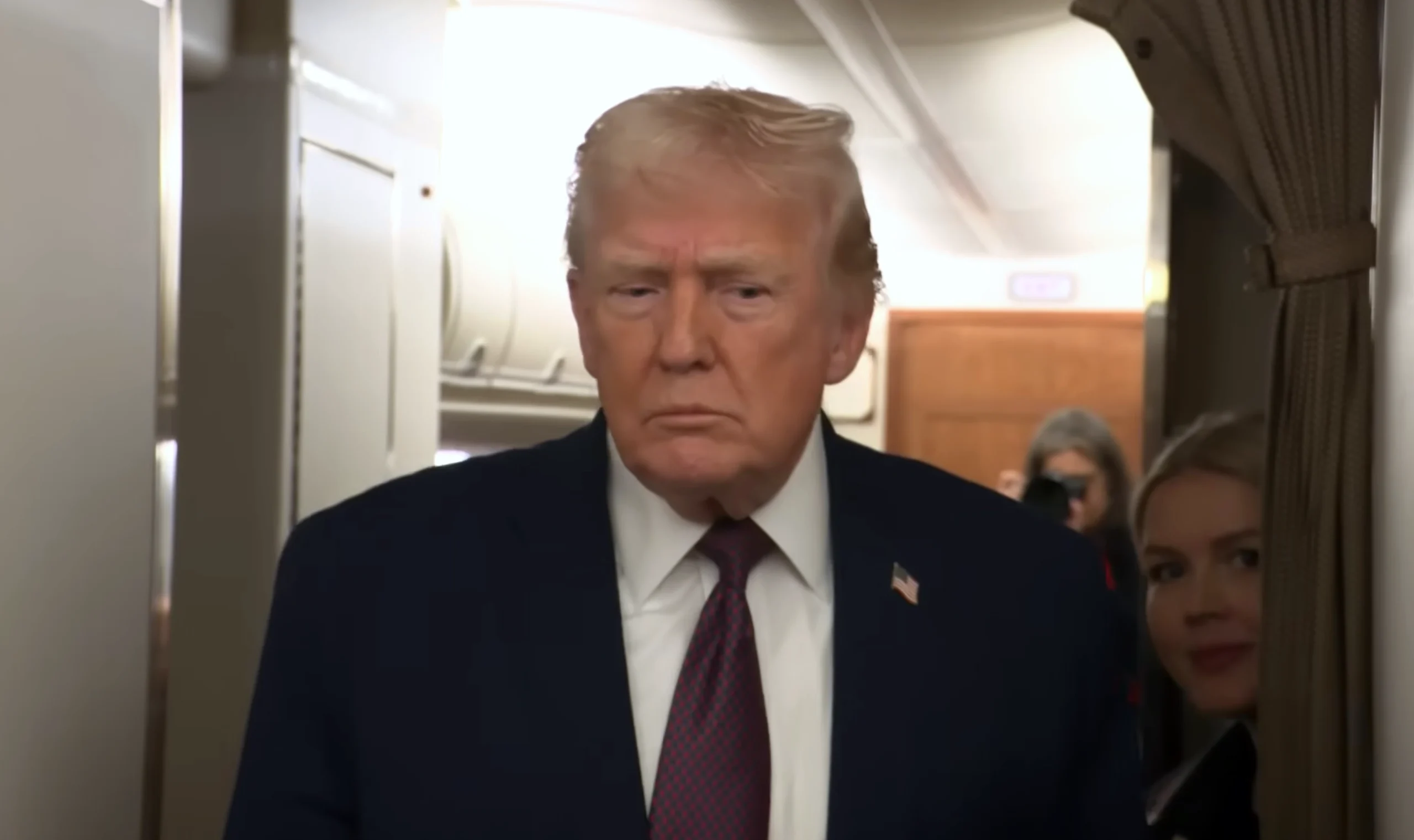
The call came as Trump told reporters aboard Air Force One that he was examining "very strong options" and would meet senior advisers Tuesday to discuss Iran. In a striking revelation, Trump said Iran's leaders had called him Saturday seeking negotiations. "The leaders of Iran called; they want to negotiate. I think they're tired of being beat up by the United States," he said. "We may have to act... before the meeting."
Death toll mounts as protests spread
US-based rights group HRANA has verified 490 protester deaths and 48 security personnel killed, with more than 10,600 arrested over two weeks of unrest, Reuters reported. State TV showed dozens of body bags at Tehran's coroner's office, calling the dead victims of "armed terrorists."
What began 28 December as economic protests over soaring prices has transformed into a direct challenge to the clerical establishment. An internet blackout since Thursday has hampered the flow of information, but footage from Tehran showed large night crowds clapping and chanting. A man recording could be heard saying the crowd "has no end nor beginning."
Iranian Parliament Speaker Mohammad Baqer Qalibaf warned Washington against "a miscalculation." If attacked, "the occupied territories [Israel] as well as all US bases and ships will be our legitimate target," the former Revolutionary Guards commander said.
Crown Prince declares 'new phase' of uprising
Exiled Crown Prince Reza Pahlavi, son of Iran's last shah, announced what he called a "new phase of the national uprising." With "the public mandate I have received from you," he addressed Iranians, declaring regime propaganda and communications infrastructure "legitimate targets."
Pahlavi offered Iran's armed forces a stark choice: "stand with the people and become allies of the nation, or choose complicity with the murderers of the people—and bear the nation's lasting shame and condemnation."
"The regime faces a severe shortage of forces of repression," he wrote. "The increase in gunfire against the people is not a sign of strength, but of fear—fear of collapse and an accelerated downfall."
When asked if he had been in contact with Iranian opposition leaders, Trump replied: "Yeah... you're going to find out pretty soon."
Trump threatens strikes 'they wouldn't believe'
Responding to Iranian threats against US bases, Trump was blunt: "We'll consider things targets they wouldn't—that they wouldn't believe. If they do that, we will hit them at levels that they've never been hit before."
Asked about restoring internet access for protesters after a 72-hour blackout, Trump said he would speak to Elon Musk about deploying Starlink. "As soon as I'm finished with you," he told reporters.
The president cited his first-term record—the killing of Iranian General Qasem Soleimani and ISIS leader Abu Bakr al-Baghdadi, and "the Iran nuclear threat wiped out"—when a CNN reporter asked if Iran takes his threats seriously. "What a stupid question," Trump responded.
Israel on high alert
Three Israeli sources told Reuters that Israel was on high alert for possible US intervention. The two countries fought a 12-day war in June 2025, which the US briefly joined by attacking nuclear installations. Iran retaliated by firing missiles at Israel and an American air base in Qatar.
UN Secretary-General Antonio Guterres said he was "shocked" by reports of violence by Iranian authorities. "The rights to freedom of expression, association & peaceful assembly must be fully respected & protected," he wrote.
Iranian President Masoud Pezeshkian blamed Israel and the US for the unrest, saying enemies had brought in "terrorists... who set mosques on fire... attack banks, and public properties." He pleaded with families: "do not allow your young children to join rioters and terrorists who behead people and kill others."
Former US diplomat Alan Eyre thought it unlikely the protests would topple the establishment. "I think it more likely that it puts these protests down eventually, but emerges from the process far weaker," he told Reuters, noting Iran's elite still appeared cohesive and there was no organized opposition.
Graham offered a different calculus: "If it ends well, then peace breaks out. All the state-sponsored terrorism activity stops—Hezbollah, Hamas, they go away. Israel and Saudi make peace—a new day in the Mideast. If the Ayatollah hangs on, it's a giant Obama step backward."