


Russia is trying to break Ukraine by destroying its power grid. Kyiv residents averaged 9.5 hours without electricity per day in December. Some regions face 16-hour blackouts. A senior European diplomat told The Washington Post the country stands “one step from a complete blackout” in the east.
“I know of at least three people who were offered the job and said no.”
Into this crisis, President Volodymyr Zelenskyy needed an energy minister. He couldn’t find one.
Political scientist Volodymyr Fesenko revealed that “all other candidates for the Minister of Energy refused. I know of at least three people who were offered the job and said no.”

Why? “The catastrophic situation in energy due to Russian shelling. The fallout of the [Energoatom scandal] and the scale of corruption problems discovered there. Candidates realized that if you take that job, you inherit a mountain of problems you might not be able to solve, a pile of risks, and zero reputational gain.”
Defense Minister Denys Shmyhal initially refused too. But, Fesenko noted, “when the President asks persuasively, it’s hard to say no.”
Zelenskyy announced the nomination on 3 January. Parliament has not yet scheduled a vote.
A poisoned chalice
The reluctance tells us something about the ministry Shmyhal is inheriting.
Russia has devastated Ukraine’s power generation. Thermal power plants—the workhorses that balance the grid—are largely destroyed. The country has lost roughly 60% of its gas production capacity. Ukraine now relies on nuclear plants, European imports stretched to their limit, and whatever distributed generation Ukrainians can build.
The blackouts are worse than necessary—and not just because of Russia: much of this infrastructure could have been protected.
The Presidential Office systematically dismantled Western-backed oversight boards at state energy companies.
Under former Ukrenergo chief Volodymyr Kudrytskyi, 60 concrete shelters were built around critical transformers. Nearly all survived repeated Russian strikes. Kudrytskyi secured €1.5 billion in Western aid for grid defense. The method worked.

It wasn’t replicated. While Ukrenergo built shelters, the Energy Ministry under Herman Halushchenko failed to coordinate protection for other critical facilities. Why? A New York Times investigation found that the Presidential Office systematically dismantled Western-backed oversight boards at state energy companies—leaving expert seats vacant, stacking boards with loyalists, rewriting charters to strip supervisory powers.
The result: in November 2025, anti-corruption investigators exposed Operation Midas—a $100 million kickback scheme at state nuclear operator Energoatom. Over 1,000 hours of surveillance recordings documented officials demanding 10-15% cuts from contractors. Zero protective shelters were built at Energoatom facilities through autumn 2024. Some officials, recordings suggested, considered shelter construction “a waste of money.”
If Russia succeeds in making Ukraine unlivable through energy destruction, it achieves its war aim without winning on the battlefield.
Meanwhile, Kudrytskyi—who had actually protected infrastructure—faces prosecution on fraud charges over a 2018 fence project. Western donors withdrew. International funding for energy protection collapsed to 5-10% of previous levels.
This is the inheritance. Russian bombs are falling every 10 days. A corruption scandal that reached into Zelenskyy’s inner circle. Western partners are demanding structural reform. And a public that will blame whoever holds the title when the lights go out.
No wonder people said no.
Western taxpayers have a direct stake: billions in energy reconstruction aid could disappear into similar schemes. For European security, the calculation is grimmer—if Russia succeeds in making Ukraine unlivable through energy destruction, it achieves its war aim without winning on the battlefield. And Ukraine’s EU accession, which requires governance reforms, now depends on whether Kyiv implements structural changes or just rotates personnel.
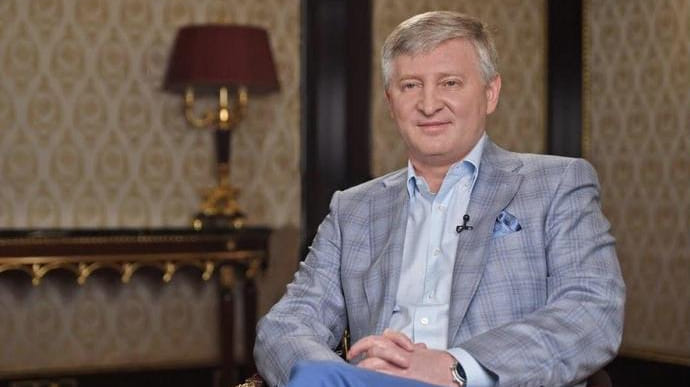
What Shmyhal brings
Shmyhal, 50, isn’t unqualified. At the Ministry of Defense, he oversaw a record year:
- $45 billion in international security support—more than any year since the full-scale invasion
- $6.1 billion attracted for Ukraine’s defense industry (vs. $600 million in 2024)
- 2.4 million FPV drones supplied to the military
Within a week of his July appointment, Shmyhal had named six deputy ministers. The man moves fast.
He also has energy experience—though this cuts both ways. From 2017 to 2019, Shmyhal worked at DTEK, Ukraine’s largest private energy company. DTEK is wholly owned by Rinat Akhmetov, Ukraine’s richest oligarch. The conglomerate employs 55,000 people, has invested €12 billion in Ukraine’s energy sector since 2005, and controls thermal plants, wind farms, coal mines, and power distribution across multiple regions.
For 18 months, Shmyhal ran DTEK’s Burshtyn thermal power plant—one of Ukraine’s largest, and the country’s main electricity exporter to Europe. He understands how Ukraine’s energy market actually works.
“He does not know Akhmetov in person and simply worked in the company.”
But he learned it inside an empire that investigative journalists say influences at least 100 lawmakers in parliament. The European Bank for Reconstruction and Development has refused to fund DTEK specifically due to its oligarchic ownership.
Shmyhal has denied personal ties to Akhmetov. “He does not know Akhmetov in person and simply worked in the company,” Euromaidan Press reported in 2020, citing Shmyhal’s claims that he was hired through “an open selection procedure.”
Running one of Ukraine’s largest thermal power plants for 18 months without ever meeting the owner seems unlikely. Whether this matters depends on what Zelenskyy actually wants from his energy minister.
The Nekrasov question
There’s an obvious alternative already in place: Acting Energy Minister Artem Nekrasov. He has spent his entire career in the energy sector—far more experience than Shmyhal’s year and a half at DTEK. Since taking over in November, he has even unblocked a stalled tender for backup generators that had stalled under Halushchenko.
So why isn’t Nekrasov being promoted?
The answer seems to be association. Nekrasov worked under Halushchenko. He’s not on the Midas surveillance recordings. No one accuses him of wrongdoing. But he’s “Halushchenko’s man”—and that label apparently disqualifies him.
But there’s another factor: Nekrasov could have said no. Shmyhal, when the president asks “persuasively,” cannot.
When Zelenskyy needed someone to take over Defense last July, he sent Shmyhal.
After DTEK, Shmyhal’s rise was entirely tied to Zelenskyy: Ivano-Frankivsk governor in August 2019, vice prime minister in February 2020, prime minister the following month. He led the government through COVID, then through full-scale war—becoming Ukraine’s longest-serving prime minister. When Zelenskyy needed someone to take over Defense last July, he sent Shmyhal.
“Shmyhal is absolutely non-irritating member of Zelenskyy’s team for plugging holes,” wrote Yurii Nikolov, editor of investigative outlet Nashi Groshi.
When the hole is one nobody else will fill, you need someone who won’t refuse.

A recognizable face
Nikolov offers another explanation for why Shmyhal specifically: Zelenskyy needs a recognizable face to absorb public anger over blackouts. An unknown acting minister means frustration flows upward to the president. Someone as familiar as Shmyhal—a household name after five years as PM—becomes a more effective buffer.
“It’s much easier to say ‘Shmyhal didn’t protect [the grid]’ than ‘that guy... what’s his name... some poet or something,’” Nikolov observed.
“I’m convinced Shmyhal won’t be sending ‘two grand to Moscow.’”
Even opposition figures offer cautious support. Yaroslav Zheleznyak, a Holos party MP and frequent government critic, told NV that Shmyhal “really is a workhorse” with a “pretty good reputation as a manager across political circles.”
“I’m convinced Shmyhal won’t be sending ‘two grand to Moscow,’” Zheleznyak said, referencing the corruption scheme’s most damning phrase. “At minimum, we should have more electricity with his arrival. He at least understands how this works.”
The structural test
Some progress has happened in the energy sector since November. On 31 December, four independent members were approved for Energoatom’s supervisory board—a direct response to the scandal. The EU expects the whole board to be finalized by this month.
But the broader reforms remain pending. The EU’s 10-point plan calls for amendments to the Criminal Procedure Code to strengthen anti-corruption bodies, the adoption of transparent procedures for selecting prosecutors, and the implementation of a comprehensive anti-corruption strategy. These are EU accession conditions. They remain unfulfilled.
“It’s not hard to stop stealing during the war.”
Tymur Mindich, the businessman accused of orchestrating Midas, remains in Israel. Whoever tipped him off before the raids has not been identified. The NABU detective who led the investigation spent months detained on what activists called fabricated charges—released only in December.
“It’s not hard to stop stealing during the war,” Kudrytskyi told Euromaidan Press in December. “You don’t need to wait until the end of the war to stop doing that.”

Why does Ukraine’s grid survive missiles that would black out Europe? Ousted energy chief explains
The question nobody’s asking
The fact that three candidates refused the job—and that Shmyhal initially refused too—tells us something important about Ukraine’s governance.
A ministry this critical shouldn’t be a poisoned chalice. Energy is the backbone of Ukraine’s survival. If competent people see the role as career suicide—“a mountain of problems you might not be able to solve, a pile of risks, and zero reputational gain”—something is deeply wrong with the system.
But the deeper problem isn’t who holds the job. It’s that the job has become one nobody wants.
Maybe Shmyhal will fix it. He’s competent, he’s loyal, and he understands energy markets. He also has no choice but to try.
But the deeper problem isn’t who holds the job. It’s that the job has become one nobody wants. That won’t change by rotating ministers. It requires the kind of structural reform—independent oversight, accountability for enablers, genuine anti-corruption enforcement—that Ukraine has promised but not delivered.
Russia keeps bombing what remains. The man who couldn’t say no is now responsible for keeping the lights on.


