

Ukrainian President Volodymyr Zelenskyy announced a sweeping government reshuffle on 2 January, placing his spy chief at the center of presidential decision-making and proposing the architect of Ukraine's drone warfare program to lead the Defense Ministry. The changes mark the most significant restructuring of Ukraine's wartime leadership since Russia's full-scale invasion began.
"Today, we have begun a substantial overhaul – internal changes to make Ukraine more resilient," Zelenskyy said in his evening address. The reshuffle follows weeks of leadership vacuum after anti-corruption investigators exposed a $100 million embezzlement scheme at state nuclear operator Energoatom that brought down Zelenskyy's powerful chief of staff Andriy Yermak on 28 November.
Budanov moves from shadows to center stage
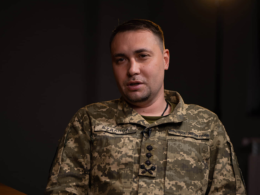
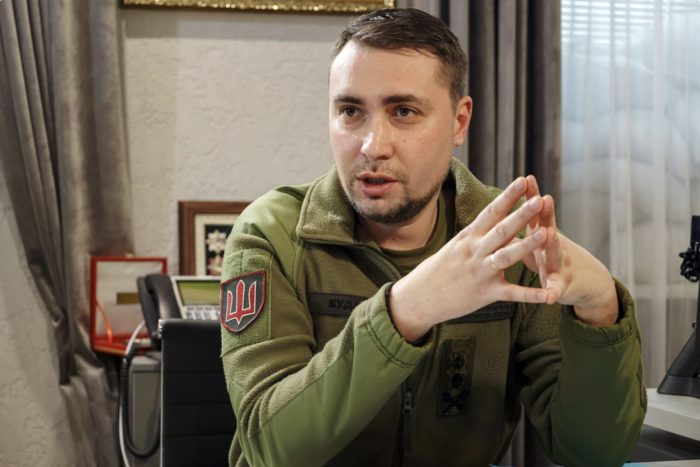
Kyrylo Budanov, 39, the military intelligence chief who became a cult figure for orchestrating covert operations inside Russia, now runs the Presidential Office. Zelenskyy said "Kyrylo's experience and strength are enough to steer the Office's work toward security matters and the negotiation process exactly as needed."
Budanov built Ukraine's Main Intelligence Directorate (GUR) into one of the war's most effective agencies, responsible for strikes deep inside Russian territory and psychological operations that kept Moscow off-balance. His appointment signals Zelenskyy's intent to bring wartime intelligence tradecraft directly into civilian governance, and into peace negotiations with Washington.
Ivashchenko takes the spy helm
Oleh Ivashchenko, who led Ukraine's Foreign Intelligence Service since March 2024, replaces Budanov at the Defense Intelligence. Zelenskyy called him "a highly qualified professional" who "previously served in the Defense Intelligence and led Ukraine's Foreign Intelligence Service."
In a separate meeting with Ivashchenko prior to the appointment, Zelenskyy outlined priorities: "The less the aggressor earns, the more opportunities there will be for diplomacy. This especially concerns Russian oil exports, which will be limited and made cheaper," the president stated, according to his office.
Little public information exists about Ivashchenko, as intelligence services traditionally keep their chiefs' biographies classified. A decision on who will lead the Foreign Intelligence Service is expected soon.
Fedorov: From digitization to defense
The most unexpected move: Zelenskyy proposed Mykhailo Fedorov, 35, the First Deputy Prime Minister and Digital Transformation Minister, to lead the Defense Ministry.
Fedorov transformed Ukraine's approach to military technology. Under his direction, the Brave1 defense tech cluster funded hundreds of drone and electronic warfare projects, and Ukraine achieved production of over 1,000 interceptor drones daily, a target Zelenskyy confirmed was met in December.
"Together with all our military, the army command, national weapons producers, and Ukraine's partners, we must implement defense-sector changes that will be of help," Zelenskyy said. Fedorov's appointment would bring the man who built Ukraine's defense tech ecosystem directly into control of procurement and military policy.
Shmyhal stays, role shifts
Defense Minister Denys Shmyhal remains in Zelenskyy's team. The president proposed he "lead another direction in government work – equally important for our resilience." Zelenskyy thanked Shmyhal for "his systematic work for our state" but did not specify the new role.
More changes coming
The reshuffle extends beyond the top positions:
State Border Guard Service: Zelenskyy ordered a new chief appointed, saying he discussed changes with outgoing head Serhii Deineko and Interior Minister Ihor Klymenko, and that "new approaches will be introduced in managing the Border Guard Service."
State Bureau of Investigation (DBR): Zelenskyy ordered a presidential bill prepared for January to "update" the agency. "There are things that should be changed," he said, with the Cabinet and Presidential Office to prepare proposals.
Military training: Changes are coming to training institutions. "Training must learn the lessons of this war directly from the front, and everyone who trains Ukrainian warriors must understand firsthand what war truly is," Zelenskyy said.
Combat brigades: Deputy Presidential Office Head Pavlo Palisa, himself a former combat unit commander, will meet with frontline brigades "in the coming days" to identify decisions that could strengthen Ukrainian positions.
The timing
Zelenskyy announced the reshuffle one day before a meeting of security advisers from Europe and the United States, the first high-level consultations of 2026 on Ukraine's security.
"Tomorrow, we will continue the changes. Further decisions will follow," Zelenskyy said.