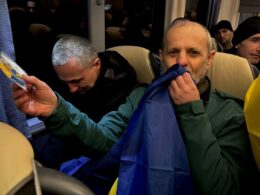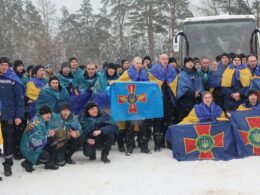


Before releasing Ukrainian civilians in prisoner exchanges, Russian guards at a Siberian detention facility wash them, feed them properly for the first time in years, and warn them to be careful not to get any bruises, according to newly released testimonies from freed prisoners.
"They fed us like pigs before release. All of us," said Mykola Medyk, a 70-year-old electrician who spent over three years in Russian captivity. "Apparently they were choosing: whoever they fatten up, they exchange first."
The testimonies, documented by Ukraine's Media Initiative for Human Rights (MIPL), paint a picture of systematic torture across multiple Russian detention facilities—followed by coordinated attempts to conceal the evidence before prisoner swaps.
How Russia tortures Ukrainian civilians in Siberian detention
For centuries, Siberia has served as Russia's dumping ground for those it wants broken. The city of Biysk, in Russia's Altai region thousands of kilometers from Ukraine, has become what freed prisoners describe as the final stop in a network of brutality—and the place where authorities try hardest to cover their tracks.
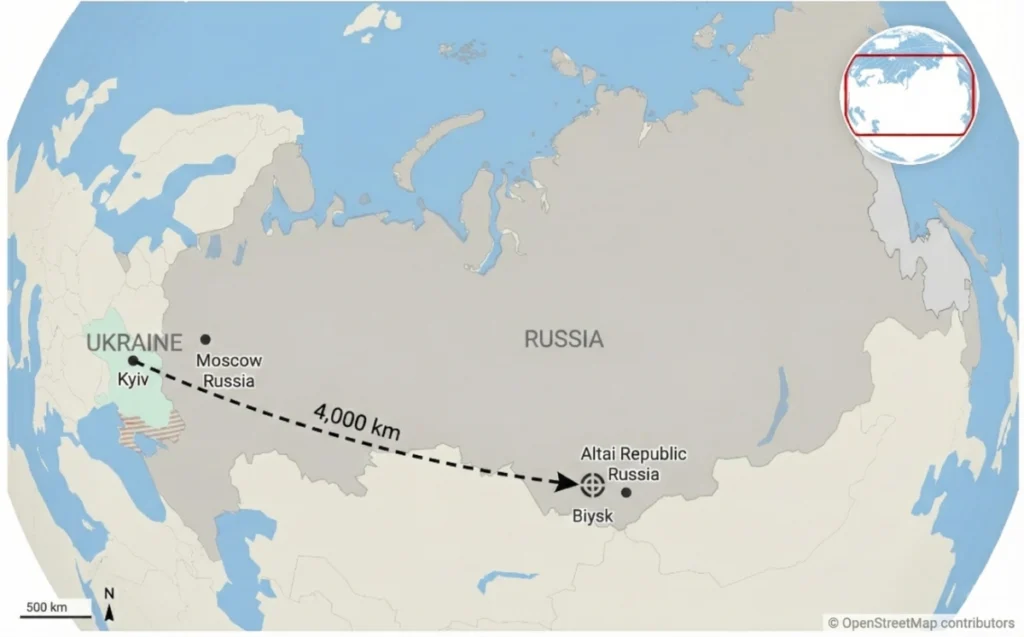
The journey to Biysk takes about a week in prison train cars with minimal provisions: dry rations, hot water, empty bottles to use as toilets. Prisoners aren't allowed outside during transport.
What awaits them is what survivors describe as some of the harshest conditions in the entire system. Upon arrival, prisoners run a gauntlet through narrow corridors with bags over their heads, beaten with electroshockers, kicked, and forced to their knees with hands raised. One former captive said it felt like "they would simply kill you."
The bathhouse was the worst, according to multiple testimonies.
"They killed people there. Beat them so hard that guys lost consciousness. Going to that bathhouse was like going to be executed," one freed prisoner said. "God forbid you turn your head and look at a guard—consider yourself gone."
Torture network in occupied Donetsk Oblast
Before reaching Siberia, most civilian prisoners pass through a rotating circuit of detention sites in occupied Donetsk Oblast: Dokuchaievsk, Donetsk, Khrestivka, Olenivka, Horlivka, Torez. Each new location means a new cycle of violence.
The testimonies describe consistent patterns across facilities. At Olenivka—infamous for a 2022 explosion that killed dozens of Ukrainian POWs—guards used dogs, electroshockers, rubber hoses, metal pipes, and rebar. One prisoner had his nose broken during intake. Another recalled being stripped naked, inspected for wounds, photographed, then assigned to grossly overcrowded cells.
"They put seventeen people in a cell built for six to eight. I won't even mention the guys crammed seventy into the same size cell—sleeping was impossible, even sitting down. Some had to stand," one freed civilian recounted.
At the Donetsk pretrial detention center, the occupation administration deliberately provoked conflicts between prisoners. During food distribution, some received large portions while others got transparent scraps of bread. Freed prisoners believe this was systematic—the same pattern repeated across different facilities. Most fights between captives started over food.
Ukrainian civilian's testimony: "I learned to stay silent when they beat me"
Mykola Medyk lived his entire life in Volodymyrivka and worked as an electrician at a local factory. On 9 April 2022, armed Russian soldiers entered his home, took him outside, put him in a vehicle, and drove him away. First to Volnovakha for interrogation, then Donetsk. They accused him of pro-Ukrainian politics.
He ended up in SIZO-2 in Galich, Kostroma Oblast—deep inside Russia—held alongside Ukrainian POWs.
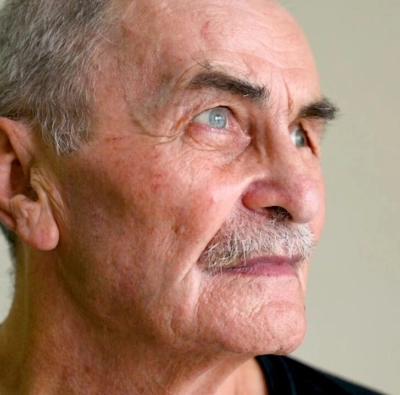
"They tortured us systematically. Sticks, whips, wooden mallets. I got hit once with one of those sledgehammers and couldn't get up," Medyk said.
FSB staff rotated monthly at the facility. Each new shift started with beatings. At one point, the administration officially banned hitting prisoners—but guards simply reduced the violence slightly rather than stopping.
"In the first two years, they beat us mercilessly, used whatever was at hand," Medyk recalled. "On 31 August 2022, after a failed Russian offensive at the front, the guards beat everyone in detention. Everyone had black backsides, no exceptions. When they beat people, guys would—excuse me—piss and shit themselves. Screamed. I learned later to stay silent when they beat me."
Some prisoners tried to kill themselves, but guards watched constantly. When someone attempted self-harm, the guards beat the entire cell. So prisoners started stopping each other. Medyk admits he thought about suicide himself but held on.
What kept him going? A letter from his daughter.
Russia hides torture evidence before prisoner exchanges
Before prisoner exchanges, behavior at Biysk shifts noticeably. Guards stop beating prisoners, though tension rises.
"When they're gathering people [for exchange], they wash them, bathe them, give them new clothes if theirs are torn. They fill out paperwork, speak politely: 'Don't fall, don't hit yourself—you know, so there aren't any bruises,'" one freed prisoner recounted.
Prisoners were also forced to sign documents agreeing to cooperate with Russian special services and to read statements on camera saying they had no complaints about their detention conditions.
Staff at Biysk go to unusual lengths to hide the facility's location from prisoners. Stamps and seals on bedding and mattresses are painted over. Markings on soap are scraped off. Guards wear balaclavas. During movement around the facility, prisoners must look only at the floor.
When a representative of the Russian ombudsman visited, conditions temporarily improved—short walks were permitted, the regime relaxed. After she left, everything returned to normal.
Systematic torture of Ukrainian prisoners documented
The testimonies collected by MIPL share common threads. Immediate detention in basements or improvised cells after capture. First interrogations with physical force. Forced signing of documents. Transport through a network of facilities where violence cycles repeat.
The geographic spread—from basements in occupied Ukrainian territory to detention centers deep in Siberia—and the consistent treatment across locations suggests coordination rather than individual facility practices.
Russia has denied systematic mistreatment of Ukrainian prisoners. The evidence from freed civilians tells a different story: a network designed to break people, then clean them up enough for cameras before sending them home.
Medyk, the 70-year-old electrician, said he didn't believe until the last moment that he would actually be exchanged. When guards came to his cell, read out names, and lined everyone up, it still felt unreal.
Prisoners had no access to clocks or calendars. They didn't know dates or times—only when radio commands allowed them to lie down, or when the routine changed. In the middle of the night before his release, Medyk was washed and shaved, returned briefly to his cell, then taken to a basement waiting area. From there, prison transport vehicles, an airfield, and finally—a flight toward the exchange point.
After more than three years, he was going home.