

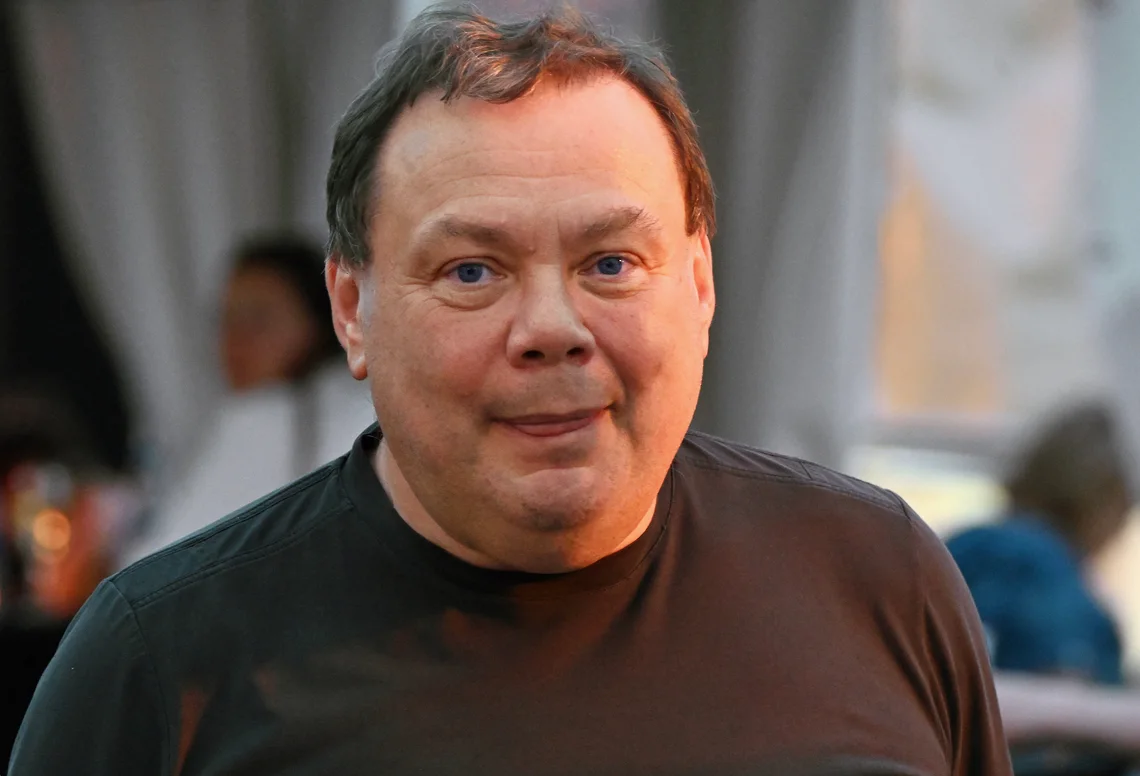
Mikhail Fridman, one of Russia’s wealthiest oligarchs, is using obscure investor-state arbitration mechanisms to challenge sanctions imposed after Moscow’s full-scale invasion of Ukraine. If he wins, every sanctioned oligarch could follow, forcing Western governments to choose between billion-dollar payouts or abandoning economic pressure on Russia entirely.
UK Business Secretary Chris Bryant confirmed on 18 November that Fridman is suing the British government.
In Luxembourg, where he seeks €13.8 billion, his legal team includes Omnia Strategy—the firm founded by Cherie Blair, wife of former Prime Minister Tony Blair. The weapon of choice is ISDS—Investor-State Dispute Settlement—a mechanism embedded in over 3,300 investment treaties worldwide. The UK alone has 79 such agreements; EU member states have around 1,400.
Originally designed to protect foreign investors from expropriation in unstable countries, these tribunals let corporations sue governments before private arbitrators rather than national courts. Critics call them “corporate courts” that bypass democratic accountability. Now Fridman is testing whether they can dismantle sanctions—and if he succeeds, every sanctioned oligarch with assets in the West could follow suit.
Ukraine’s case against Fridman
Ukraine’s Security Service (SBU) accused Fridman in September 2023 of funneling 2 billion rubles (roughly $20.7 million) into Russian military factories since the full-scale invasion began—including the Tula Cartridge Plant, which produces ammunition for Russian troops.
Fridman was charged under Article 110-2.3 of Ukraine’s Criminal Code: financing actions aimed at “violent change or overthrow of the constitutional order or seizure of state power, change of the boundaries of the territory or state border of Ukraine.”
Fridman, born in 1964 in Lviv, Ukraine, co-founded Alfa-Bank and became one of Russia’s “seven bankers” who dominated the country’s post-Soviet economy. Forbes currently values his fortune at $14.9 billion.
The EU sanctioned him on 28 February 2022, four days after Russia’s invasion. The UK followed on 15 March. Ukraine froze $464 million in assets belonging to Fridman and fellow oligarchs Petr Aven and Andrei Kosogov in October 2023.
ISDS threatens the entire sanctions architecture
The precedent is building. Fridman filed his Luxembourg claim in August 2024, seeking billions over the freezing of his assets. The EU has since responded with new measures in its 18th sanctions package—explicitly prohibiting sanctioned Russians from using ISDS to challenge sanctions and blocking the enforcement of any awards. Brussels clearly sees the threat.
Tom Wills, Director of the Trade Justice Movement, described the revelation of Fridman’s lawsuit as “staggering” and said: “ISDS gives wealthy investors a private legal backdoor to challenge democratic decisions. Now we discover that this backdoor is being used by someone sanctioned for their links to the Russian regime.”
Trending Now
Fridman has already won partial victories.
In April 2024, the EU General Court ruled there was insufficient evidence linking him to the Kremlin—though he remains sanctioned. By March 2025, Hungary and Luxembourg were lobbying for his removal from the EU lists.
The Blair connection adds political toxicity. Omnia Strategy confirmed to Byline Times that it represents Fridman in the Luxembourg arbitration. In May 2025, the Tony Blair Institute met with Shadow Foreign Secretary Douglas Alexander—now a government minister—raising questions about the former prime minister’s proximity to decisions affecting his wife’s client.
Europe holds approximately €193 billion in frozen Russian assets, with the majority at Belgium’s Euroclear. If ISDS becomes a reliable escape route, oligarchs have every incentive to litigate rather than wait out the sanctions—and the resources to do so indefinitely.


