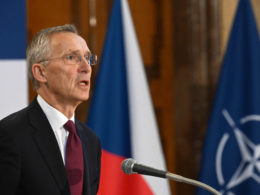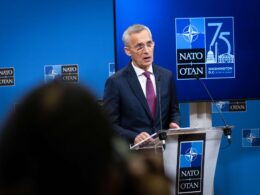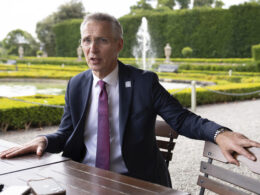
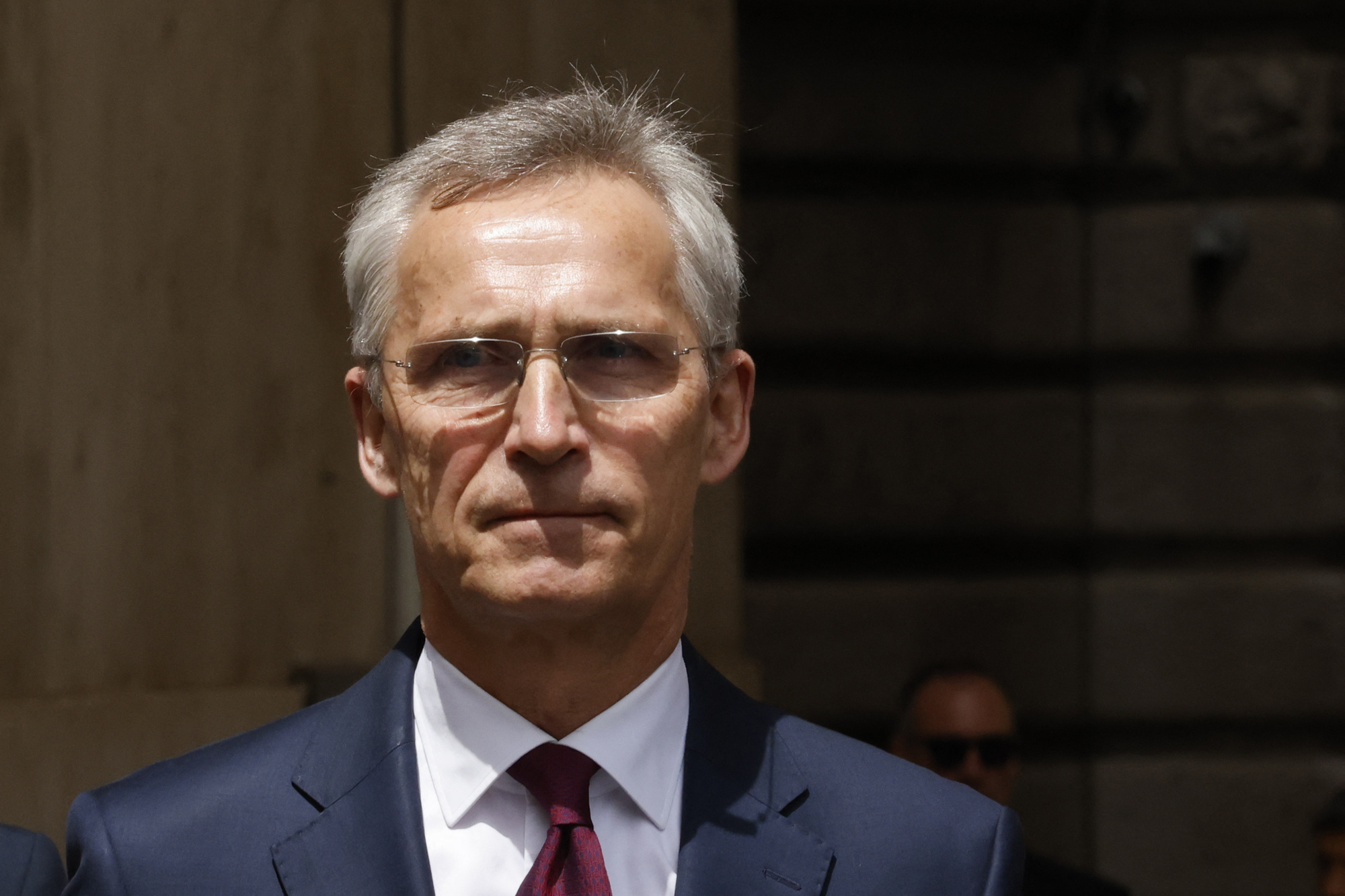
Former NATO secretary‑general Jens Stoltenberg described a “painful moment” in February 2022 when he turned down Ukrainian President Volodymyr Zelenskyy’s request to impose a no‑fly zone over the country, according to his memoirs, reported by The Times.
In February 2022, Russia launched a full-scale invasion of Ukraine, with forces advancing rapidly toward Kyiv and other major cities. The Ukrainian military was under heavy pressure, and the capital faced an imminent threat of occupation. NATO faced a choice: support Ukraine directly and risk provoking a wider war, or limit its involvement to avoid direct confrontation with Russia.
Stoltenberg said Zelenskyy called from a Kyiv bunker as Russian forces approached, asking NATO to block Russian aircraft, drones, and helicopters. Zelenskyy acknowledged that NATO would not send ground troops, saying he accepted the decision even though he disagreed.
Zelenskyy pointed out that NATO had previously implemented a no‑fly zone over Bosnia and Herzegovina in the 1990s to prevent attacks by the invading Serbian armed forces and asked for similar protection over Ukraine.
Stoltenberg told him that enforcing a no‑fly zone would require neutralizing Russian air‑defense systems in Belarus and Russia, and that any engagement with Russian aircraft could trigger a full-scale war between NATO and Moscow.
He said the moment was “extremely painful” because he feared the call might be Zelenskyy’s last. Stoltenberg emphasized that, despite the refusal, the decision not to deploy NATO ground troops or enforce a no‑fly zone was correct under the circumstances.
He also noted that Western military support to Ukraine was often “too little and too late,” suggesting that if Kyiv had received sufficient backing earlier, Russia might have reconsidered a full-scale invasion, judging it too risky.