

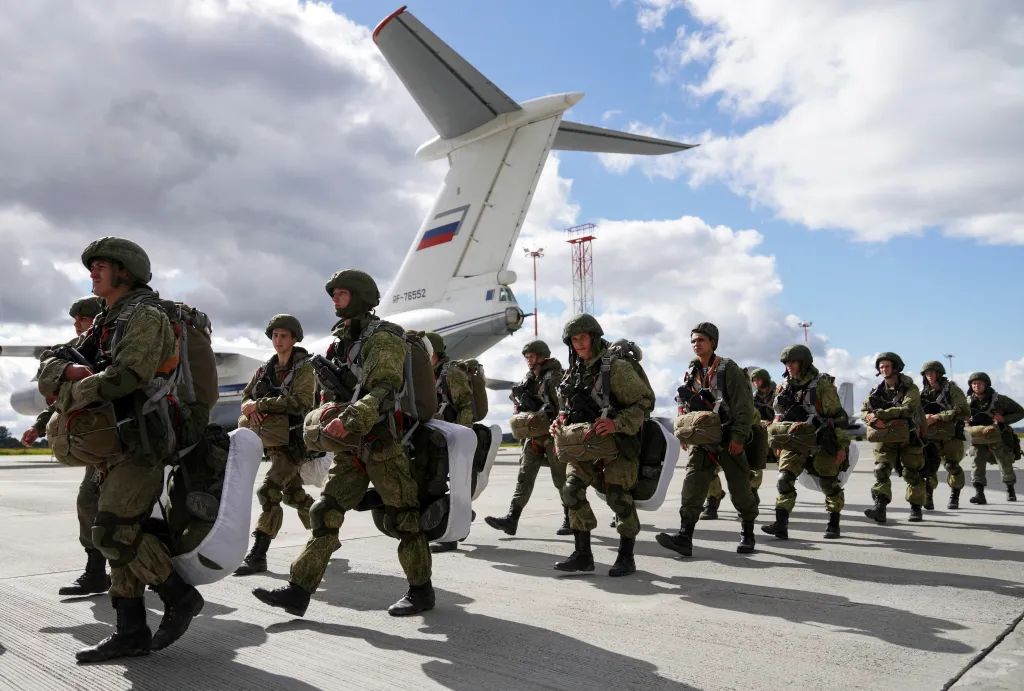
The Russian government has submitted a draft budget for 2026-2028 that allocates 17 trillion rubles ($183 billion) to national security and defense in 2026.
It represents 38% of planned annual expenditures, according to documents presented to the State Duma on 29 September.
The budget projects federal revenues of 40.3 trillion rubles ($485 billion) and expenditures of 44.1 trillion rubles ($531 billion) for 2026. Defense spending is set at 12.9 trillion rubles ($155 billion) in 2026, down from 13.5 trillion rubles ($163 billion) in 2025. The draft projects defense expenditures will rise to 13.6 trillion rubles ($164 billion) in 2027 before declining to 13 trillion rubles ($156.5 billion) in 2028.
National security spending will increase to 3.9 trillion rubles ($47 billion) in 2026 from 3.5 trillion rubles ($42 billion) in 2025. The combined defense and security allocation represents a decrease from 41% of total expenditures in 2025.
Russia is reducing its defense and security spending by 200 billion rubles ($2.4 billion) compared to 2025 despite ongoing economic pressures. Finance Minister Anton Siluanov said on 18 September that Russian authorities expect oil and gas sales to account for 20 to 22% of federal budget revenues in 2026, down from about 50% previously.
The Kremlin has announced an increase in value-added tax to fund defense and security, which the Finance Ministry estimates will generate $14.2 billion in additional revenue in 2026.
Russian opposition outlet Verstka reported on 29 September that the government plans to spend 106.4 billion rubles ($1.28 billion) on state television channels in 2026, a significant increase from 69.1 billion rubles ($832 million) planned for 2025. The 2025 budget allocated 4.5 billion rubles ($47 million) to the Solovyov Live Telegram channel and 49 million rubles ($511,000) to Readovka online news aggregator.
The increase in television funding suggests a shift back to traditional propaganda methods amid recent social media restrictions and the creation of the Russian state messenger Max, according to the Institute for the Study of War.
Read also
-
Russia just accidentally crashed its first Tu-95 bomber in 11 years. Its missiles will keep striking Ukraine anyway
-
Robots won’t replace armored vehicles, says Ukrainian company that builds both. It reveals one job they can’t do
-
Ukraine’s training facilities get boost: EU is funding centers where its army prepares soldiers, with Denmark putting in €33 million


