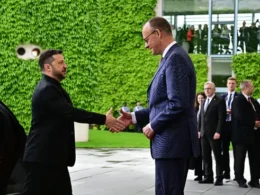
German Chancellor Friedrich Merz called the refusal to support Ukraine’s NATO membership in 2008 a mistake, saying the country’s accession could probably have prevented the current war. Speaking alongside NATO Secretary-General Mark Rutte in Berlin, Merz backed a French push to revive the question of Ukraine’s membership after the war, UkrInform reports.
The remark marks a reversal for Berlin. At the 2008 Bucharest summit, Germany, then under Chancellor Angela Merkel, and France led the opposition that derailed a US-backed plan to put Ukraine and Georgia on a path to membership, a decision widely seen as having cleared the way for Russia’s wars.
The question has resurfaced as Ukraine and its allies weigh what security guarantees could be offered after the current war, with Merz arguing that those guarantees should come close to membership itself. Meanwhile, there are no signs that Russia wants to end its aggression against Kyiv.
Guarantees close to NATO itself
Merz said Ukraine’s future security guarantees should resemble those under Article 5 of the North Atlantic Treaty, the alliance’s collective-defense clause, which, in his view, would already put it close to full membership. He could not imagine Ukraine’s future without reliable guarantees, he added, and they would serve not only Ukraine but everyone.
He also endorsed French President Emmanuel Macron’s call to bring the membership question back to the table, aligning it with the guarantees the West wants to offer Kyiv once the war ends.
Rutte: Russia’s war machine will not stop
Rutte used the same news conference to warn that Russia has shifted onto a war economy and that its military machine would likely not stop once the war in Ukraine ends.
Trending Now
NATO must invest more in defense production, maintain steady aid to Ukraine, and strengthen the resilience of its societies, he argued. He also pointed to China, which he described as accelerating its military buildup while keeping its true intentions opaque.
Gray-zone attacks and production gaps
Rutte drew attention to Russia’s intensifying “gray zone” campaign against Europe: arson at a factory, drones shutting down an airport, railway sabotage, attacks on cargo ships at sea, and cyberattacks, alongside repeated breaches of European airspace and maritime borders.
He urged defense firms to increase their output in response to such actions. Ammunition production has grown sharply, he noted, but drones and air defenses still lag, and governments should pool demand while companies deepen cooperation and share resources.
Read also
-
Ukraine flew a Flamingo cruise missile into the Kerch Bridge like an FPV drone, watching through its camera to the last seconds
-
Ukraine has almost nothing to stop Russia’s ballistic missiles, presidential tech adviser says, listing seven weapons Kyiv needs
-
Ukraine’s Neptune missiles hit Russian airbase used for glide-bomb attacks – fourth airbase hit in two weeks