Ukraine's battlefield successes appear to be forcing Russian President Vladimir Putin to reevaluate his theory of victory and shift focus toward long-range strikes to compel Ukraine to surrender, rather than advances on the battlefield, the Institute for the Study of War said on 4 October.
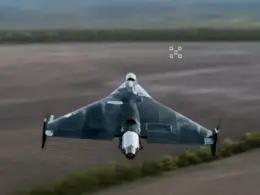
Ukrainian President Volodymyr Zelenskyy said Russia used more than 800 jet-powered drones during the week of 27 September to 4 October. Ukraine currently intercepts only 50–60% of jet-powered drones, leaving it vulnerable to the large number of new drones Russia is deploying.
The late-September start and the campaign's aim
ISW said Russian forces began their winter 2026–27 strike campaign against Ukraine's energy infrastructure in late September and that the campaign is aimed at making civilian life unbearable enough to force Ukraine to capitulate.
Russian forces would step up attacks on military facilities, defense industry sites, and related infrastructure in Kyiv and elsewhere in Ukraine, the Russian Defense Ministry said on 4 October, according to Reuters. The announcement followed Zelenskyy's vow to increase attacks on Russian oil refineries.
The ministry also claimed its recent strikes on Kyiv and other Ukrainian regions were a response to alleged Ukrainian attacks on civilian targets inside Russia. Among the grievances it named were Ukraine's strikes on Leningrad Oblast during the St. Petersburg International Economic Forum in June and alleged strikes on electoral infrastructure in Moscow during the 18–20 September State Duma elections, according to ISW.
ISW called the Russian Defense Ministry's framing of the recent strikes as retaliation for Ukrainian attacks on Russian civilian targets unfounded, saying many of its specific claims are "blatantly false." Russia has provided no evidence that Ukraine targeted electoral infrastructure, and Ukraine's 19–20 September strikes on Moscow targeted oil refineries and warehouses, the think tank said. The Russian strikes "are not an actual response to specific events," it concluded.
The 135 drones, the bridges struck seven times
Overnight on 3–4 October, Russia launched 135 Shahed-type and Gerbera-type drones, while also using decoy drones and Banderol or Dan-T loitering munitions. Ukrainian forces downed 123 drones and two loitering munitions, and strikes hit five locations, according to ISW, which cited the Ukrainian Air Force. Russian forces struck Kyiv's Northern and Southern bridges seven times between 1 and 4 October in an effort to disrupt Ukraine's economy and daily civilian life, ISW said.
Ukraine builds new layers of defense against jet drones
More than 12 .50-caliber machine-gun turrets are already working in Kyiv against jet-powered drones, and eight more will be installed in Kyiv Oblast, Zelenskyy said, Suspilne reported. He added that F-16s help a lot against the drones, according to Ukrinform. Ukraine is set to receive 2,000 Bars interceptor drones through joint production with Germany, RBC-Ukraine reported.
Ballistic missiles may be Russia's next wave
Zelenskyy said Ukraine estimates Russia has up to 700 ballistic missiles in reserve and produces 130–140 a month. He made the remarks at a joint media briefing with German Chancellor Friedrich Merz in Kyiv, Ukrinform reported. Russia is likely stockpiling ballistic and quasi-ballistic missiles for intense strikes after its jet-powered drones lose their current advantage, ISW assessed. ISW also cited an ongoing shortage of Patriot interceptors.
OHCHR has verified some 15,280 civilian casualties in Ukraine in the first eight months of 2026, 55% more than in the same period of 2025, UN High Commissioner for Human Rights Volker Türk said on 2 October.
Read also
-
Russia’s drones keep targeting the bridges Kyiv can’t easily replace—now the Northern crossing is cratered
-
Russia repeatedly attacks bridge connecting Kyiv’s two sides across the Dnipro river, disrupting transport across the capital
-
Russia’s mass drone attacks on Ukraine have a goal—likely Ukraine’s capitulation by spring 2027, ISW says