


Ukraine's defense forces intercepted 55% of Russia's jet-propelled drones in September—more than 1,500 out of over 2,730 launched—Ukrainian President Volodymyr Zelenskyy said in his 26 September evening address.
Russia's full-scale aerial campaign has shifted from propeller-driven Shaheds Ukraine learned to shoot down at over 90% to jet-propelled models that fly faster, resist jamming, and often slip past existing defenses.
55% and climbing
Zelenskyy said military intelligence had briefed him on Russian weapons production—not just jet Shaheds but other technological systems. The documents detail what Moscow is preparing for next year: the volumes and the financing. "We are preparing our countermeasures, and for every line item there must be a Ukrainian answer," he said.
Several effective interceptor prototypes are already in combat.
"Interceptors have been identified that can become the main tool of our defense. Production, components—all of this we are scaling up. There will be an answer," Zelenskyy said.
The goal is to match the interception rate for regular propeller-driven Shaheds, which exceeds 90%. At 55%, the jet-drone rate is climbing but still leaves nearly half reaching their targets.
$12 billion for one category
Russia plans to spend $12 billion in 2027 on jet drones and loitering munitions alone, Zelenskyy said. "This concerns not only Ukraine and not only us," he added, warning that multiple intelligence agencies have information Russia wants to expand its war to other countries and regions.
He said this is why Ukraine is pushing for stronger sanctions and the Drone Deal format. Ukraine has signed 11 such agreements, the latest with Finland at the UN General Assembly this week, and is preparing a 12th with what Zelenskyy called "a strong country."
The warning came as Russia struck a Kyiv data center twice on the morning of 27 September, injuring three people including two children, Zelenskyy wrote. Overnight strikes killed three people in Zaporizhzhia Oblast and one man in Kyiv.
In total this week, Russia launched more than 2,200 strike drones, roughly 1,650 aerial bombs, and 38 missiles—a significant share of them ballistic—at Ukraine, he said.
A $50 computer just flew Russia’s newest jet drone into a Ukrainian grain ship—and jamming couldn’t stop it
Jet drones are now Russia's main aerial weapon
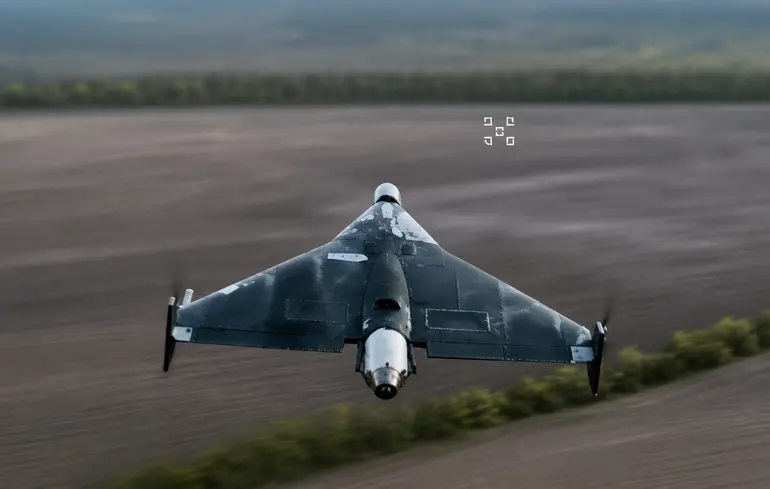
Russia's jet-propelled Geran-4 and Geran-5 drones have become the dominant threat in Russia's aerial campaign against Ukrainian cities. By August, production of jet Geran-4/5 models exceeded that of propeller-driven Geran-2s, according to Ukraine's military intelligence (HUR). Russian factories produce roughly 3,000 jet models per month alongside about 2,800 of the older type. The Geran-5 is technically a drone but functions as a small cruise missile—faster, harder to jam, and increasingly guided by AI and mesh networking that complicate interception.
Ukraine's answer has been interceptor drones—cheap, fast enough to chase a Geran, and guided by machine vision. A Ukrainian interceptor recently scored its first kills against jet Gerans and is heading into mass production, though a presidential adviser warned that speed alone cannot catch them—machine vision and automatic guidance decide the chase.
Read also
-
“Ukraine is becoming a security provider for Europe”: Ukraine signs Drone Deals with Estonia, the Netherlands, and Denmark as Europe taps Kyiv’s battlefield-tested weapons technology
-
Two railway workers killed: a Russian jet drone hit their train’s locomotive in Odesa Oblast
-
Ukraine may have just lost its first Swedish assault boat—to a Russian jet drone


