

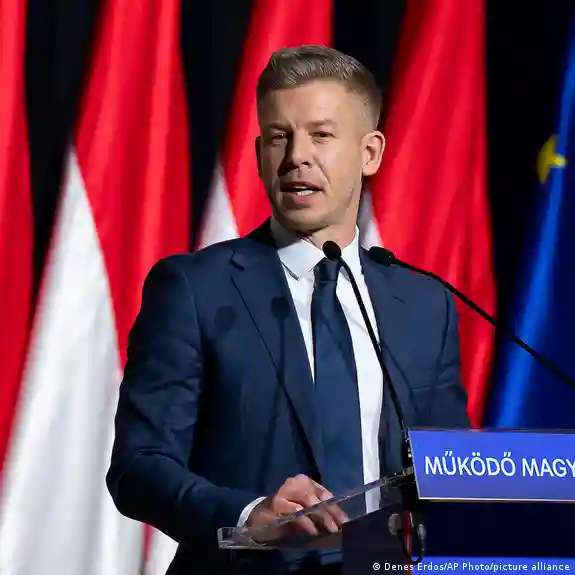
Hungarian Prime Minister Péter Magyar said the entire European Union will return to buying Russian gas after Russia's war on Ukraine ends, in an interview with Polish daily Rzeczpospolita.
Magyar said the bloc's three-year plan to phase out Russian oil and gas will change after the war ends, citing competitiveness and geography. Hungary, Poland, and the rest of the EU need lower energy prices to remain competitive, he told the outlet.
Magyar's prediction
"I think that when the war ends, the entire European Union will return to buying Russian gas, because it is cheaper. This is dictated by competitiveness, geography. Simply. But gentlemen, you will see for yourselves. I cannot predict everything, but this is my feeling," Magyar told Rzeczpospolita.
Magyar said his mandate from Hungarian voters is to maximize diversification of energy sources, with focus on supply security and price. "Liquefied natural gas, which is pumped through the Baltic Sea, through Poland and Slovakia, is significantly more expensive than gas imported from Romania, Russia, or Austria," he told the daily.
Polish negotiations and EU policy
Polish Prime Minister Donald Tusk promised to do everything possible to lower the LNG price, Magyar said. Hungary is in negotiations with Poland and wants multiple supply sources for security and bargaining leverage, with EU funds enabling better terms.
The EU plans to phase out Russian oil and gas within three years, but Magyar said the policy will change after the war ends. "Let's hope this happens very soon. We must be competitive — Hungary, Poland. And for that we need lower energy prices. In this I am very pragmatic," he told Rzeczpospolita.
Trending Now
Magyar said he accepts criticism of his stance but his mandate is for both supply security and lower prices. He is focused on current EU funds negotiations rather than getting ahead of himself, he told the outlet.
Hungary's energy context
After Magyar's election victory over Viktor Orbán, Hungary faces the challenge of preventing a fuel crisis as the country's oil reserves run low, LIGA.net reported. The interview was published on 21 May 2026.
A May 2025 report by Bulgaria's Center for the Study of Democracy and Finland's Centre for Research on Energy and Clean Air found that Hungary and Slovakia had the technical and economic means to drop Russian oil and gas but consciously chose not to, in violation of EU energy security strategy, LIGA.net reported.


